Breast forms are the quickest way to a feminine silhouette. They sit in a bra (or stick to your chest) and give you real shape, so tops and dresses fall the way they are designed to. This guide collects everything in one place: the types and shapes, how sizes really work, how to read AliExpress and Temu listings, breastplates, fitting problems and how to make your forms last.
⚡ Quick Answer
- Type: silicone looks and moves the most naturally. Foam and fabric forms are lighter, cooler and cheaper.
- Size: most people look best in a B or C cup. Match the cup to your frame, not the biggest size you can find.
- Shape: teardrop for narrower chests (up to a 36 band), triangle from 36 up, wide or peardrop from 40 up.
- Cheap listings: the "cup" is really the weight of the pair (B ≈ 600 g, C ≈ 800 g). On a broad chest, the same form looks smaller.
- Bra: a full-coverage or pocket bra in your real band size, with the cup that matches your forms.
Want it worked out for you? Use our free breast form size calculator.
🧴 Types of Breast Forms
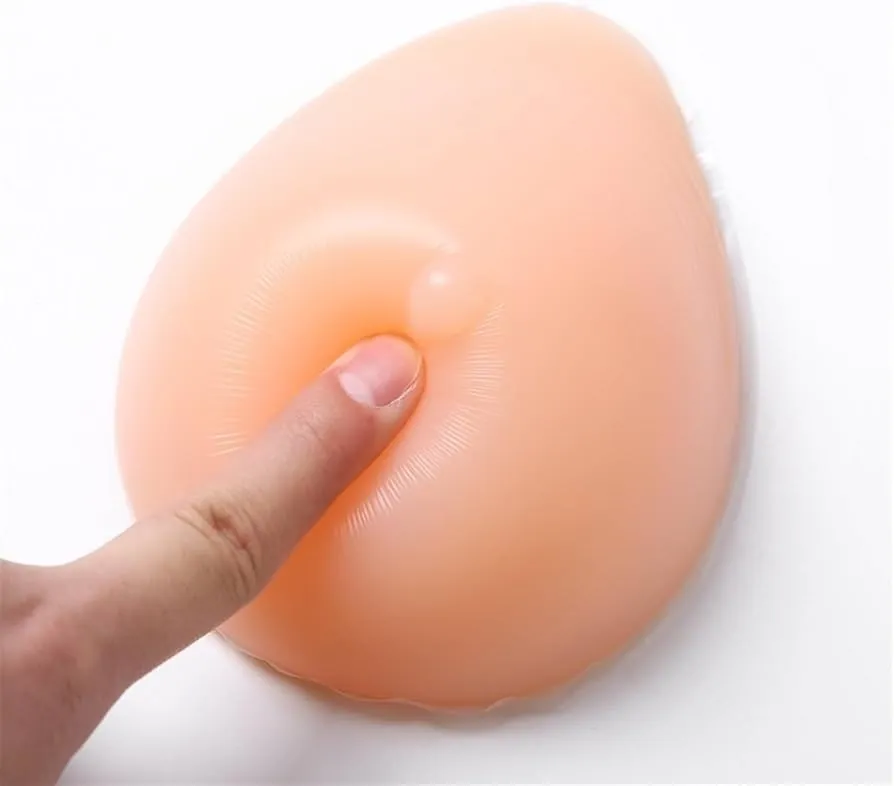
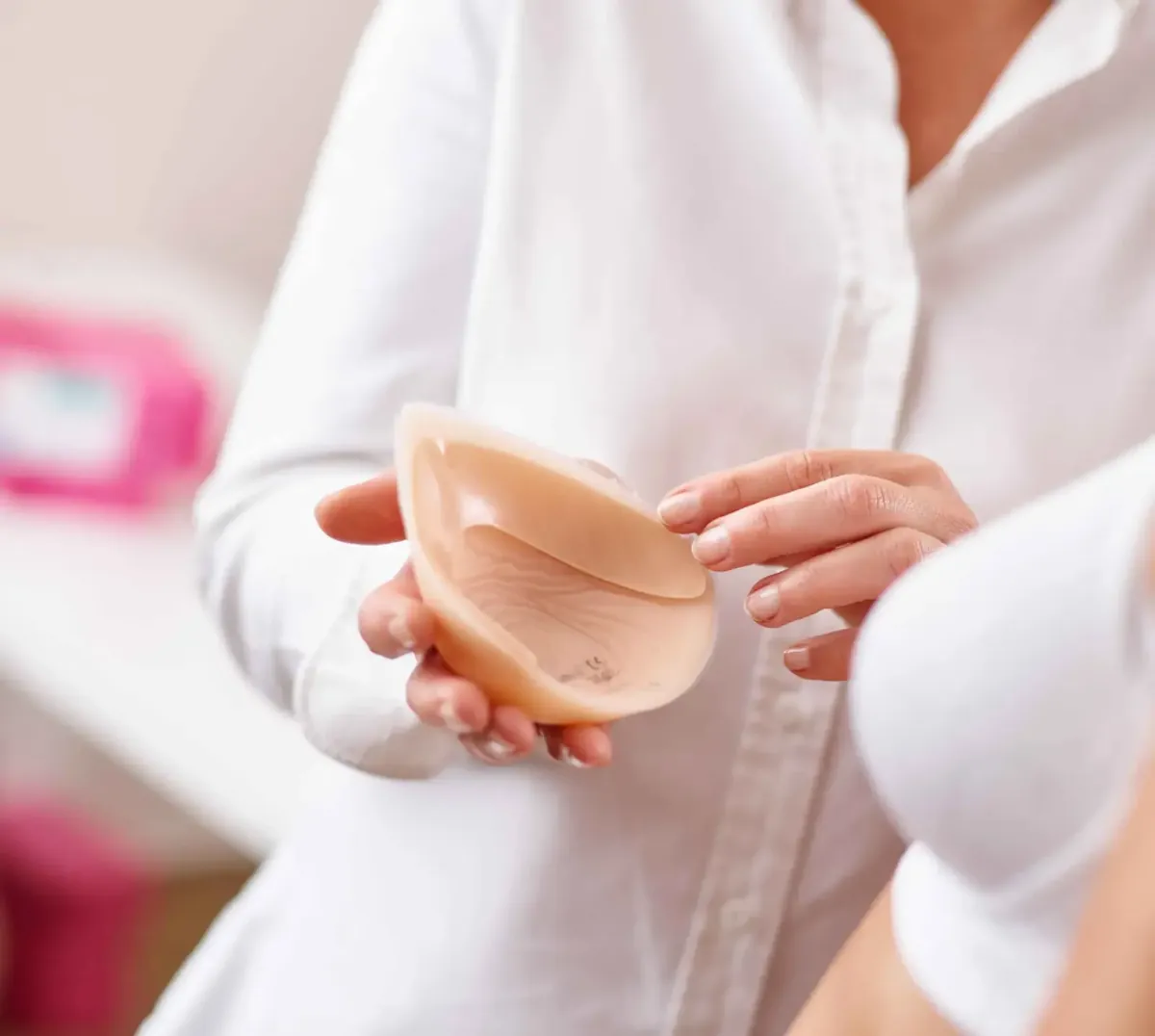
Full silicone
The most realistic weight, bounce and skin feel. Moves like a real breast.
- Weight: Heaviest
- Best for: Going out, fitted tops, the most natural look
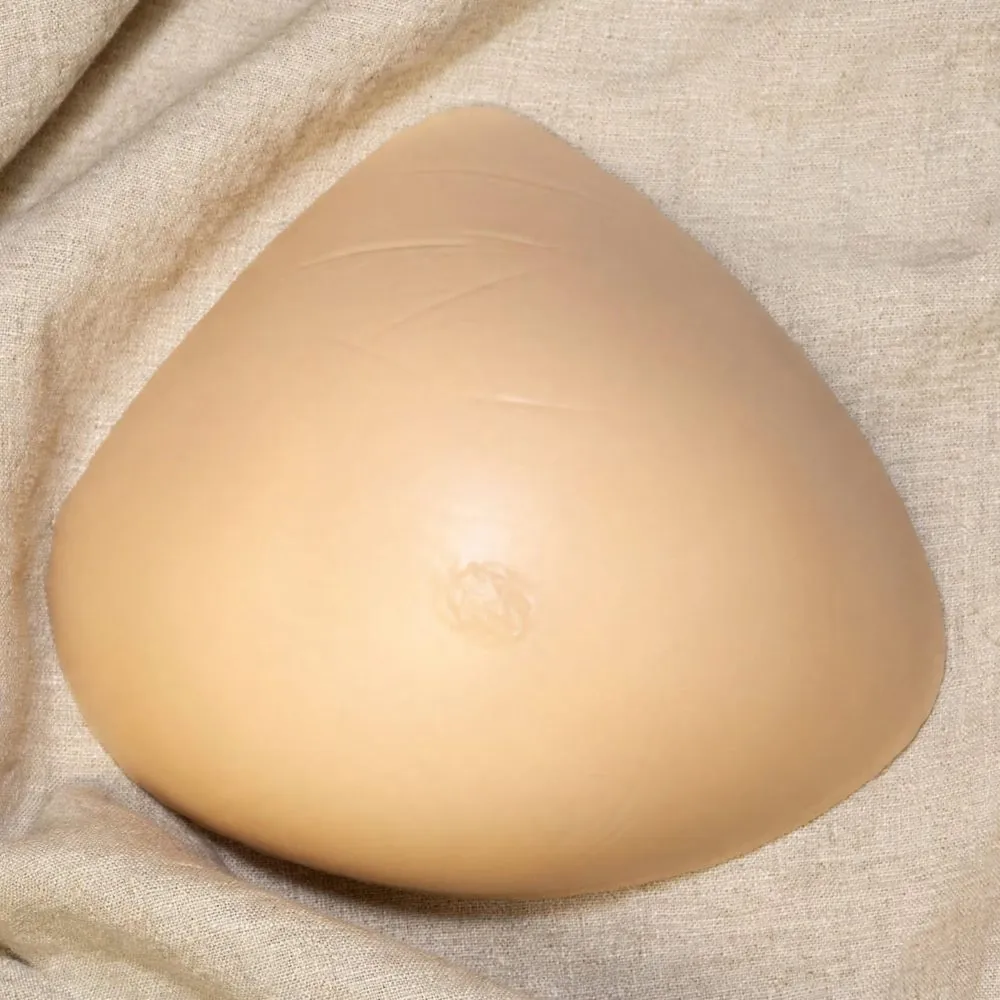
Lightweight silicone
Silicone with a hollow or foam-filled back. Looks almost the same, with a little less movement.
- Weight: Around 30% lighter
- Best for: All-day wear
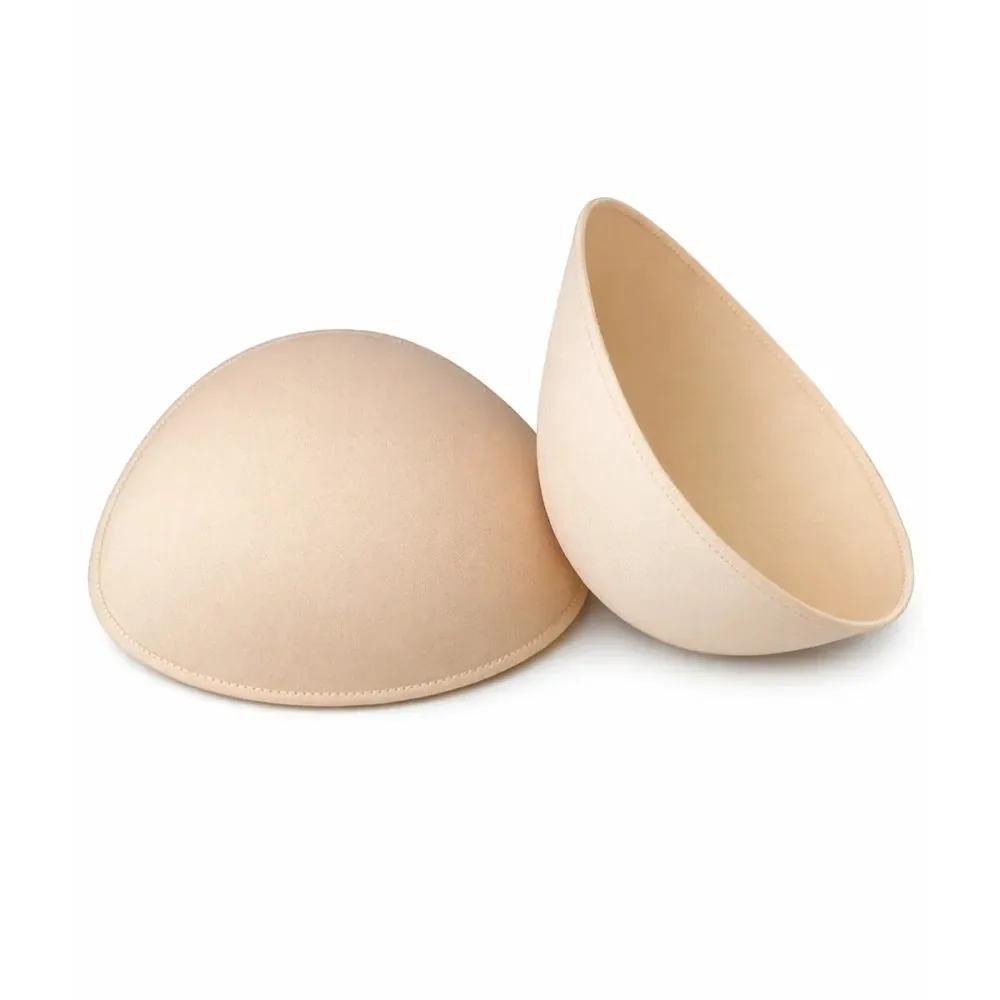
Foam
Holds a good shape under clothes but does not move or bounce.
- Weight: Very light
- Best for: Hot weather, beginners, low budget
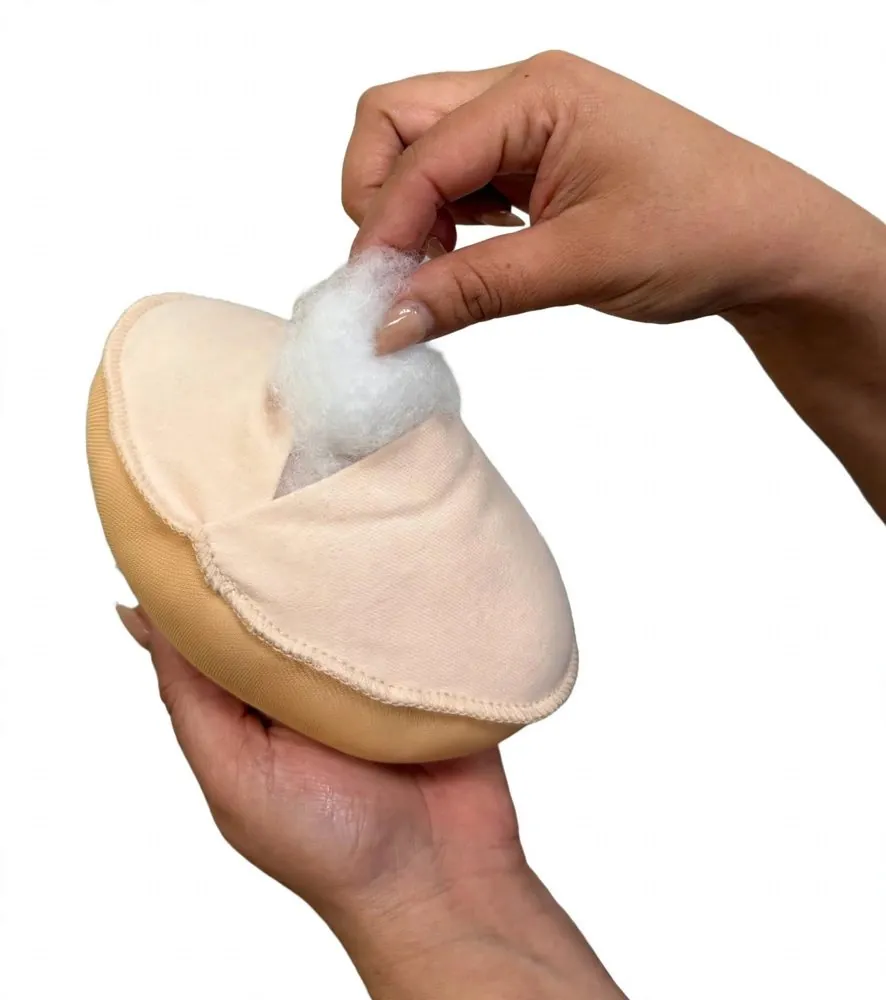
Fabric or fibre-filled
Soft and washable. Many let you add or remove filling to change the size.
- Weight: Very light
- Best for: Trying things out, sleepwear, loose clothes
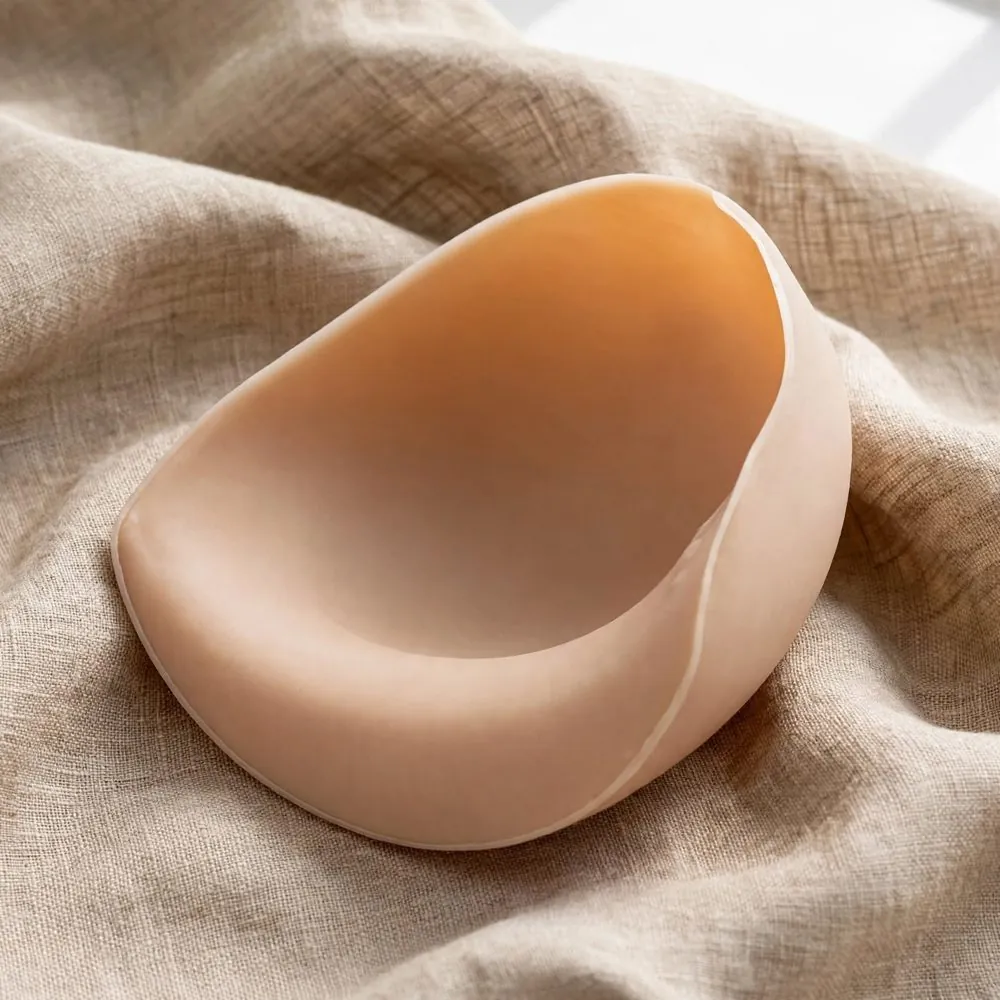
Partial shells / enhancers
Hollow forms worn over your own chest. Thin ones add about half a cup; deep scooped ones add a lot more, with far less weight.
- Weight: Light for their size
- Best for: Growing breasts on HRT, size without the weight
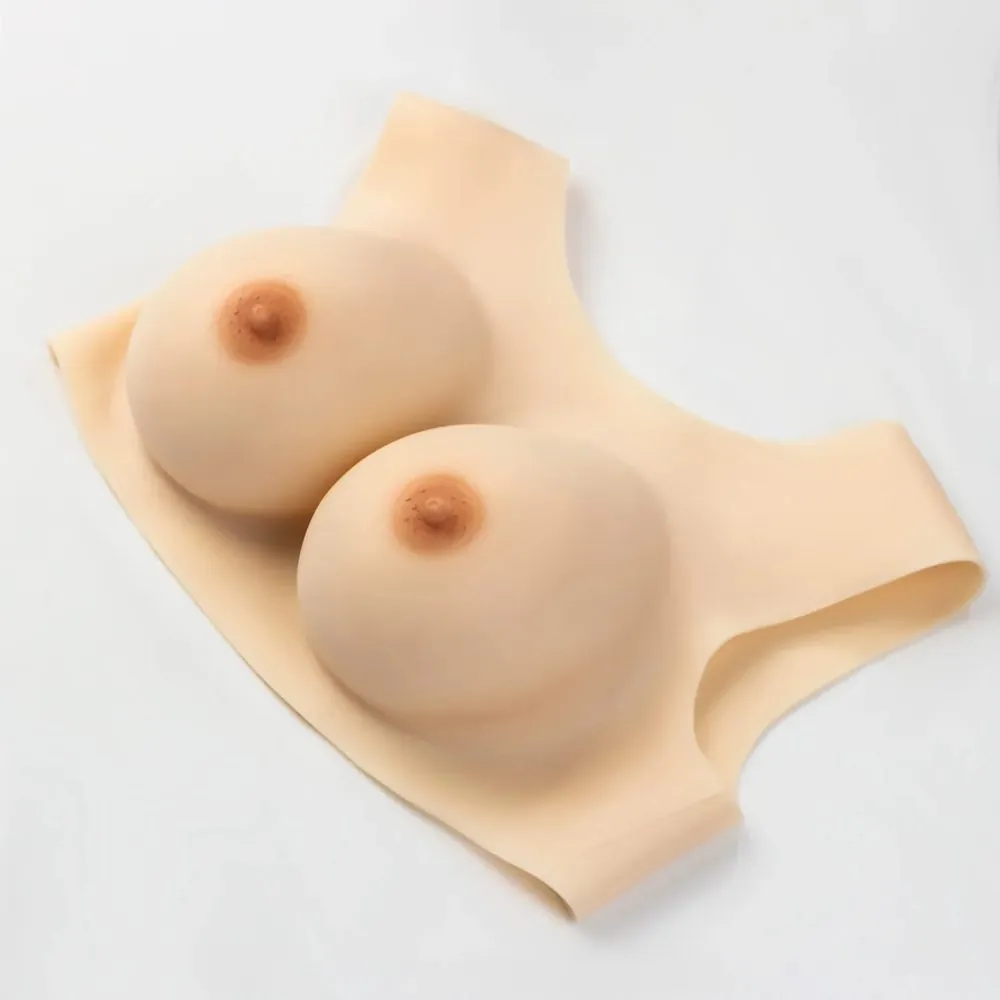
Breastplate
One piece covering the whole upper chest, with real cleavage and no bra edge.
- Weight: Heavy (silicone) to medium (cotton-filled)
- Best for: Low necklines, performance, drag, photos
Listings often say "silicone gel breast forms". That is the same thing as the silicone forms above — "gel" only describes the soft filling. It is not a breast implant, which is a different product placed inside the chest by a surgeon.
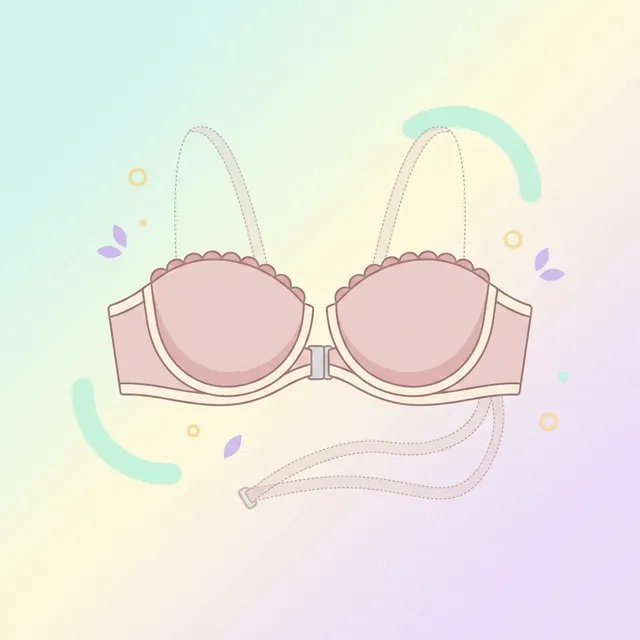
How forms stay in place
- In a bra (non-adhesive): the form simply sits in the cup or a pocket. Easy, cheap and the best place to start.
- Self-adhesive back: a built-in sticky layer holds the form to your skin. Moves with you and allows strapless and low-cut tops. Wash the sticky side to refresh it.
- Double-sided tape strips: single-use medical strips that turn any silicone form into an adhesive one. Hypoallergenic and waterproof.
- Skin adhesive (glue): the strongest hold, for long nights or performances. Needs a matching remover and patch-testing first.
- Strap-on harness: some cheap forms and plates come with straps. Stable, but the straps can show under thin tops.
🔺 Breast Form Shapes
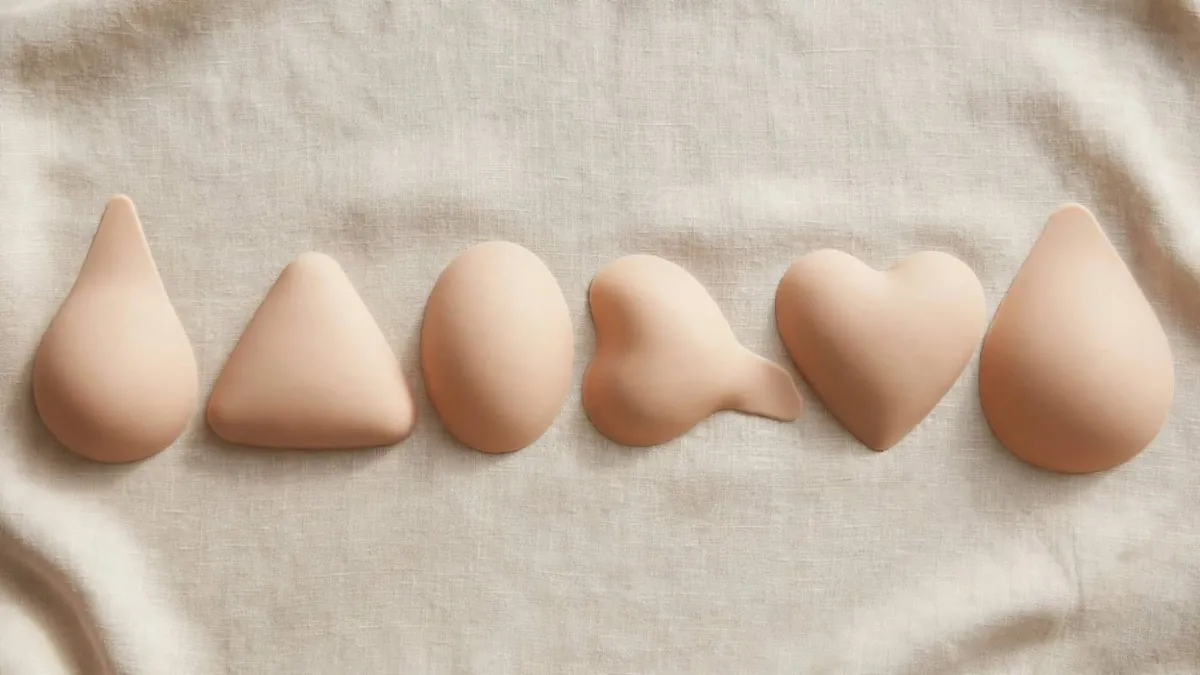
The shape decides how the form sits against your chest. The wrong shape gaps at the top, shows at the sides or shifts during the day, even when the cup size is right.
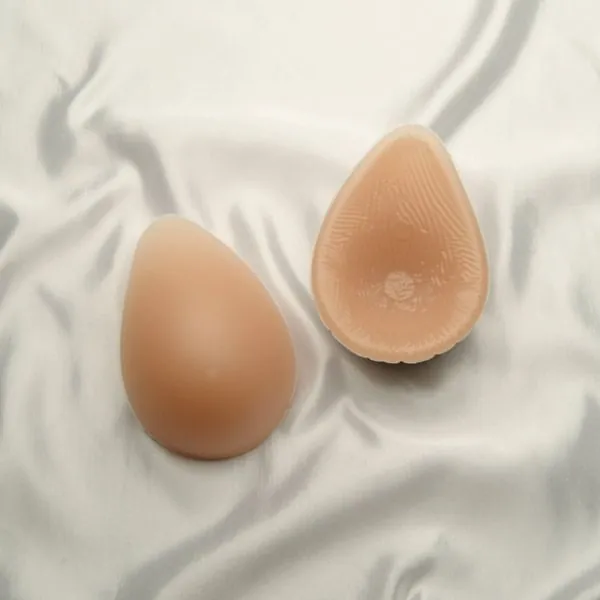
Teardrop
Rounded, with more fullness at the bottom and a narrow top. Sits high in the cup, so it can peek out of low tops.
- Best for: Narrower chests, about 28–36 bands
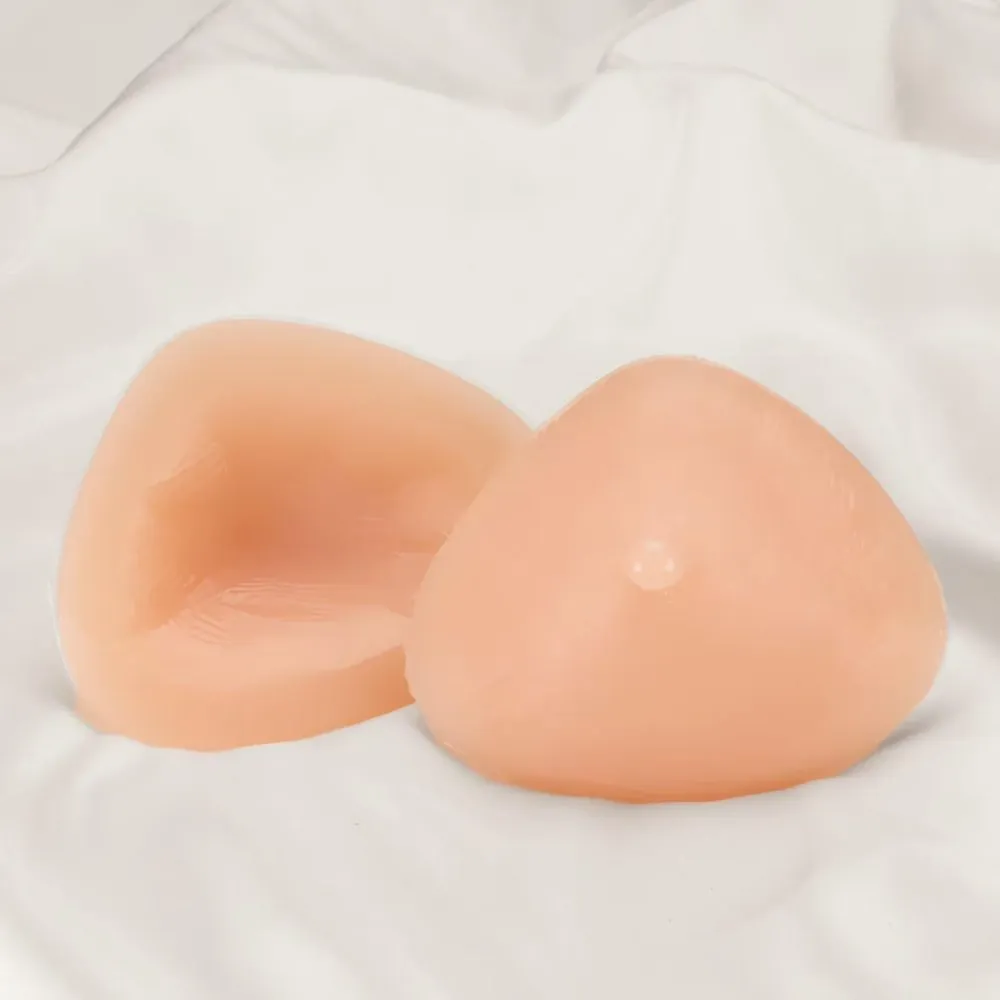
Triangle
Wider base with a hollow (concave) back. The most versatile shape, and the hollow suits some breast growth.
- Best for: 36 bands and up
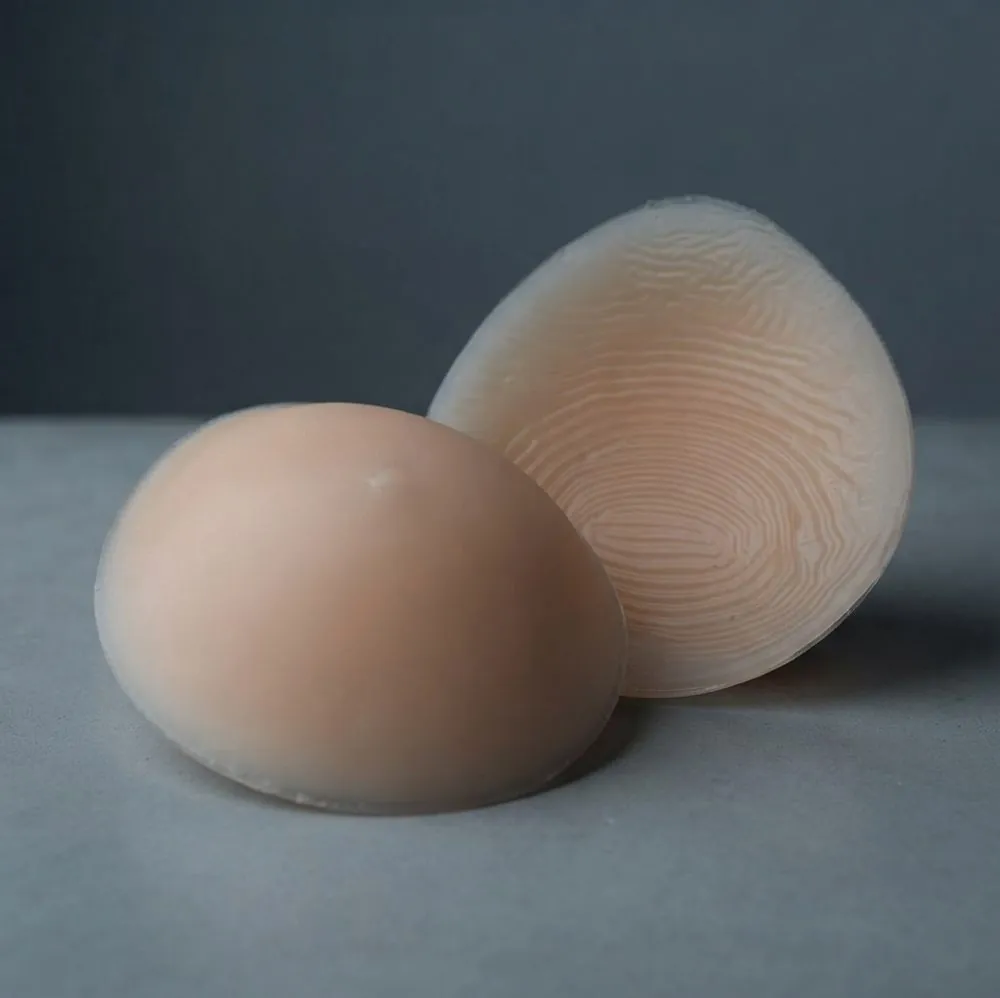
Oval
An even, full profile all round for a rounder look.
- Best for: Underwire and soft pocket bras
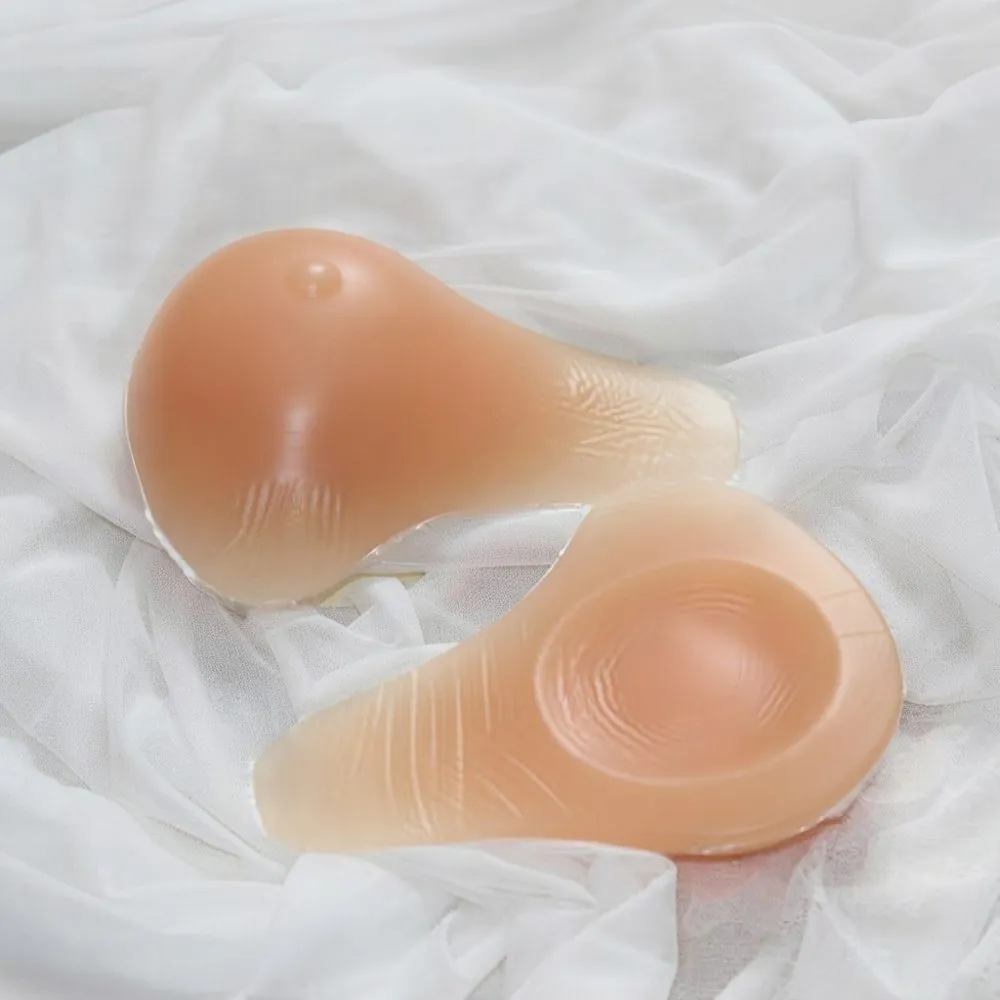
Asymmetric
An oval with a tail that reaches toward the armpit. The most realistic side view; comes as left and right.
- Best for: Filling the area under the arm
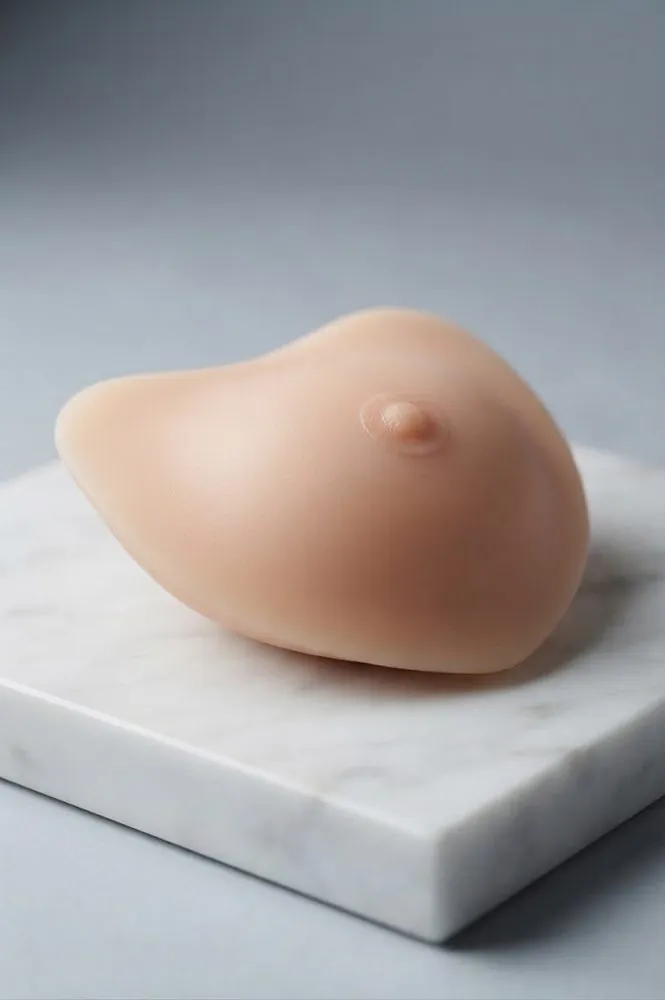
Heart
Rounded top and pointed base. Can be turned any way to fine-tune the fit.
- Best for: Underwire bras
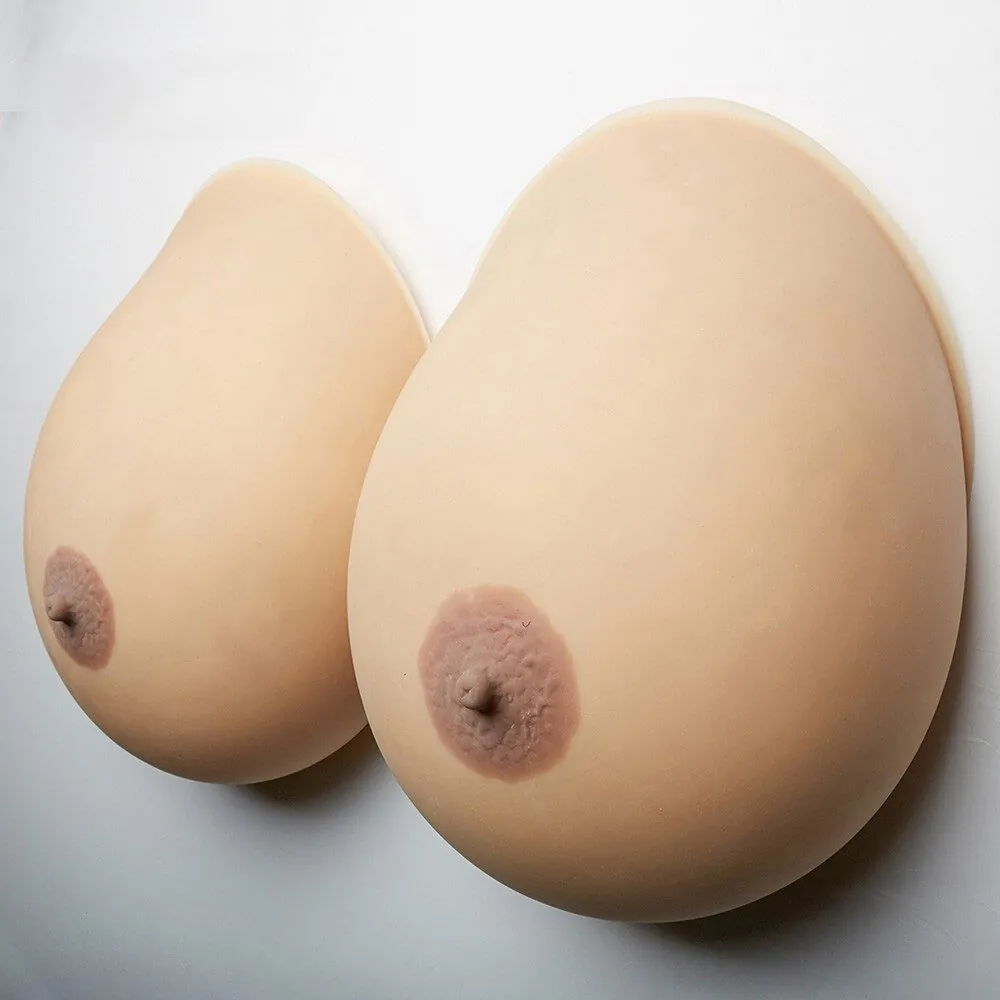
Peardrop (wide)
Wider and flatter, with a broad bottom, for a subtle, natural look.
- Best for: Broad chests, 40 bands and up
📐 How Breast Form Sizes Really Work
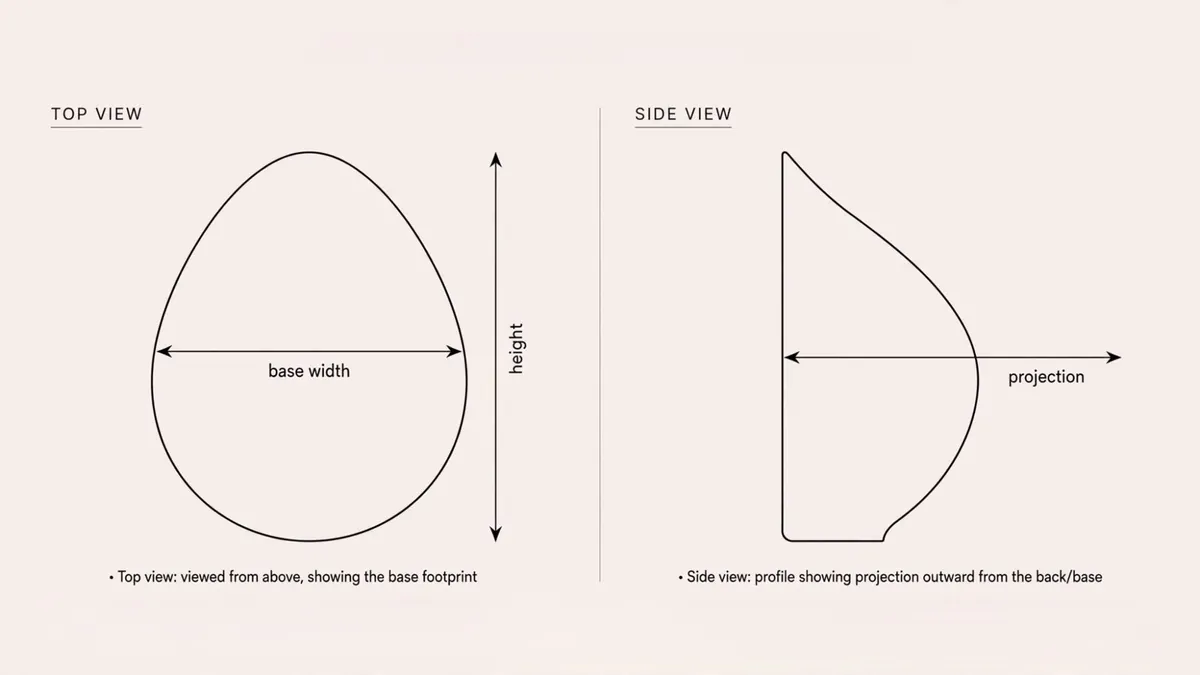
A form's size comes from three measurements plus its weight. Good listings show all of them. If a listing only gives a cup letter, be careful.
- ↔️ Base width: the widest point across the back. It should match the width of your bra cup (wire end to wire end) and sit inside your chest, not wrap round your side.
- ↕️ Height: top to bottom. Too tall and the top shows above the cup.
- ⛰️ Projection (thickness): how far it sticks out from your chest. More projection means a bigger cup, but there is no fixed inches-per-cup rule — each brand is different, so compare the projection between sizes within one brand's chart rather than across brands. (The 1 inch per cup rule you see everywhere is about your bust minus underbust measurement, not the thickness of the form.)
- ⚖️ Weight: tells you the volume and how it will feel after a long day.
Cup size depends on your band
A cup letter only means something next to a band size. The same form looks bigger on a narrow chest and smaller on a broad one. These all hold about the same volume:
| Band | 32 | 34 | 36 | 38 | 40 |
|---|---|---|---|---|---|
| Same form looks like | DD | D | C | B | A |
That is why a broad-shouldered person often needs a "bigger" form than expected to get a B or C look, and why our calculator scales the weight to your band.
Reading AliExpress, Temu & Amazon listings
Budget sellers usually label the cup by the weight of the pair, and it does not change with your band:
| Listed as | A | B | C | D | DD | E |
|---|---|---|---|---|---|---|
| Weight per pair | 400–500 g | 600 g | 800 g | 1000 g | 1200 g | 1400 g |
- ✅ Shop by grams, not letters. A "B cup 600 g" is a B on a 36 band, but looks nearer an A on a 40 band. On a broad chest, go one label up.
- ✅ Check the size table in the photos. Most listings show width, height and thickness in the image gallery, not the text.
- ✅ Compare the width with your bra cup before ordering. Width is the most common reason cheap forms do not fit.
- ✅ Read reviews with photos. They show the real skin tone and how the edges blend.
- ❌ Avoid listings with no weight and no measurements.
Brand size numbers
Medical and specialist brands use their own numbers (for example size 4 = a 75B / 34B in one brand) and some work out the band by adding 4 inches to your underbust. Numbers never carry over between brands, so always look up your bra size in that brand's own chart.
💭 Thinking about breast augmentation?
Forms are the home version of the sizers a surgeon gives you to wear in a bra at a consultation. Silicone weighs about a gram per cc, so a 400cc implant is roughly 400 g — the same as one C-cup full silicone form in the chart above. Wearing that weight for a few days tells you far more about a size than a number on a page does.
Two things to keep in mind: cc is not a cup size, and a form sits on top of your chest while an implant goes underneath, so a form reads a little more projected. Surgeons usually recommend about 12 months of hormones before augmentation, and forms are what most people wear during that wait. This is not medical advice — your surgeon decides sizing with you.
📏 How to Choose Your Size
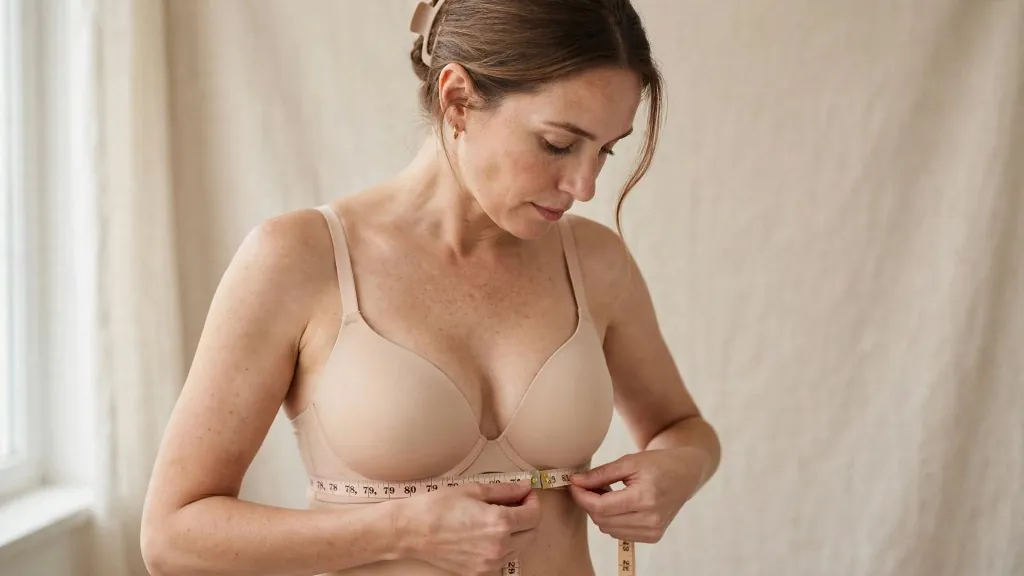
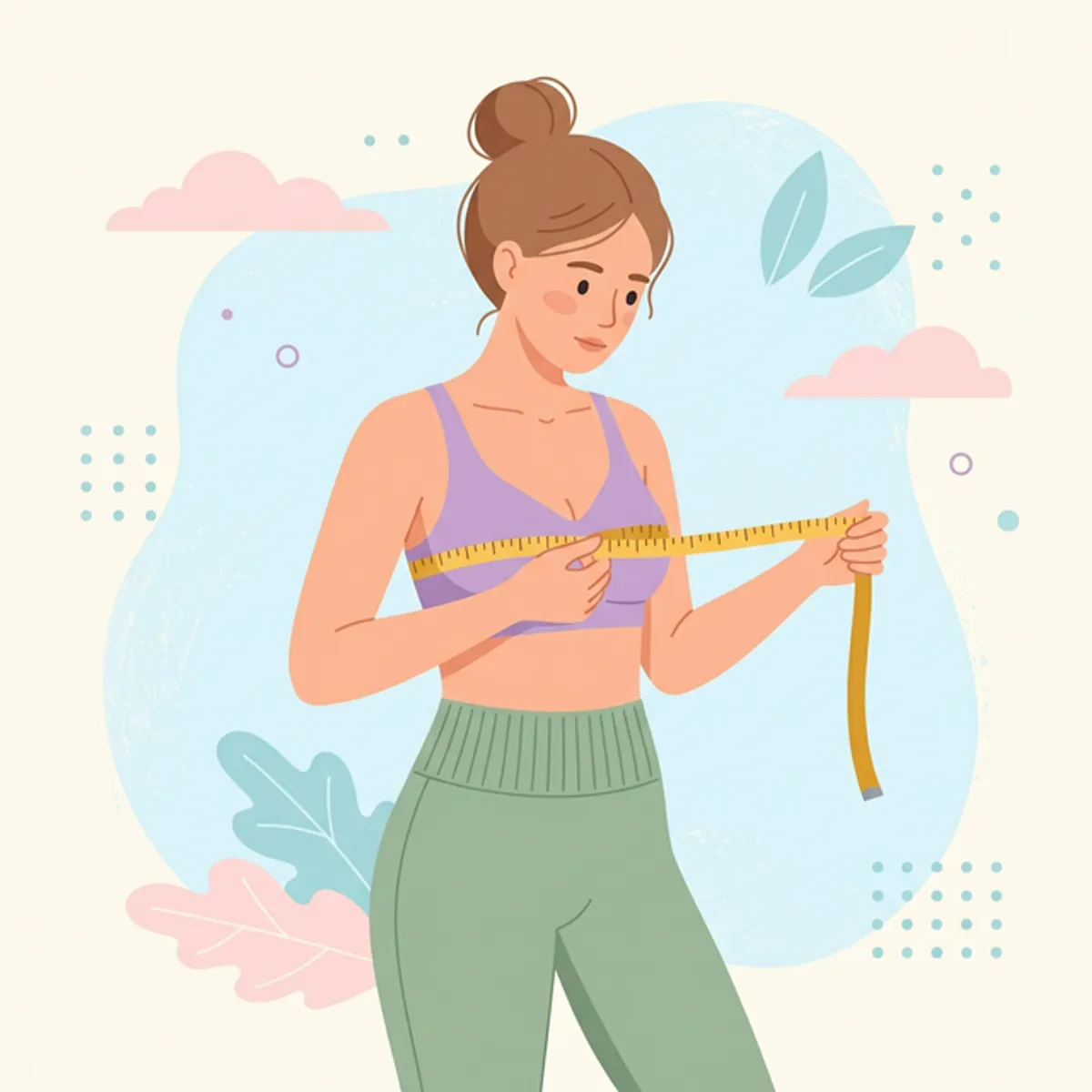
- Measure your underbust: a soft tape snug around your ribcage, where a bra band sits. This gives your band size.
- Pick a cup that suits your frame: narrow shoulders suit an A or B, average shoulders a B, broad shoulders a C. Very large forms on a slim frame look less natural, not more.
- Pick a shape for your band: teardrop up to 36, triangle from 36, wide or peardrop from 40.
- Check the chart: the brand's size number, or the pair weight on budget sites.
The breast form size calculator does all four steps for you.
💡 Size tips that work
- Most dresses are cut for about a C cup. Bigger than that and you may need a larger dress size.
- If you are under about 180 cm (5'11") and slim, a B cup usually looks best.
- Start one size smaller than you think; you can always go up. A form that is too big is the most common regret.
Breast form weight chart
Weight matters more than most beginners expect. Heavy forms pull on your bra straps and shoulders over a long day. These are typical weights for one form with a 36 band. Smaller bands weigh less, larger bands more. A lightweight B-cup silicone form is around 210 g, a full silicone one around 300 g.
| Cup | Look | Full silicone | Lightweight silicone | Foam / fabric |
|---|---|---|---|---|
| A | Subtle | ~200 g | ~140 g | 20–40 g |
| B | Natural | ~300 g | ~210 g | 30–50 g |
| C | Feminine | ~400 g | ~280 g | 40–70 g |
| D | Full | ~500 g | ~350 g | 50–90 g |
🧽 Choosing Foam or Fabric Forms
Foam and fabric forms are sized by the same cup letters, but they behave differently from silicone, so pick them a little differently.
- 📐 Match your bra cup exactly. Foam does not squash down like silicone, so a form one size too big pushes the cup out and shows at the edges. Buy the same cup letter as your bra.
- 🔺 Choose a full teardrop or triangle shape, not thin push-up pads. Pads only lift; a full form fills the whole cup and gives shape on its own.
- 🧵 Fabric-filled forms are adjustable. Many have an opening where you can add or remove fibrefill, so you can fine-tune the size at home.
- 🪶 Expect no movement or weight. Foam holds its shape but does not bounce. A snug bra keeps light forms from shifting up, since there is no weight to hold them down.
- 🌬️ Look for breathable covers (cotton or mesh) and a firm but soft foam that springs back when pressed.
- 🧺 Hand wash and air dry. Tumble dryers and wringing ruin foam shape. Replace them when they stay dented or go flat.
Many people start with foam to find the size they like, then buy silicone in that same cup later.
🛡️ Breastplates
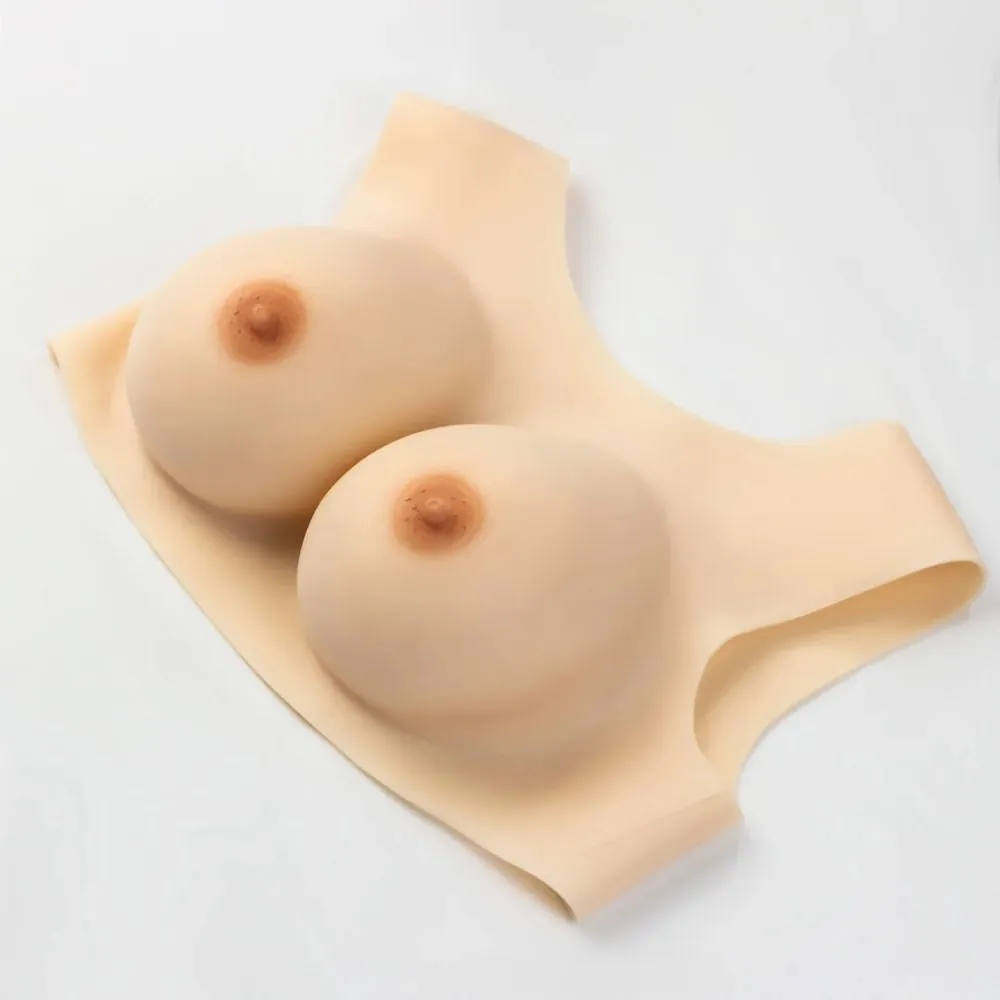
A breastplate is one silicone piece that covers the upper chest, with the breasts built in. It gives real cleavage and has no bra edge, which is why it is popular for low necklines, drag and photos. It is also the main type sold on Temu and AliExpress.
- Size by chest, not bra: measure around your chest across the nipples, then pick the cup you want from the seller's chart.
- Neck size: measure the base of your neck and take off about 1 inch (2.5 cm) for high-neck plates.
- Length: check neck-to-nipple and neck-to-bottom lengths. Within 2–3 inches on width and about 1 inch on length usually fits.
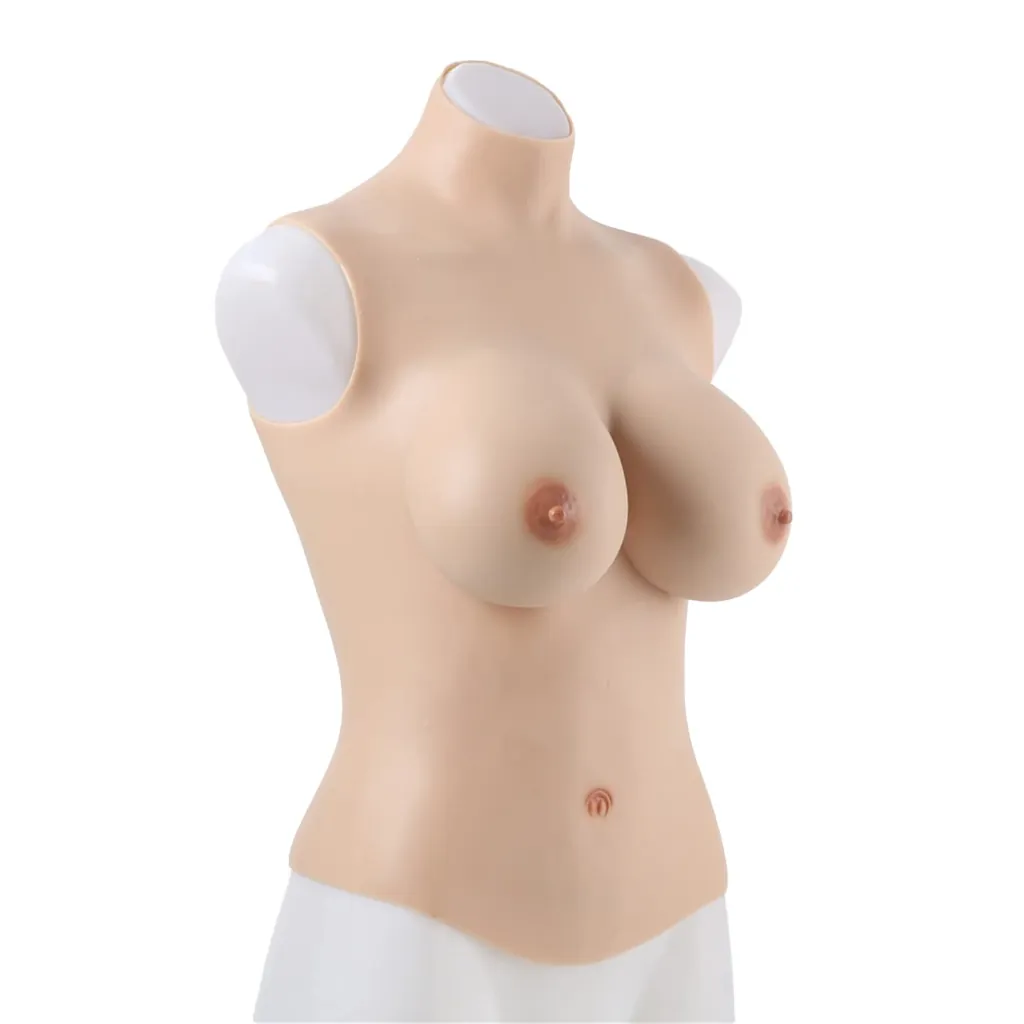
Collar
A high neck hides the top edge. Low collars show more skin, so the edge needs makeup to blend in.
- Options: High neck, round neck, low collar
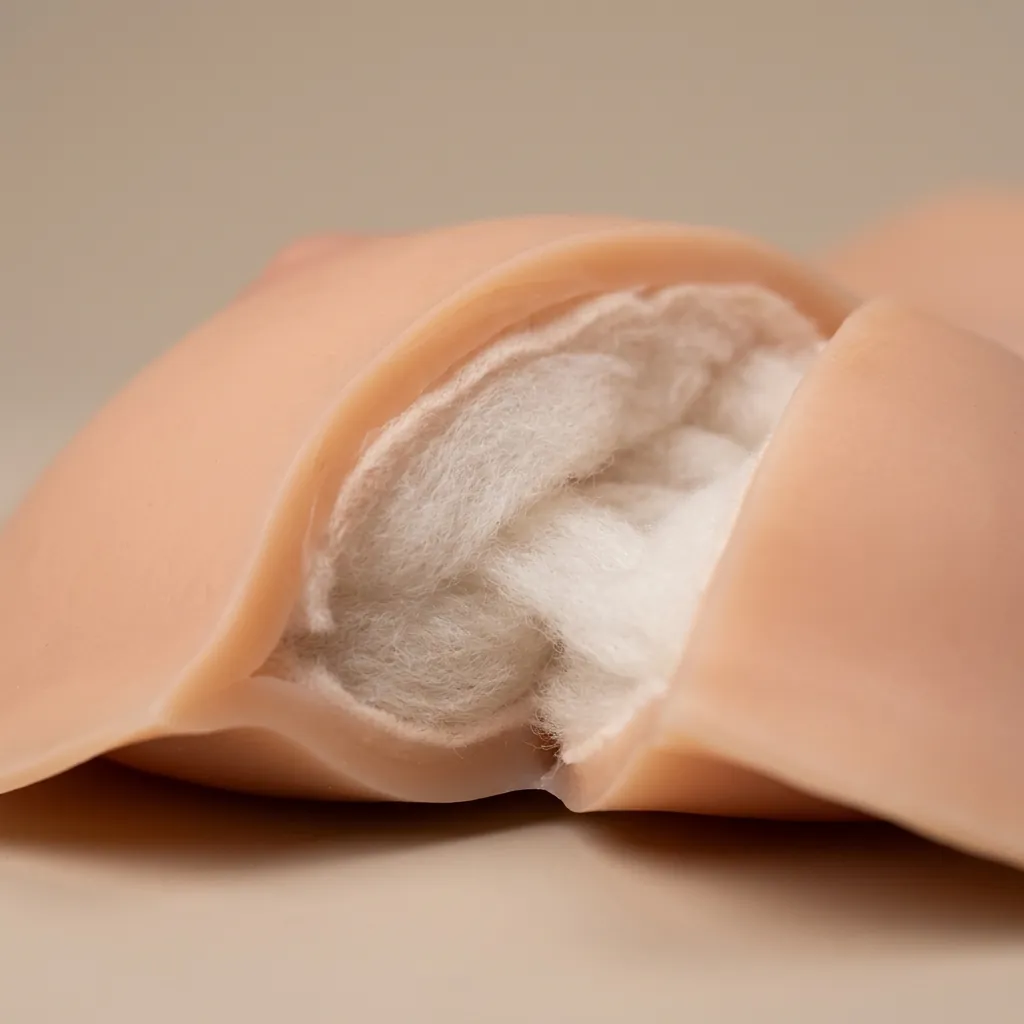
Filling
Cotton-filled is much lighter. Silicone moves more naturally but gets very heavy from E cup up.
- Options: Cotton (fibre) or silicone gel
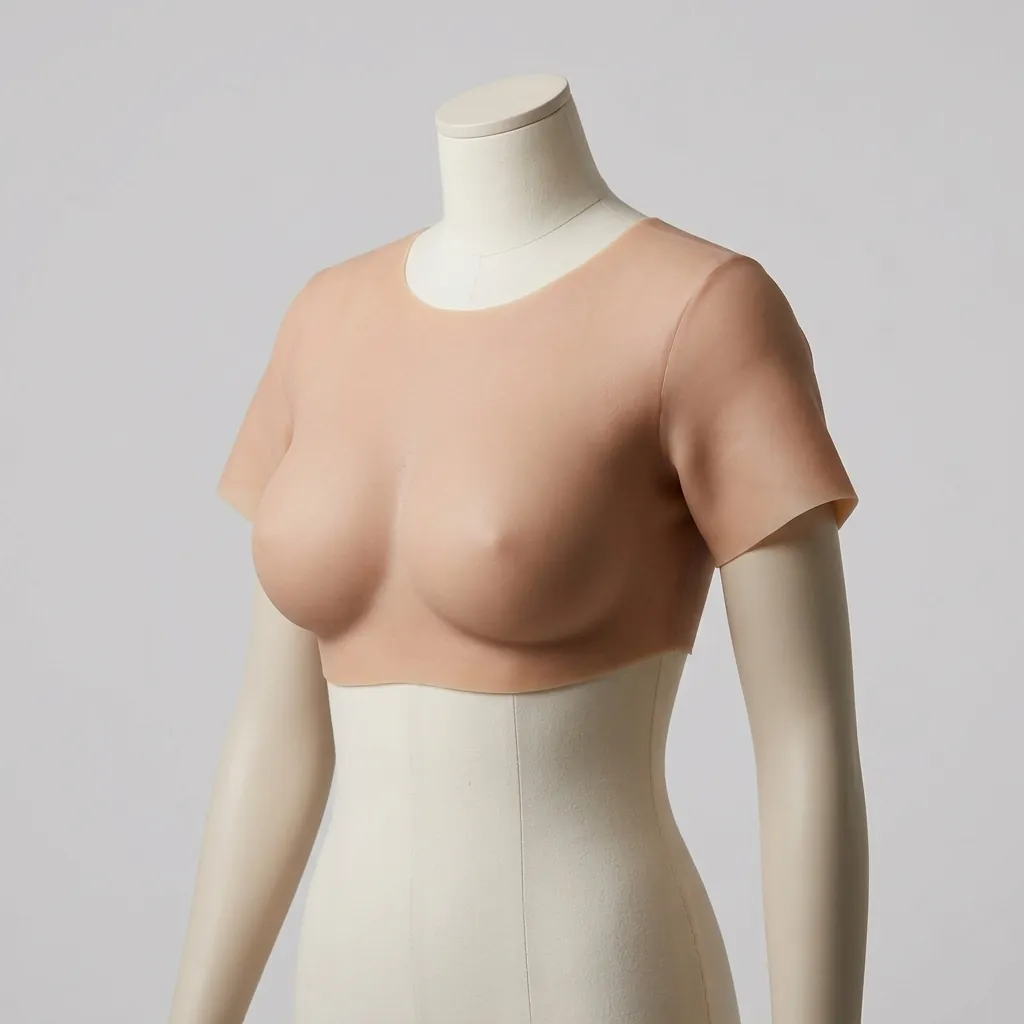
Coverage
More coverage hides more edges, but it is hotter to wear.
- Options: Plate only, with sleeves, full bodysuit
Forms or a breastplate? Forms are cheaper, lighter, cooler and fine under everyday clothes. A breastplate wins for cleavage, low necklines and a smooth chest line, but it is hot and heavy for long days.
👙 The Right Bra for Breast Forms
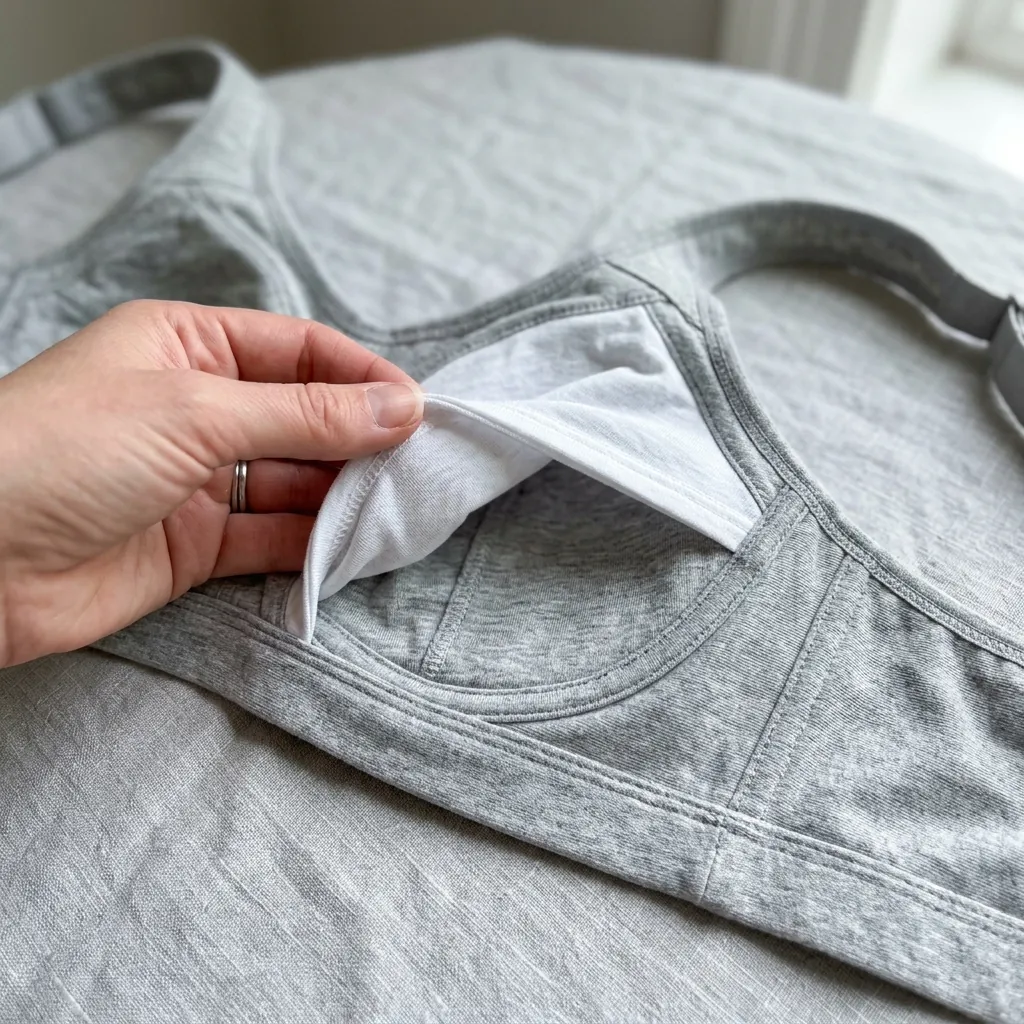
✅ Pocket (mastectomy) bras
An inner pocket holds each form in place. The most secure option.
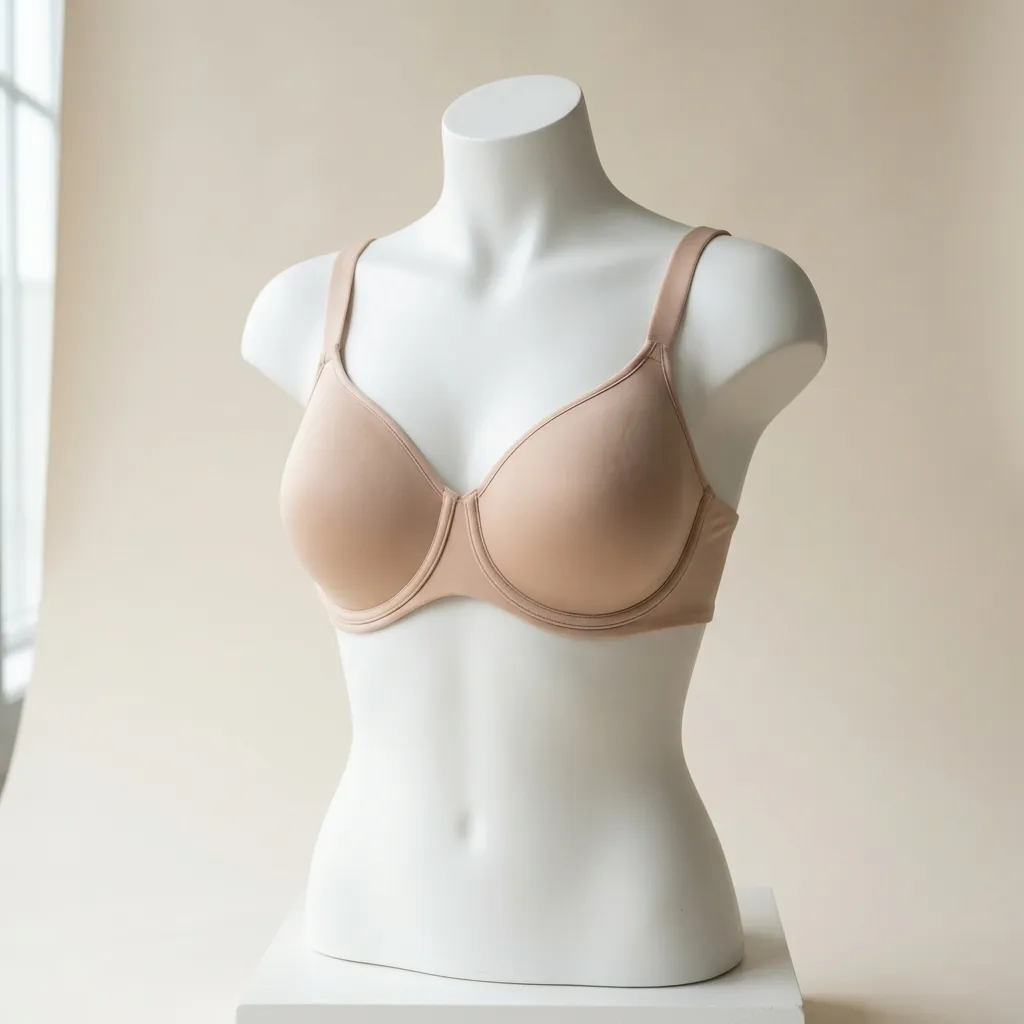
✅ Full-coverage / T-shirt
Holds the whole form and gives a smooth line under clothes.
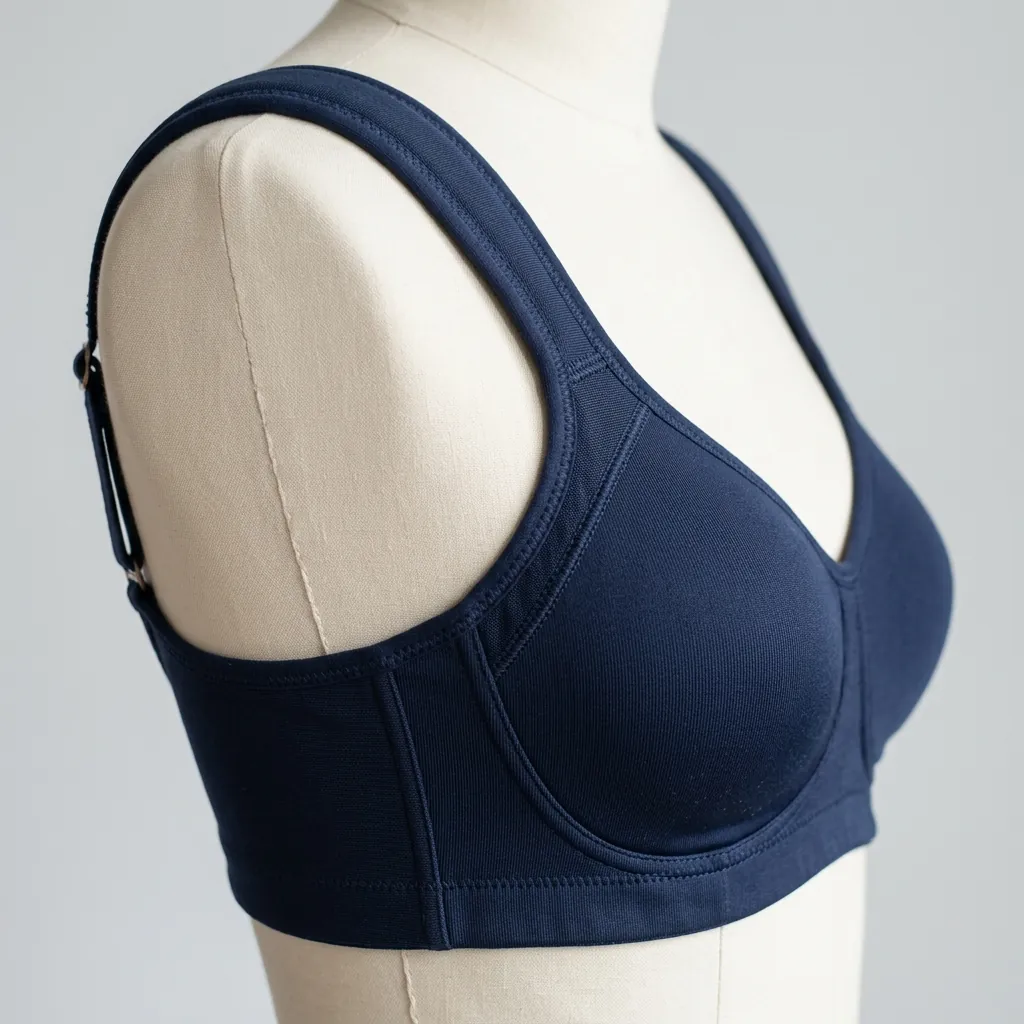
✅ Firm band, wide straps
The band carries most of the weight, so it should be snug on the loosest hook.
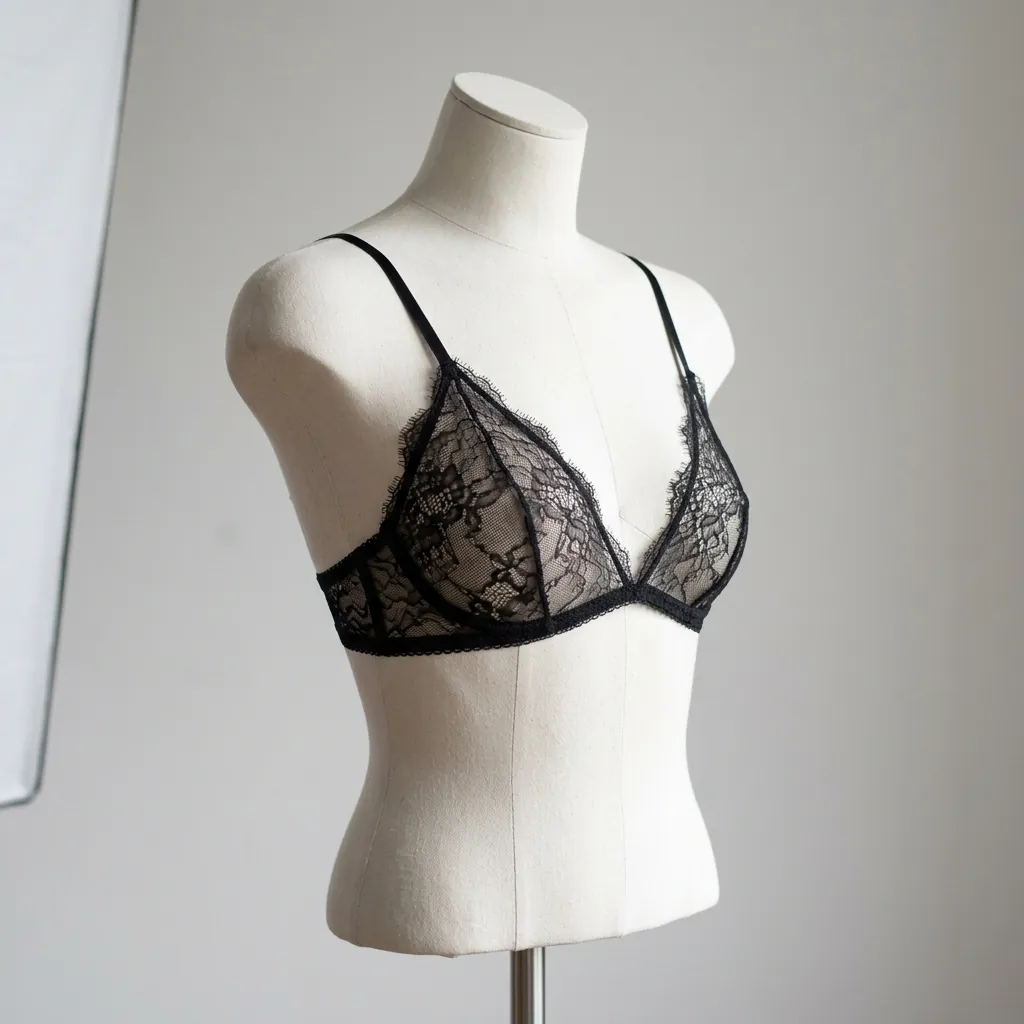
❌ Plunge & thin bralettes
Forms can slip out of place or show at the edges.
Not sure of your band? See our bra size guide.
🪞 How to Wear Breast Forms
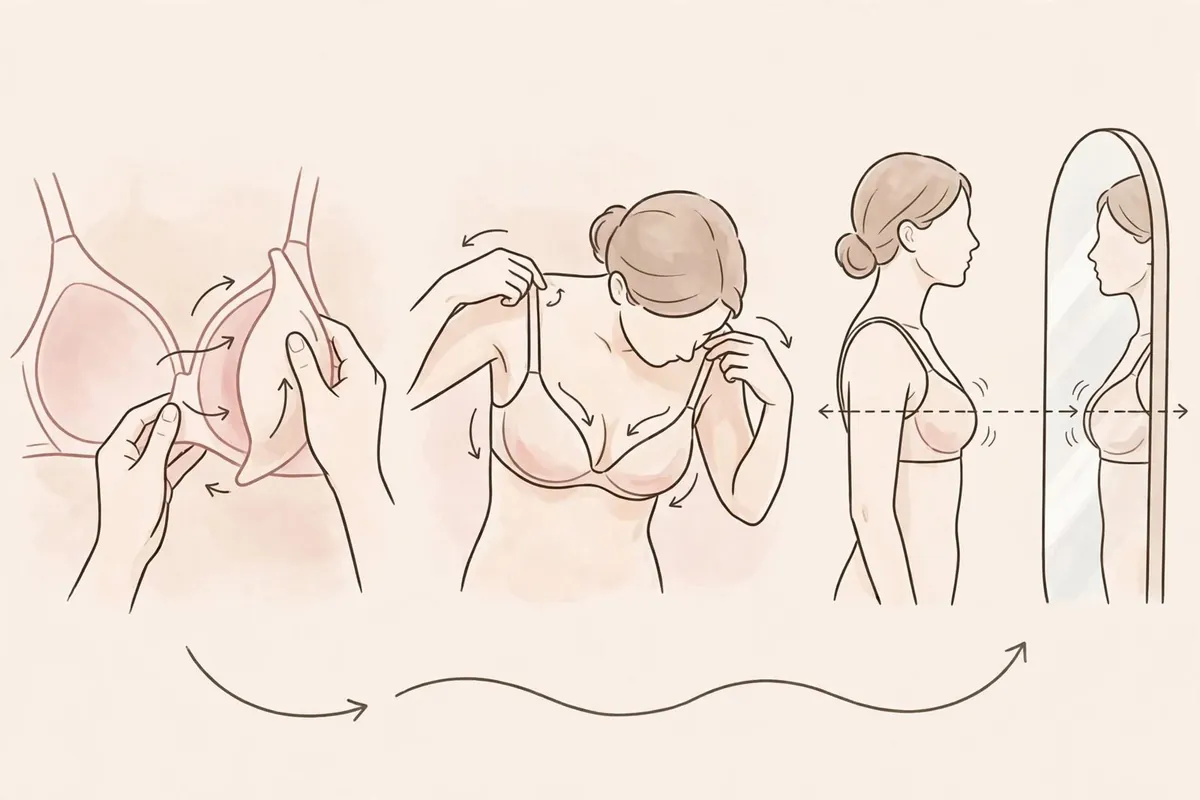
- Put the bra on first, then slide each form into the cup or pocket, with the thicker edge toward your armpit.
- Lean forward and settle the forms into the cups, then adjust the straps.
- Check from the side in a mirror: the forms should sit level, with no gap at the top of the cup.
- For adhesive forms, clean and dry your skin (no lotion), shave the area, and press firmly for 30 seconds.
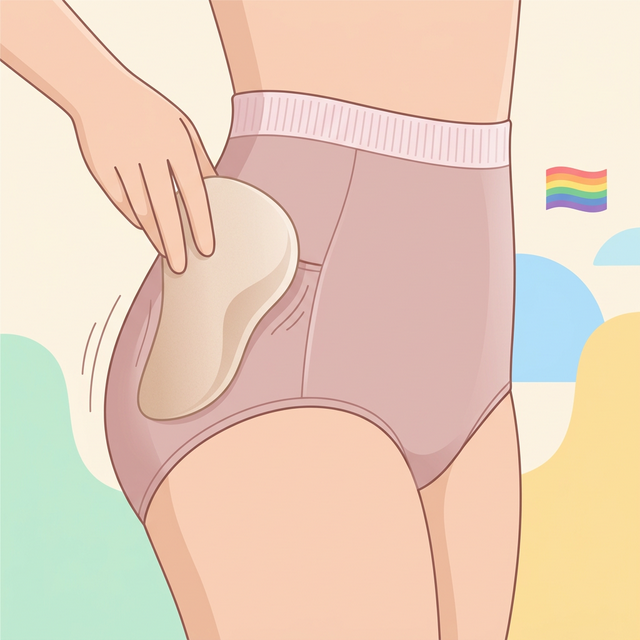
For a balanced shape, pair your forms with hip padding and shapewear.
Adhesive forms: step by step
- Shave the area a day before, so the skin is not irritated.
- Wash with plain soap, rinse well and dry completely. Any lotion, oil or sweat stops the adhesive holding.
- Patch-test new glue or tape on a small area 24 hours before the first full wear.
- Position the form while looking in a mirror, then press from the centre outwards for about 30 seconds.
- To remove, peel slowly from the edge while pressing the skin down, using the maker's remover if you used glue.
🔍 Fitting Problems & Fixes
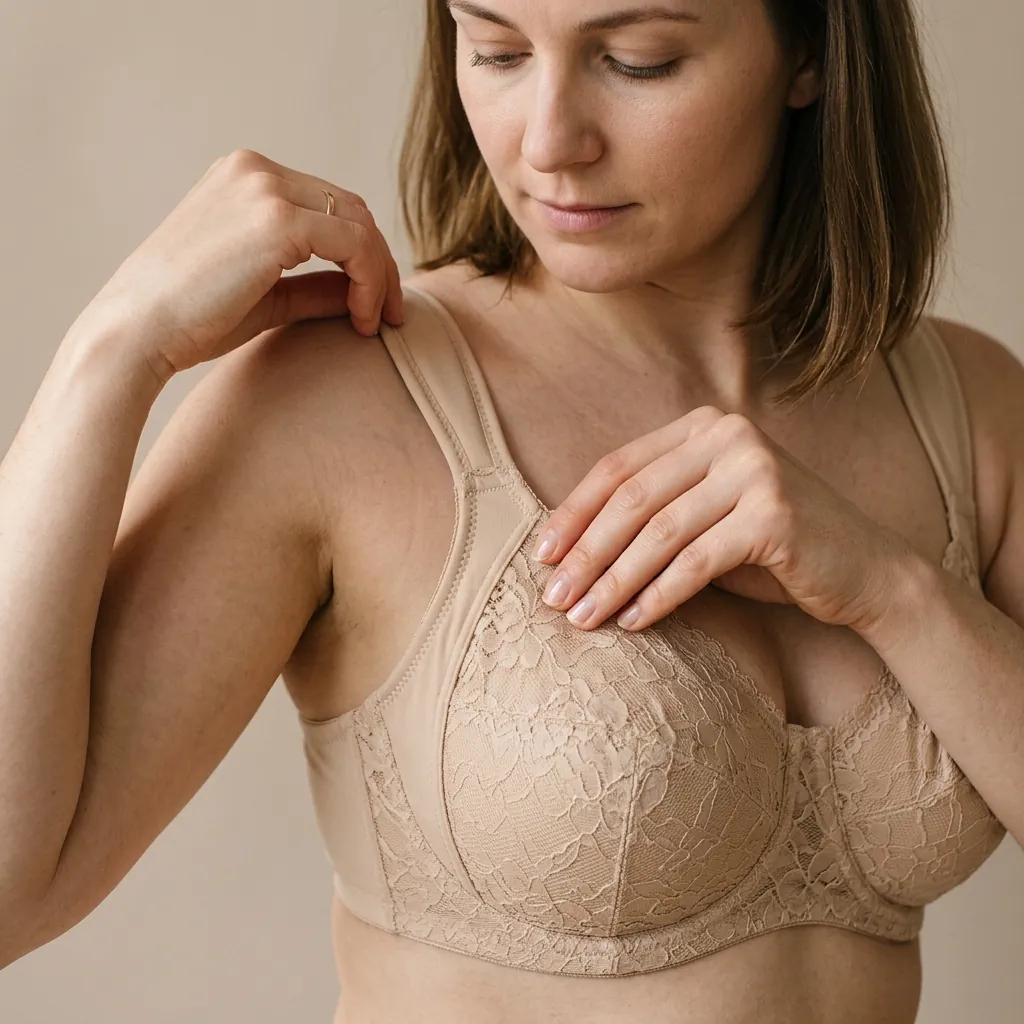
| Problem | Likely cause | Fix |
|---|---|---|
| Gap at the top of the cup | Form too small, or wrong shape for your chest | Tighten straps; try a triangle or fuller shape, or one cup up |
| Form spills over the top or sides | Form too big for the bra cup | Go up a bra cup, or down a form size |
| Forms ride up during the day | Band too tight or too loose | Check your band size; use a pocket bra |
| Straps keep slipping | Band too big or cups too big | Go down a band, or use a racerback or clip |
| Visible edge or ridge under the top | Thick edges or form too wide | Choose forms with thin, tapered edges; narrower base |
| Form shows at the armpit | Base too wide or wrong way round | Narrower shape; teardrop tail toward the armpit, not the centre |
| Neckline pulls to one side | Forms at different heights | Re-seat both forms level while leaning forward; adjust straps evenly |
| Shoulder or back ache | Forms too heavy | Lightweight silicone or foam; wider straps |
🎨 Skin Tone & Nipples
- 🎨 Skin tone only matters where it shows. Inside a bra, colour does not matter. For adhesive forms, breastplates or low tops, match the shade on your upper chest, not your face.
- 🖌️ Blend the edges of breastplates and adhesive forms with a little foundation and powder in your chest shade.
- 🔘 Nipples: many forms have them moulded in. Stick-on silicone nipples can be added to plain forms; match their tone to the form. Wash them with warm water and plain soap to restore the stickiness.
☀️ Wearing forms in hot weather
Silicone traps heat. In a hot, humid climate, choose lightweight or foam forms, wear a cotton bra, and take a break every few hours to let your skin breathe. A little talc-free powder under the form helps with sweat.
🌱 Forms and HRT
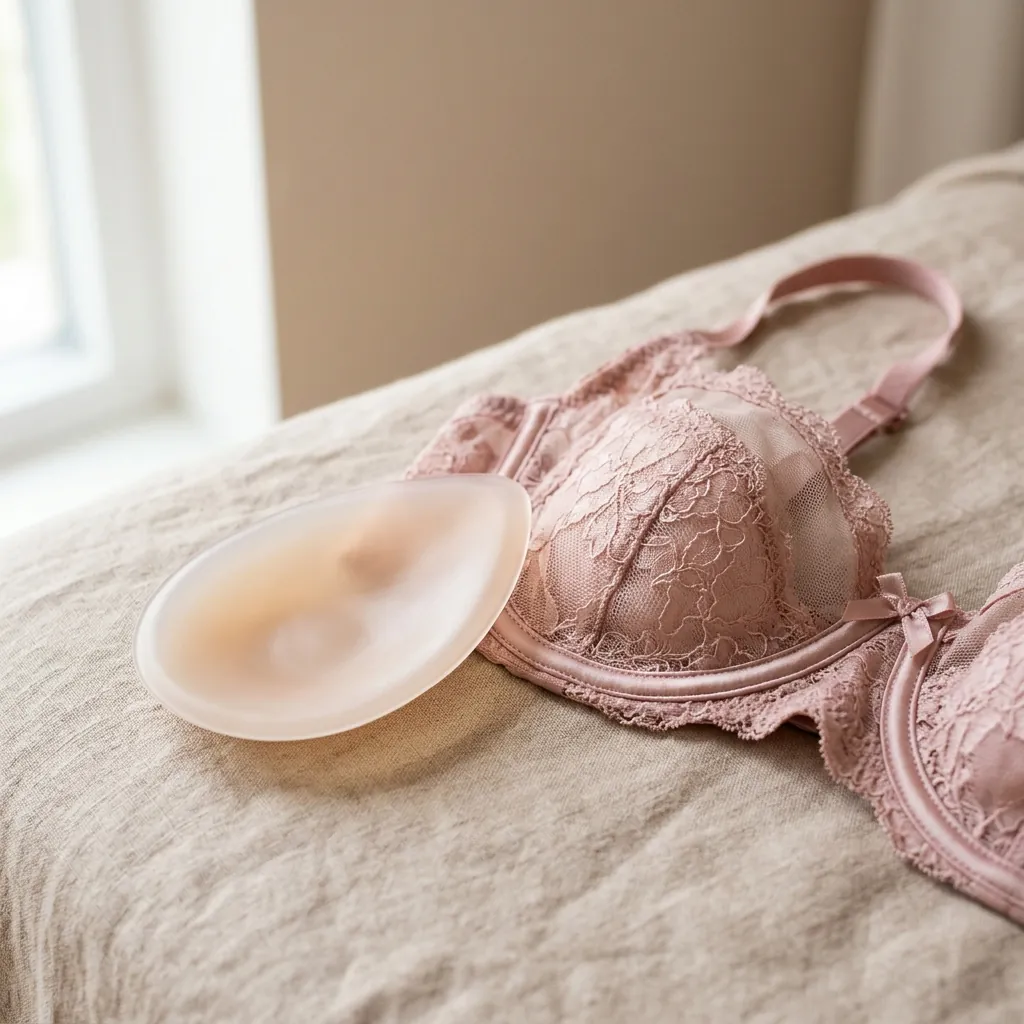
If you are growing breasts on hormones, full forms will start to feel crowded. Move to triangle forms with a hollow back, then to partial shells or enhancers that sit on top of your own tissue. Many people stop needing forms, or keep a light pair for fitted outfits only.
🧼 Care & Cleaning
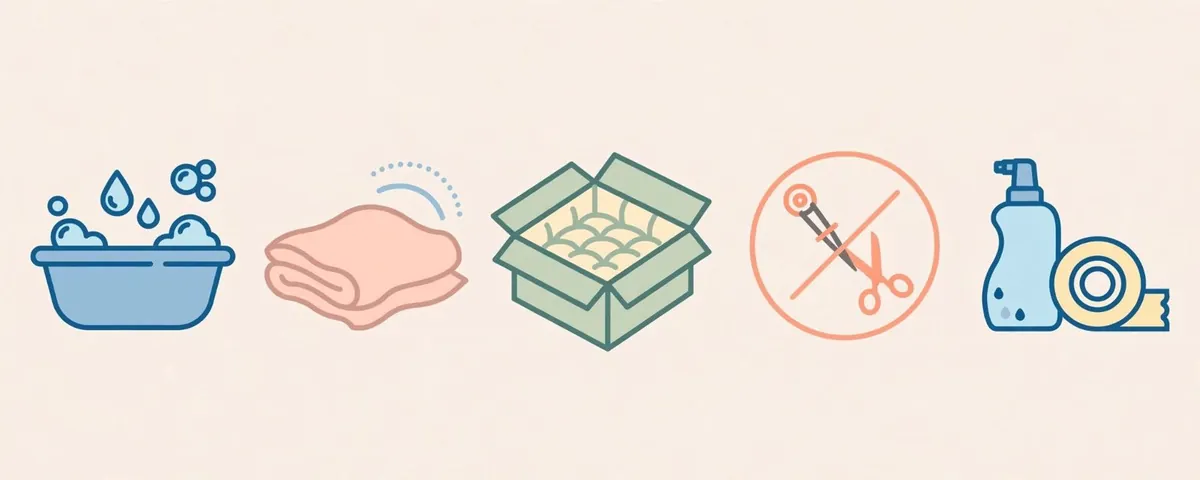
- 💧 Wash after each wear with warm water and mild soap. Pat dry with a soft towel; do not rub.
- 📦 Store them in their shaped box or a padded bag, cup side down, away from heat and sunlight.
- 📌 Keep sharp things away: pins, brooches, long nails and pets' claws can puncture silicone, and punctures cannot be repaired.
- 🧴 Keep oils off: lotions, perfume and body oils break down the silicone and the outer film over time.
- 🩹 Adhesive forms: clean the sticky surface with the maker's own cleaner (alcohol can ruin some adhesives), and replace the tape when it stops holding.
- ⏳ Lifespan: most forms last one to two years with daily wear, longer with occasional use. Foam forms wear out faster but cost much less to replace.
💰 Buying on a Budget
- 💸 Start with foam or a basic silicone pair before spending on adhesive or premium forms. Your preferred size often changes after the first few months.
- 🔎 Check the weight and size table on every listing. Cheap listings often skip them.
- 📦 Shop privately: our guide to buying clothing discreetly covers plain packaging and deliveries.
❓ Frequently Asked Questions
What size breast forms should I get?
What does "B cup 600 g" mean on AliExpress or Temu?
Are silicone breast forms heavy?
Which breast form shape looks most natural?
Do I need a special bra?
Should I get breast forms or a breastplate?
Are adhesive breast forms safe for my skin?
Can I sleep in breast forms?
Can I swim in breast forms?
How long do breast forms last?
Ready to pick a size? Try the breast form size calculator, or see the full first MTF wardrobe checklist.
Disclaimer: This guide is for educational purposes. Sizes and weights vary by brand. © 2026 TransNote.me