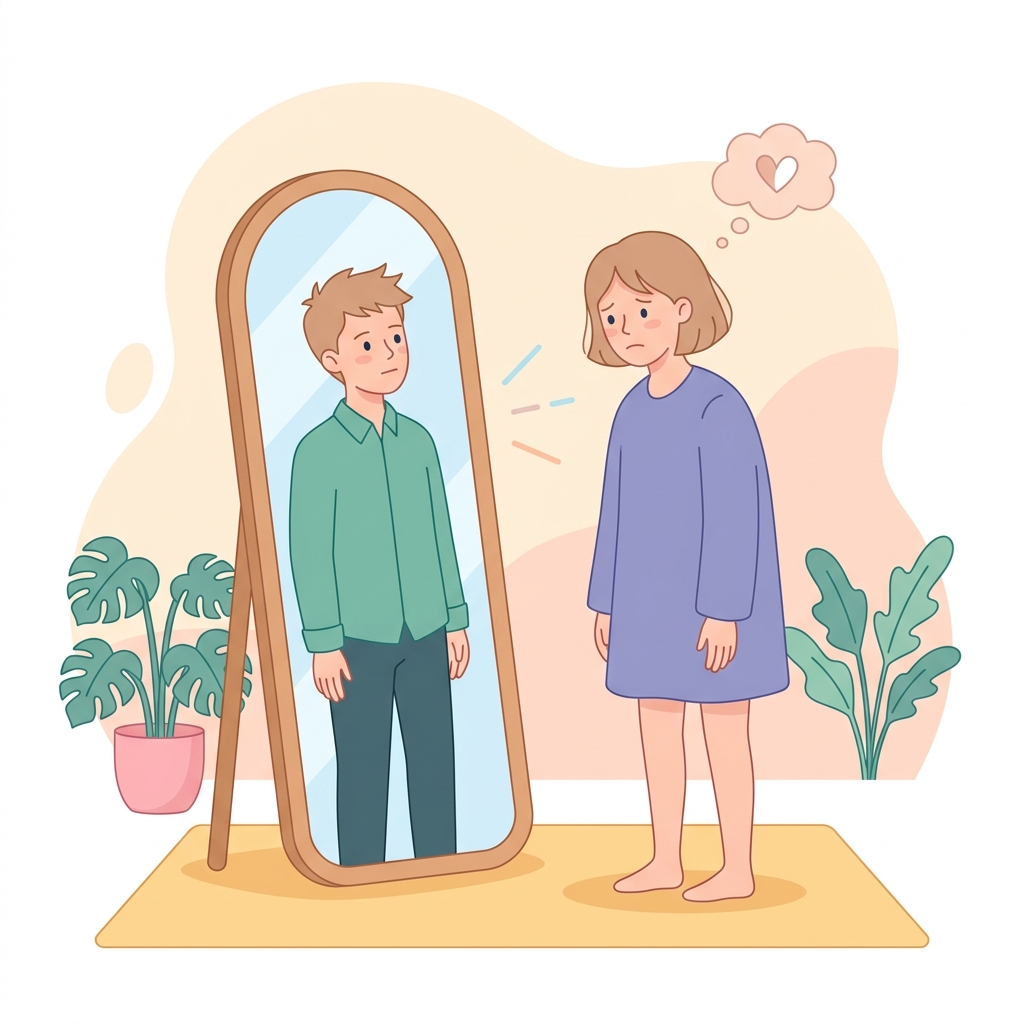
Gender dysphoria is a term used to describe the deep sense of "gender incongruence" that happens when the sex a person was assigned at birth doesn’t match their internal sense of who they are[1, 2]. For many people, it feels like being "out of alignment" with their own body or the way the world sees them[2]. It is important to understand that being transgender or gender-diverse is not a mental illness[3]. Instead, gender dysphoria refers specifically to the distress caused by that mismatch[1, 2].
How Does Gender Dysphoria Feel?
Because gender identity is internal, it can be hard to explain to those who haven’t felt it. Here are a few ways people often describe the experience:
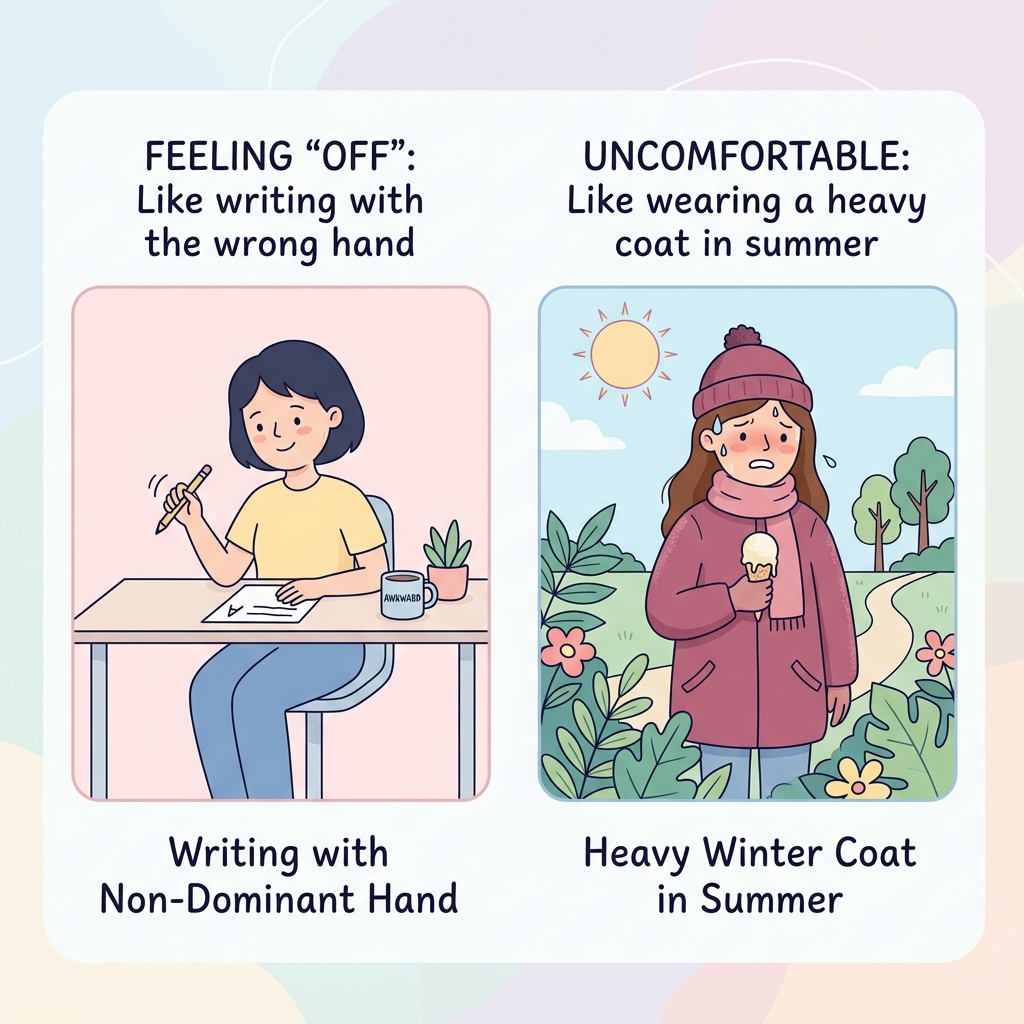
- The Dominant Hand: Imagine being forced to write with your left hand when you are naturally right-handed[4]. You can learn to do it, but it always feels "wrong" and exhausting[4].
- The Clothes That Don't Fit: Some describe it as wearing a heavy winter coat in the middle of summer—you can't take it off, and you feel constantly uncomfortable[5].
- White Noise: For others, it’s like a constant hum of white noise in the background. When things get quiet, the "hum" of feeling wrong becomes impossible to ignore.
Signs and Symptoms Across Different Ages
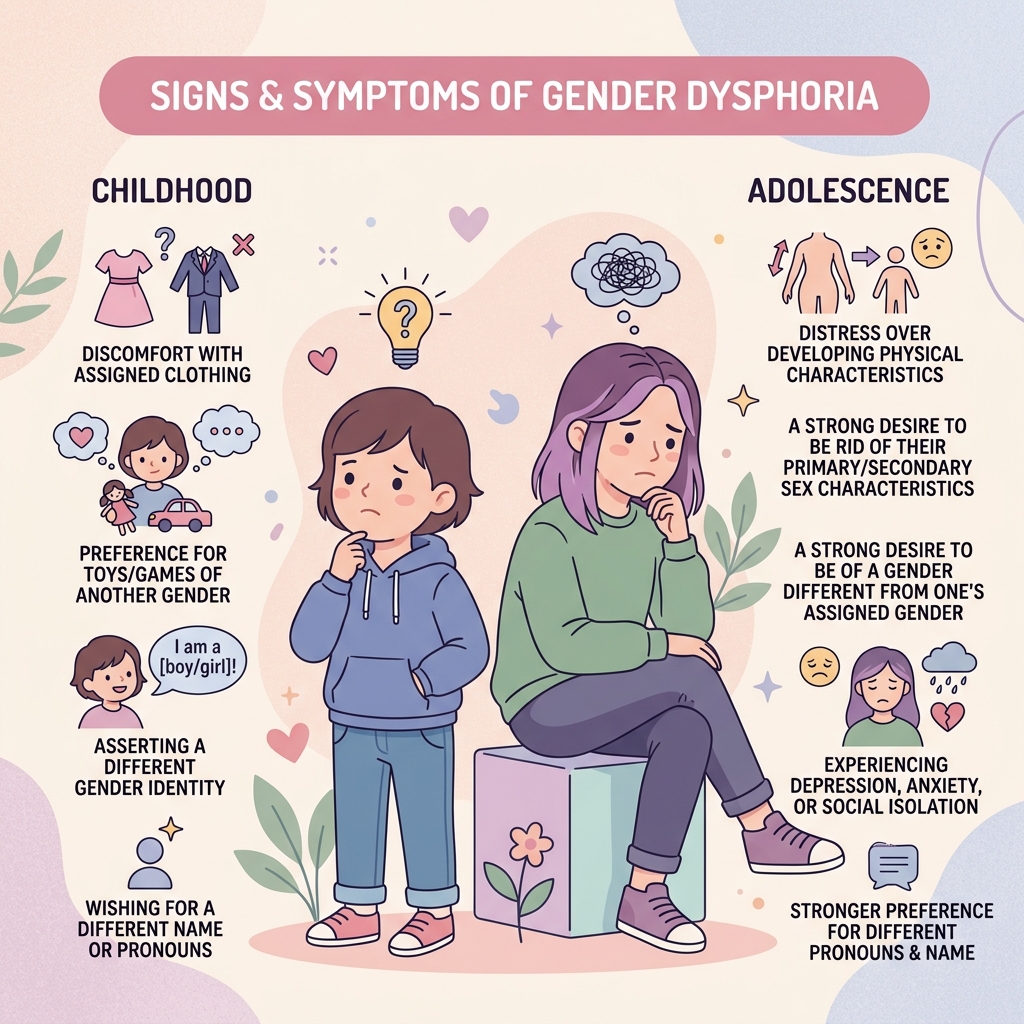
Gender dysphoria can show up at any stage of life, though it often becomes most intense during puberty when the body begins to change in ways that feel "wrong"[1, 3].
In Children:
Kids may not have the words, but they often show it through insistence[6, 7]:
- Consistently stating "I am a girl" (even if assigned male) or vice versa.
- Strong preference for clothes or toys associated with another gender[6, 5].
- Getting upset or angry when referred to by the wrong name or pronouns.
- A "dislike for their sexual anatomy" or a wish to wake up as the other sex.
In Adolescents and Adults:
- A strong desire to be rid of sex characteristics (like breasts or facial hair).
- A deep yearning to be treated as another gender in social settings[6, 5].
- Feeling like a "mask" is being worn in public[5].
- Withdrawing from social activities due to "gender minority stress".
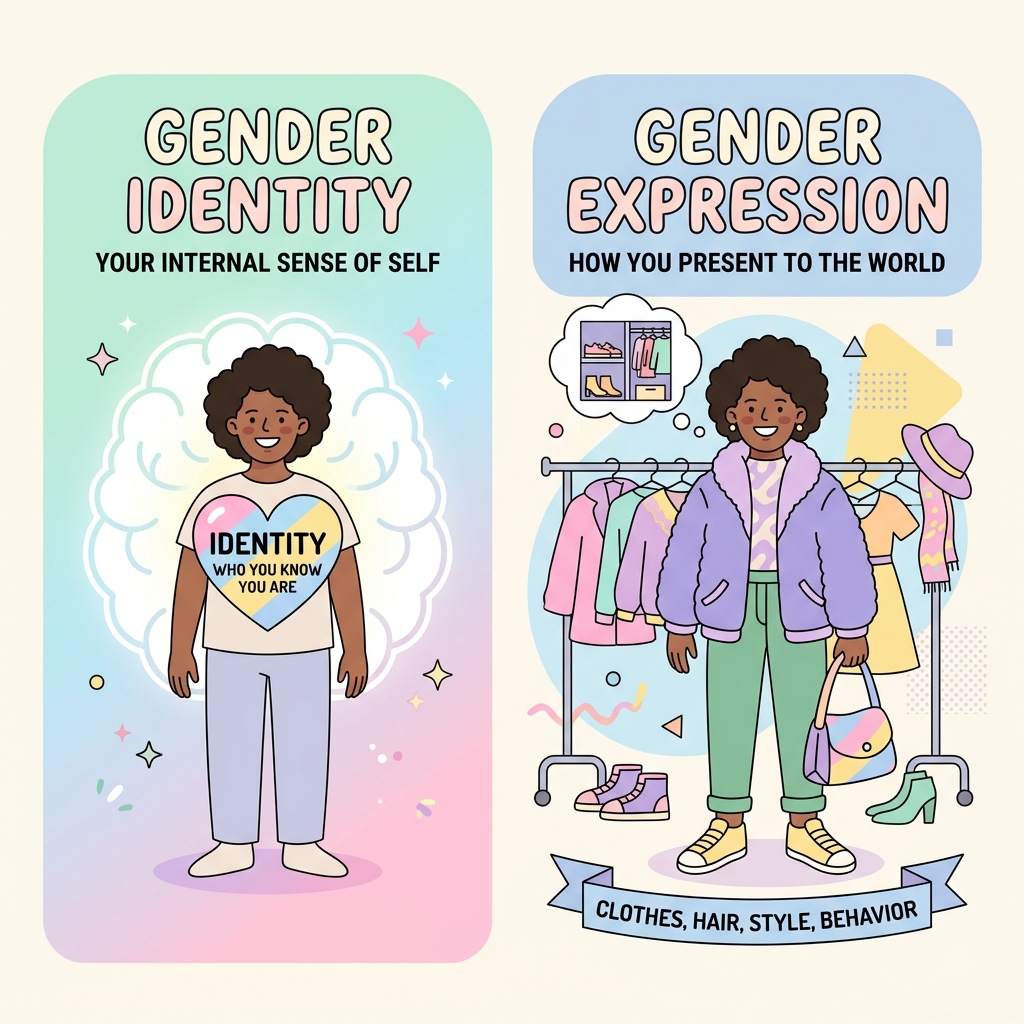
Gender Identity vs. Gender Expression
It is helpful to separate who you are from how you look[3, 8]:
- Gender Identity: Your internal sense of being a man, a woman, non-binary, or another gender[7, 3]. This is who you are at your core.
- Gender Expression: How you show your gender to the world through clothing, hair, and behavior[7, 8].
The Difference: A person can identify as a man but have a "feminine" expression[9, 10], or identify as non-binary but have a "masculine" expression. Dysphoria usually happens when the identity is ignored or suppressed[2].
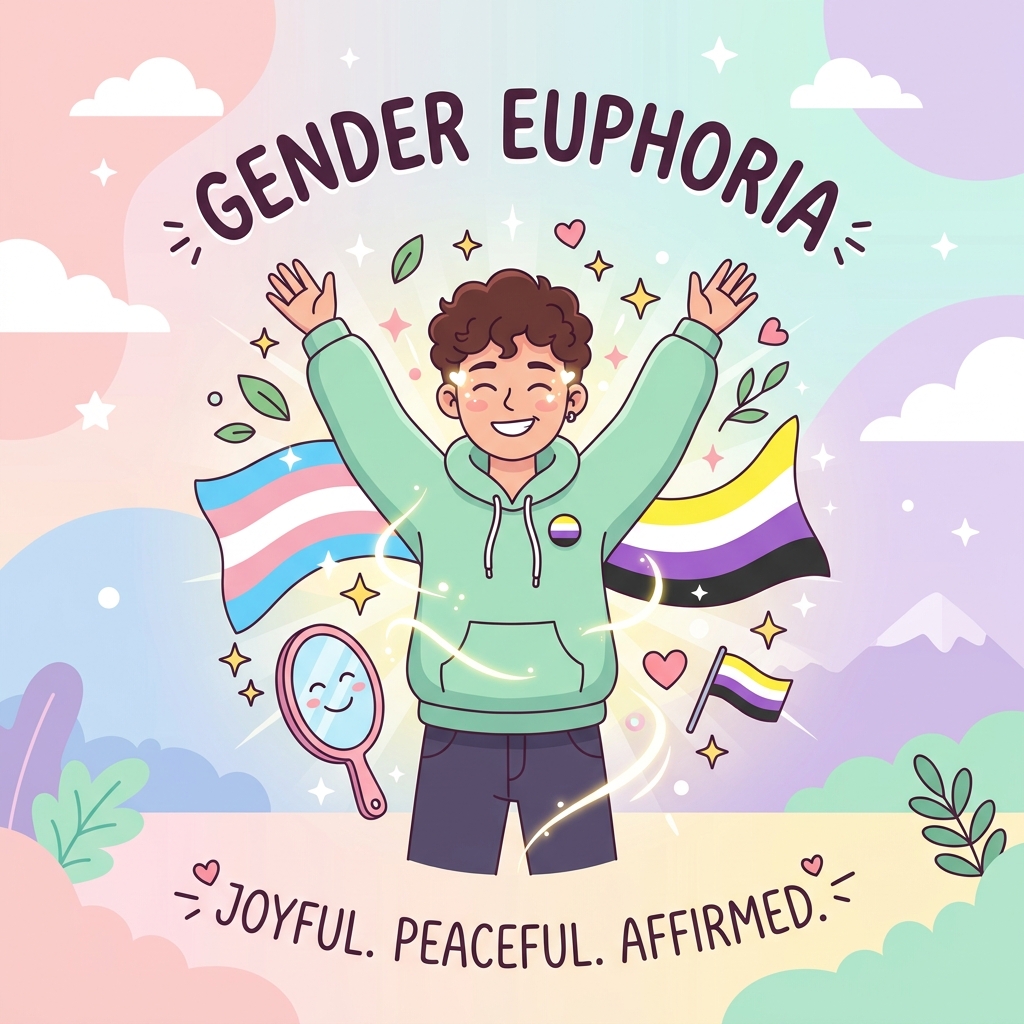
Euphoria: The Positive Side
While the conversation often focuses on distress (dysphoria), many people also experience gender euphoria.
This is the feeling of intense joy, peace, and "right-ness" that happens when your gender is finally affirmed. It can be as simple as someone using the right pronouns or feeling confident in a new haircut. It is the light that guides many through their journey toward self-actualization.
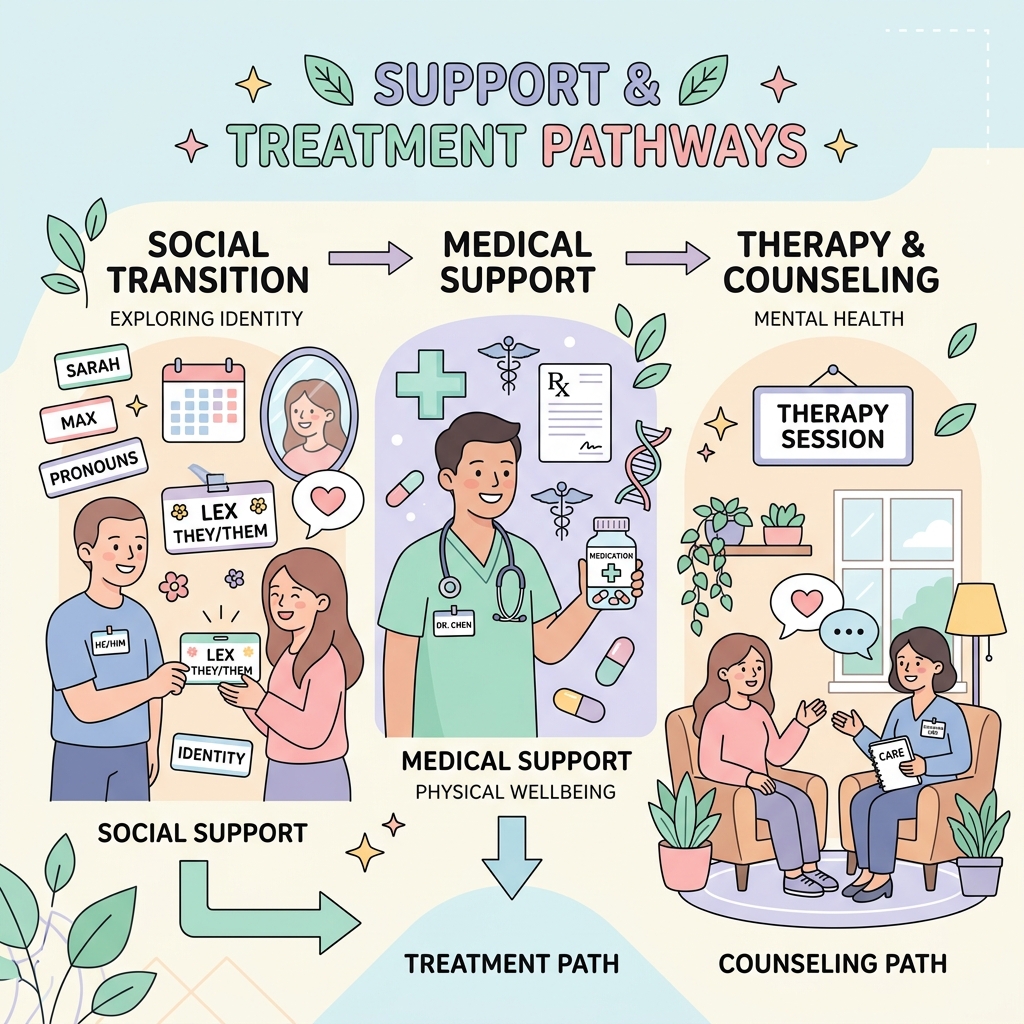
Support and Treatment Pathways
There is no "one-size-fits-all" way to manage gender dysphoria. The goal is simply to "ease the distress"[11]:
- Social Transition: Non-medical steps like changing your name, pronouns, or how you dress[12].
- Medical Affirmation: Hormone therapy or puberty blockers to align the body with identity[7, 13].
- Legal Transition: Changing gender markers on IDs, passports, or birth certificates.
- Therapy: Working with a counselor to explore gender feelings and build support.
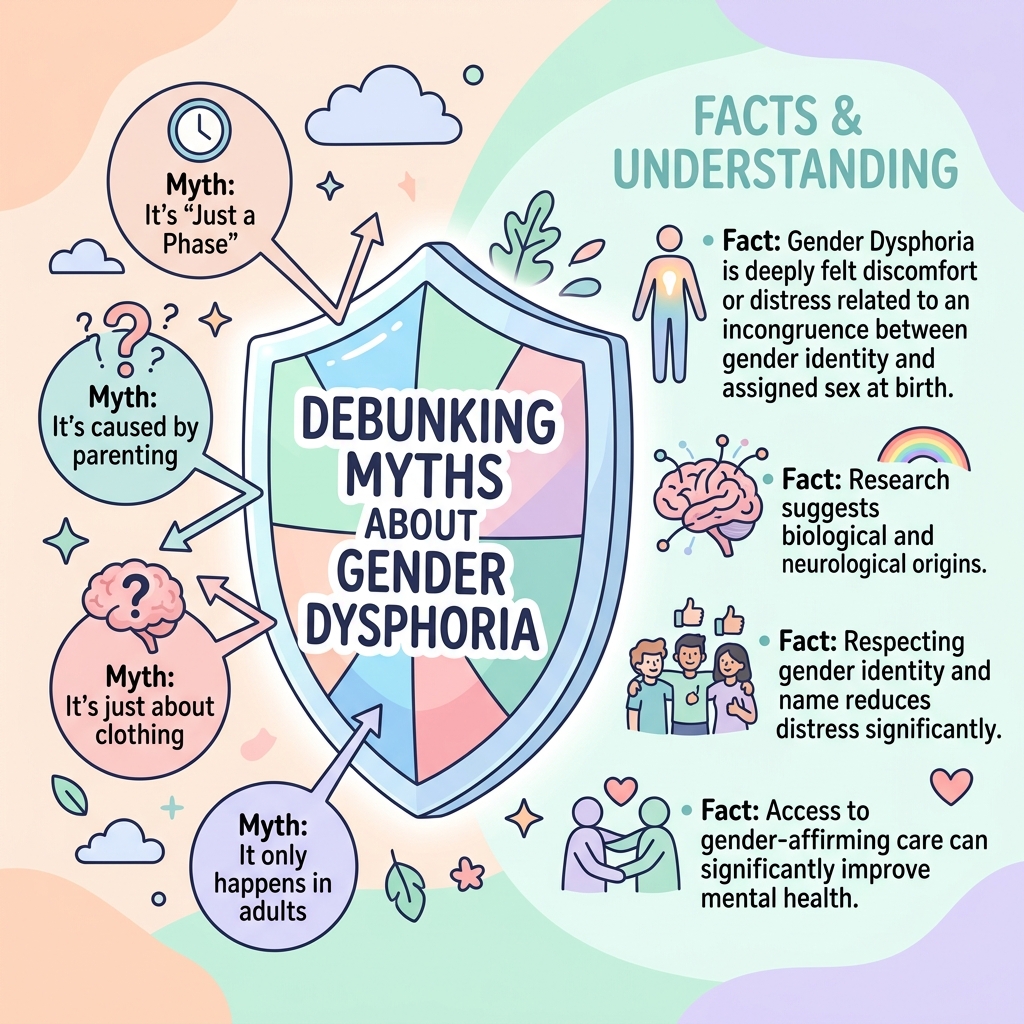
Common Myths vs. The Facts
Myth: It's just a "social contagion" or a trend[14].
Fact: Increased visibility makes it safer to come out. Trans people have always existed; they are just more comfortable being themselves now[14, 8].
Myth: Children are given surgeries[15, 16].
Fact: Medical interventions like surgery are almost exclusively for adults[15, 16]. For children, transition is entirely social.
Myth: Everyone "regrets" transitioning[14].
Fact: Research shows that regret rates are extremely low, and affirming care reduces depression and suicidal thoughts[14, 12].
Daily Coping Tips (Non-Medical)
- "The Buddy System": Find a friend who always uses the right name and pronouns.
- Shower Strategies: Use a loofah or fancy soap to focus on scent and texture rather than sight.
- Digital Escape: Find online communities where you can be your true self.
- Creative Outlets: Writing, painting, or singing to process feelings.
Conclusion
Gender dysphoria is a deeply personal experience, but it is one that can be managed with the right support. Whether through social changes, medical care, or simply finding a community that understands, the goal is always the same: to help every person live a life where they feel “at home” in their own skin.
"The goal of transition is not to become someone else, but to finally be who you have always been."
References
- American Psychiatric Association (2022). What is Gender Dysphoria?
- World Health Organization (WHO) (2019). International Classification of Diseases (ICD-11)
- WPATH (2022). Standards of Care for the Health of Transgender and Gender Diverse People, Version 8
- Mayo Clinic (2023). Gender Dysphoria: Symptoms & Causes
- NHS UK (2020). Gender Dysphoria Overview
- American Academy of Pediatrics (AAP) (2018). Supporting & Caring for Transgender Children
- GLAAD (2024). Transgender Resources & FAQ
- Gender Spectrum (2023). Understanding Gender Identity vs Expression