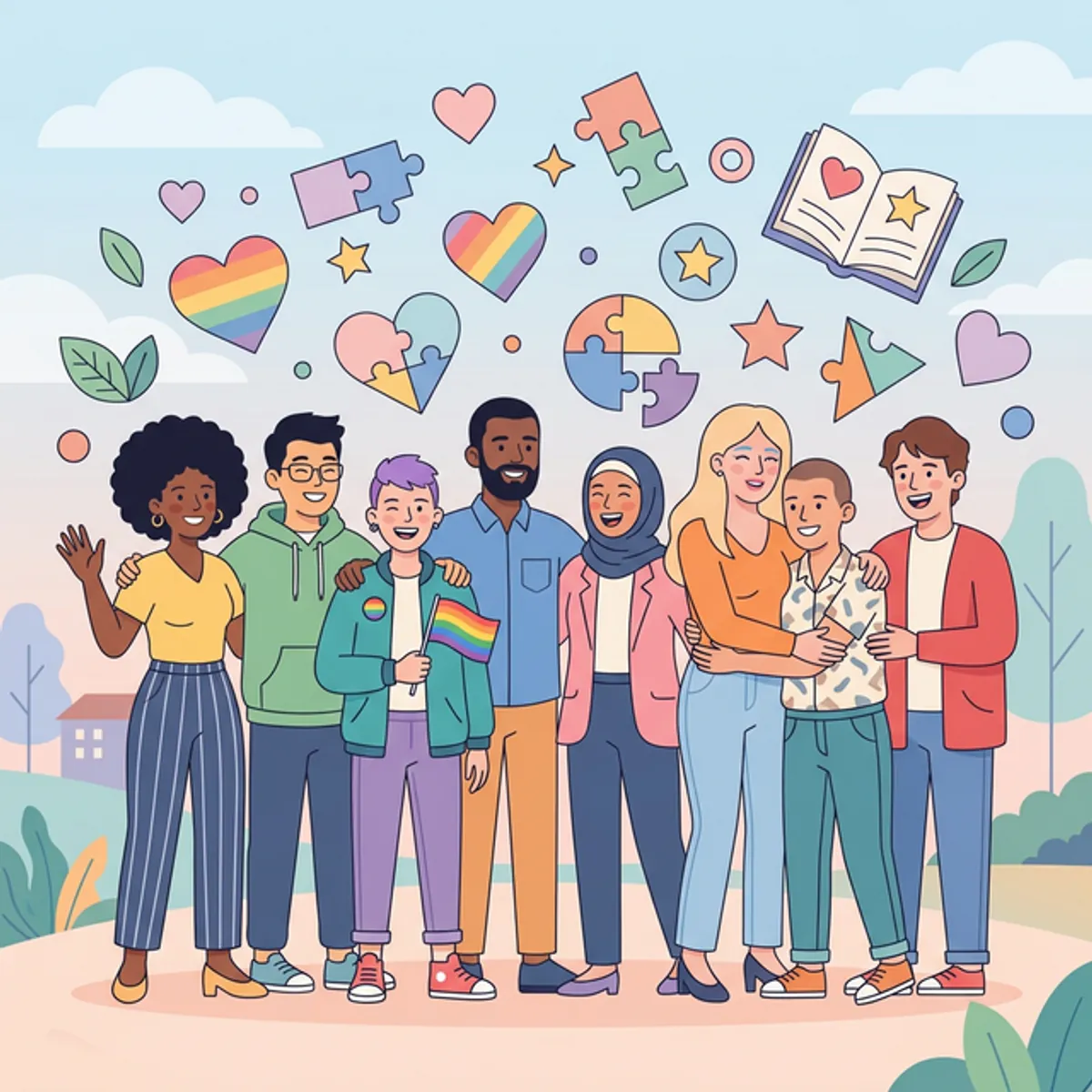
LGBTQ stands for Lesbian, Gay, Bisexual, Transgender, and Queer (or Questioning). It is an umbrella term representing people whose sexual orientation or gender identity differs from heterosexual and cisgender norms. The "+" in LGBTQ+ includes additional identities such as Asexual, Intersex, Pansexual, and Two-Spirit, signaling that everyone is welcome.
What Does Each Letter in LGBTQ Stand For?
LGBTQ is an acronym used to represent a beautifully diverse group of people. Rather than a single definition, it's a collection of unique identities. Here is what each letter generally stands for:

L — Lesbian
A lesbian is a woman who is emotionally, romantically, or physically attracted to other women.

G — Gay
A gay person is someone who is attracted to people of the same gender. While this term is most frequently used for men who are attracted to men, it can also be used as a broader umbrella term for anyone attracted to the same gender.
B — Bisexual
A bisexual person is someone who experiences emotional, romantic, or physical attraction to more than one gender. It means their attraction is not limited to just men or just women.
T — Transgender
A transgender person is someone whose gender identity (how they feel deeply inside) is different from the sex they were assigned at birth. For example, someone might have been born physically male, but deeply knows themselves to be a woman.
Q — Queer or Questioning
The "Q" often stands for two different but equally important concepts:
- Queer: An umbrella term used by many people who aren't exclusively straight or cisgender (identifying with the gender assigned at birth). It represents a spectrum of identities outside the societal norm.
- Questioning: Refers to people who are currently exploring and figuring out their sexual orientation or gender identity. It’s perfectly okay not to have it all figured out!
The Plus Sign: What LGBTQ+ Includes
You will frequently see a "+" at the end of the acronym (LGBTQ+). This plus sign is incredibly important! It includes many other identities and orientations that aren't covered by the first five letters—such as Asexual, Intersex, Pansexual, and Two-Spirit.
It’s a powerful shorthand for saying: "Everyone is welcome here."
Sexual Orientation vs. Gender Identity: What Is the Difference?
To truly understand the LGBTQ+ community, it helps to know the difference between two foundational concepts:
- Sexual Orientation (Who you love) ❤️
This is about who you are drawn to and attracted to. Lesbian, Gay, and Bisexual identities fall under this category. - Gender Identity (Who you are) 👤
This is about your own internal, deeply-held sense of being a man, a woman, neither, or somewhere in between. Transgender and Non-binary identities fall under this category.
Why Understanding LGBTQ+ Matters
At its absolute core, the LGBTQ+ community is about people wanting the fundamental freedom to be their true, authentic selves—and to love who they love without fear, shame, or judgment.
Taking the time to understand these terms is a fantastic first step towards being a supportive friend, family member, or ally. It shows profound respect and empathy for people's lived experiences.
Remember: Everyone's journey is different. The most important thing you can do is to always lead with kindness, open-mindedness, and love.
Frequently Asked Questions
What does the + in LGBTQ+ mean?
The plus sign represents identities and orientations not covered by the first five letters. It includes Asexual (people with little or no sexual attraction), Intersex (people born with physical sex characteristics that don’t fit typical male or female categories), Pansexual (people attracted to multiple genders), Aromantic (people with little or no romantic attraction), Two-Spirit (a Native American/Indigenous gender identity), and many others. The ”+” is an inclusive symbol meaning “everyone is welcome.”
Is LGBTQ the same as LGBT?
Mostly, yes. LGBTQ includes the Q for Queer/Questioning, which many people use as an umbrella term or to indicate they’re exploring their identity. LGBT is the older abbreviation without the Q. Both refer to the same community, though LGBTQ+ has become more standard as understanding of diverse identities has expanded.
What is the difference between sexual orientation and gender identity?
Sexual orientation describes who you’re attracted to (romantic or sexual attraction). Gender identity describes your internal sense of your own gender. For example, a lesbian is a woman (gender identity) attracted to women (sexual orientation). A transgender man is someone whose gender identity is male (even if assigned female at birth), and his sexual orientation could be gay, straight, bisexual, or anything else.
How can I be a good ally to the LGBTQ+ community?
Being an ally means: listening to LGBTQ+ people’s experiences without judgment, using correct names and pronouns, standing up against discrimination, educating yourself about LGBTQ+ issues (like this guide!), supporting LGBTQ+-friendly policies and organizations, and most importantly—treating all people with kindness and respect. Remember that every person’s journey is unique.