You can own a closet full of "men's" clothes and still feel like nothing reads the way you want it to. That's usually not a you problem — it's a fit problem. Masculine style isn't about buying from a particular department; it's about shape. Once you understand the handful of principles that make clothing read as masculine, you can build a look that feels like you, on almost any budget, with or without binding, and whatever your body looks like today. This guide breaks down exactly how — from the one silhouette rule everything else hangs off, to men's sizing, to what actually helps if you have wider hips.
The short version: Masculine clothing works by building an inverted triangle — visual weight at the shoulders, a straight line through the waist, and as little emphasis as possible at the hips. Almost every tip in this guide is just a different way of doing one of those three things.
The Core Principle: Silhouette Beats Everything
Before you think about a single garment, understand this: people read gender from outline long before they read detail. From across a room, nobody registers your buttons — they register your shape.
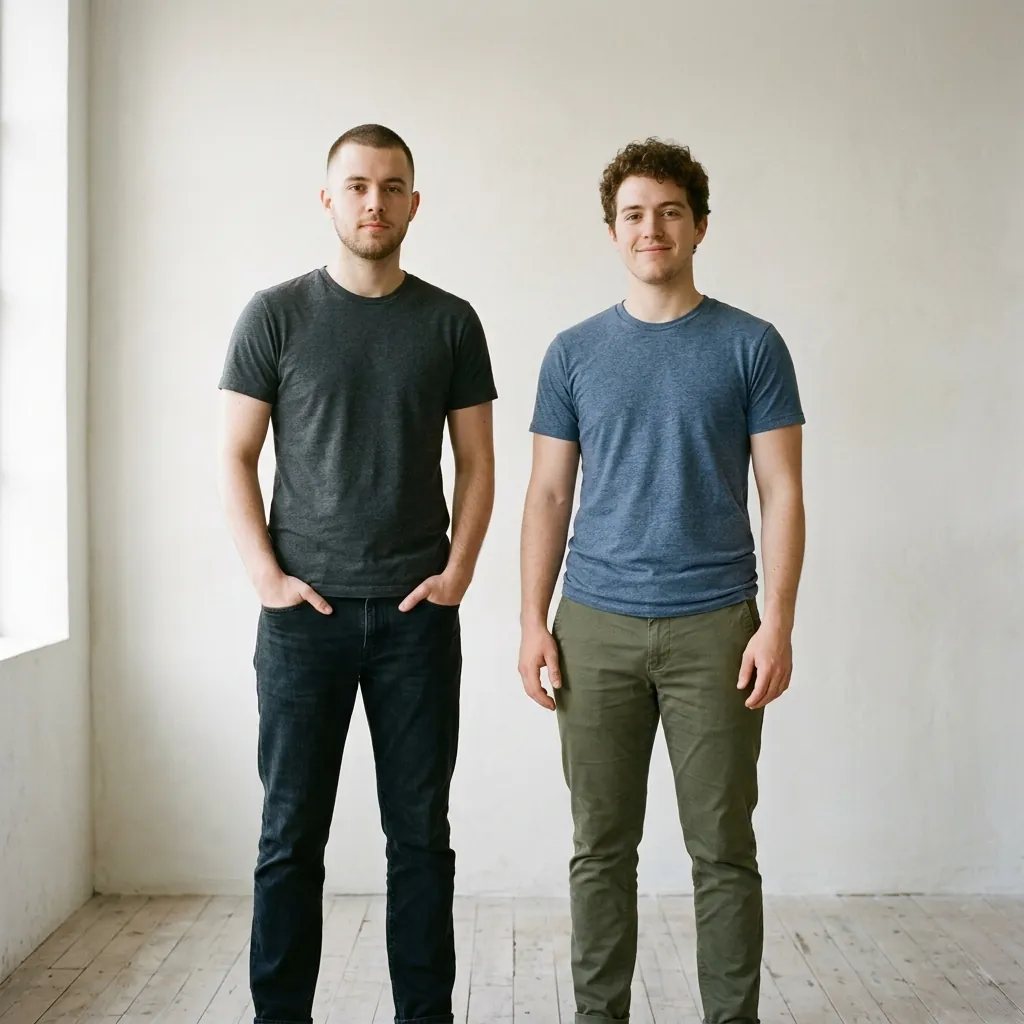
A typically masculine frame reads as an inverted triangle: widest at the shoulders, narrowing down toward the hips. A typically feminine frame reads closer to an hourglass or triangle: a defined waist, with hips equal to or wider than the shoulders.
Your goal is simple to state and surprisingly easy to act on:
- Make your shoulders the widest point. Shoulders equal to or wider than your hips is the single highest-impact change you can make.
- Straighten the waist. A visible nipped-in waist is one of the strongest feminine signals in clothing. Aim for a straight drop from ribs to hip.
- Quiet the hips. Anything that adds width, shine, cling, or detail at the hip works against you.
Notice what's not on this list: your height, your weight, or your natural build. None of those stop the silhouette rules from working — they only change which tools you reach for.
Fit Is Everything: The Menswear Rules
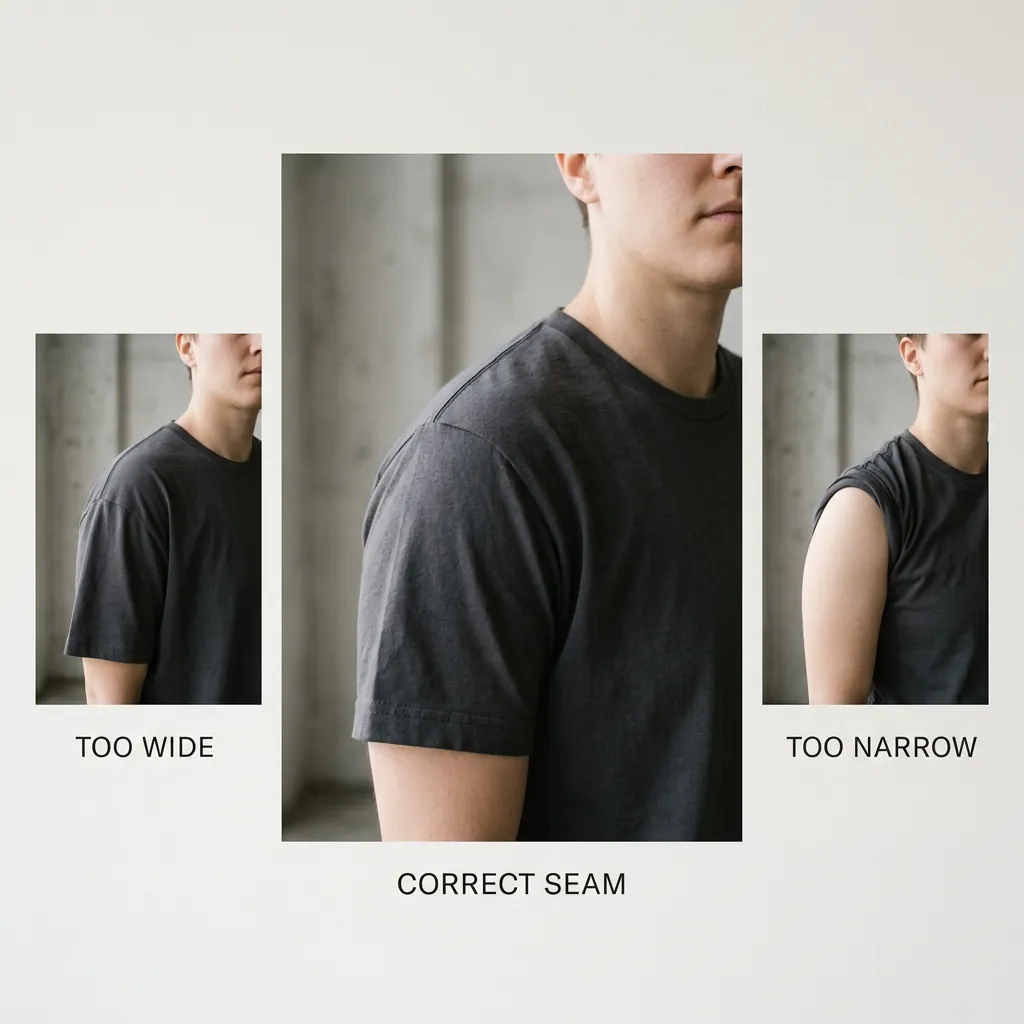
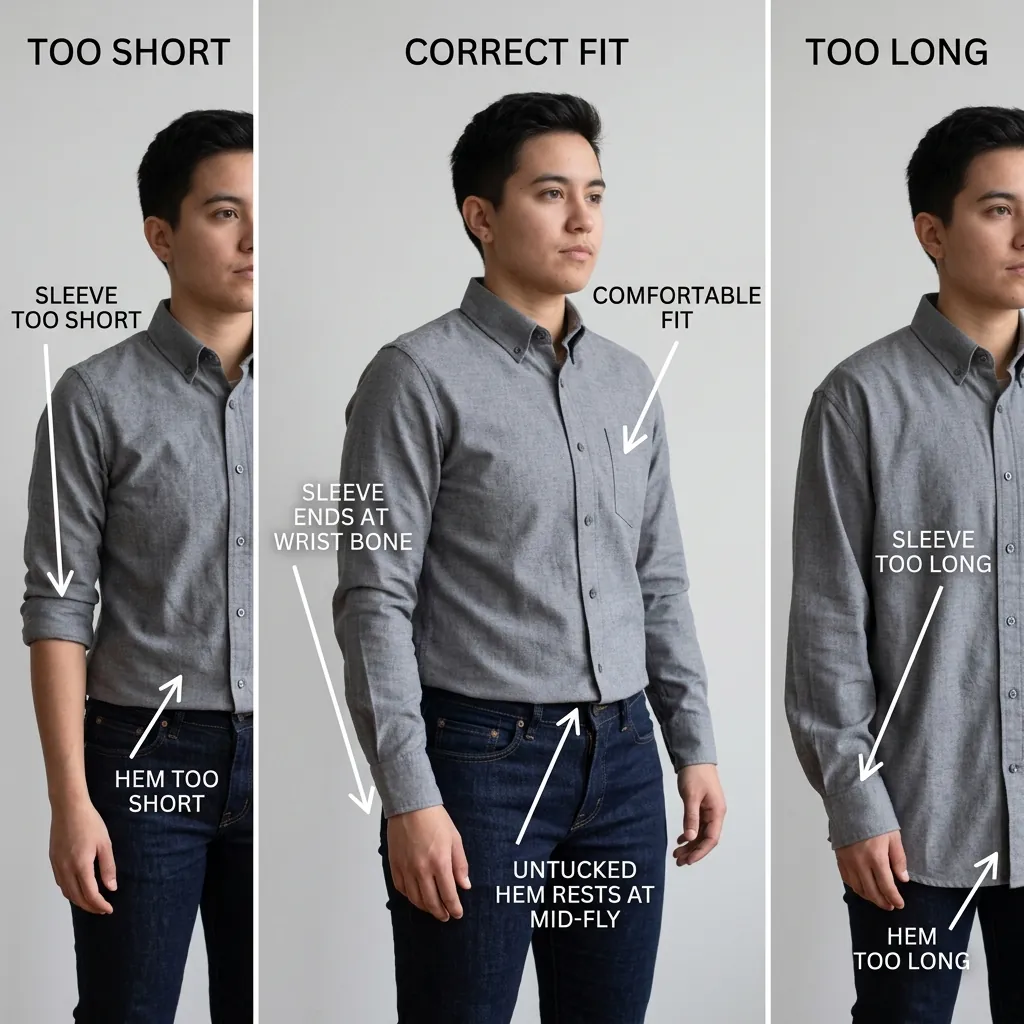
Menswear has a small set of fit rules that tailors have used for a century. Learning them means you can walk into any shop — or any thrift store — and judge a garment in about ten seconds.
- The shoulder seam rule: The seam where the sleeve joins the body should land right where your shoulder bone ends and your arm begins. Past that and the shirt looks borrowed; short of it and it pulls across your back. This is the one measurement to get right.
- The flat-hand chest test: With a jacket buttoned, you should be able to slide a flat hand between the jacket and your chest. If you can't, it's too tight. If a fist fits, it's too loose.
- No X-pulling: If the fabric pulls into an X shape from the button, it's too small. Sizing up and having the waist let out reads better than straining a smaller size.
- Sleeve length: Shirt sleeves should end at the wrist bone. Under a jacket, let about a quarter-inch of shirt cuff show.
- Shirt hem: An untucked casual shirt should end around mid-fly — roughly where your hand rests. Longer starts to look like a dress; shorter draws a line right across your hips.
Tip: Shoulders, collar, and chest are the parts a tailor can't meaningfully fix. Waist, sleeve length, and hems are cheap and easy to alter. So buy to fit your shoulders and chest, then have the rest taken in — that single habit is how most people get clothes that look "made for them."
Tops: Building Shoulders
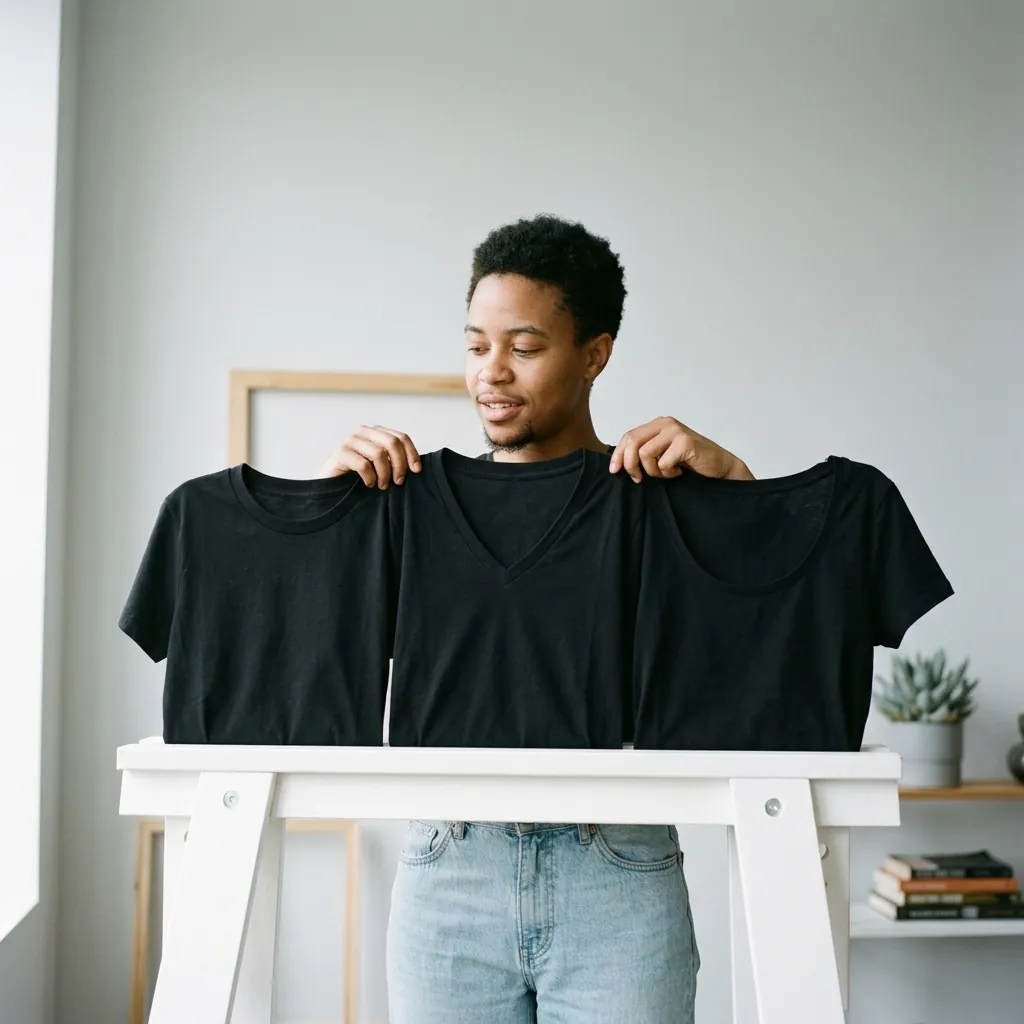
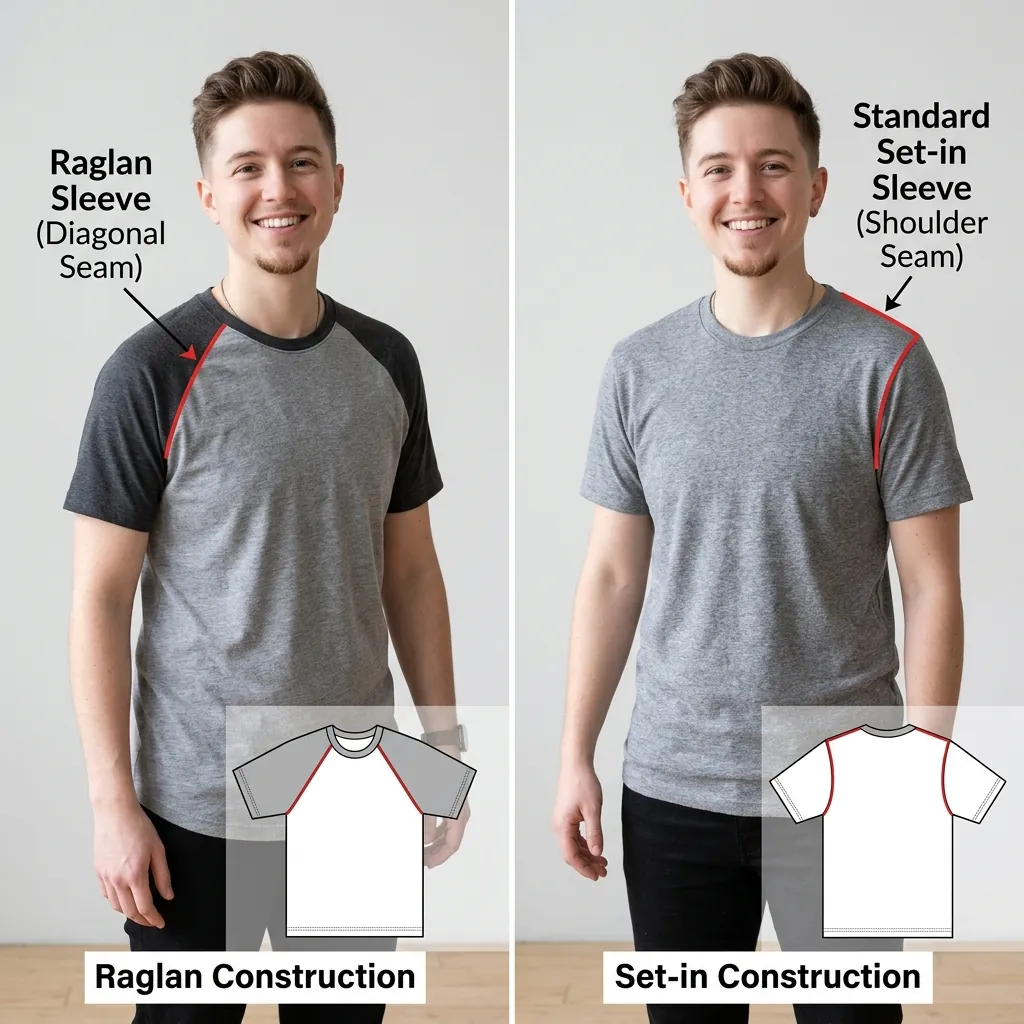
The top half is where you win or lose the silhouette. Your job here is to add visual width and structure across the shoulders.
- Choose crew necks over V-necks: A crew neck cuts a straight horizontal line across the collarbone, which widens the frame. A deep V draws a long vertical line down toward the chest and narrows the shoulders — the exact opposite of what you want.
- Button-downs are your best friend: Woven fabric holds its own shape instead of following yours. An oxford or flannel adds structure across the chest and shoulders that a soft tee never will.
- Look for raglan or saddle shoulders: Raglan sleeves run a diagonal seam from the collar to the underarm, which visually pushes the shoulder line outward.
- Use horizontal detail up top: Chest pockets, yokes, horizontal stripes, and color-blocking across the chest all add width where you want it.
- Skip the clingy stuff: Thin jersey, rayon, and stretchy knits trace every curve. Thicker cotton skims instead.
- Avoid: cap sleeves, scoop and deep-V necks, ruched sides, princess seams (the curved vertical seams that shape a waist), and anything cropped.
Layering: The Single Best Trick

If you take one practical technique from this guide, make it this one. An open shirt worn over a tee does three jobs at once, which is why it's the backbone of so many transmasculine wardrobes:
- It adds bulk at the shoulders — two layers of fabric across the top of your frame.
- It creates two strong vertical lines down your chest, which visually flattens and narrows the chest area.
- It hangs straight past your waist and hips, hiding the inward curve entirely.
It's also the most effective option on days you aren't binding, or can't. An open flannel, denim shirt, overshirt, or unzipped hoodie all do the same work.
Tip: Layering is also the best hot-weather answer. A short-sleeved open button-down over a tee gives you the same vertical lines and shoulder bulk without a heavy extra layer.
Bottoms: Quieting the Hips
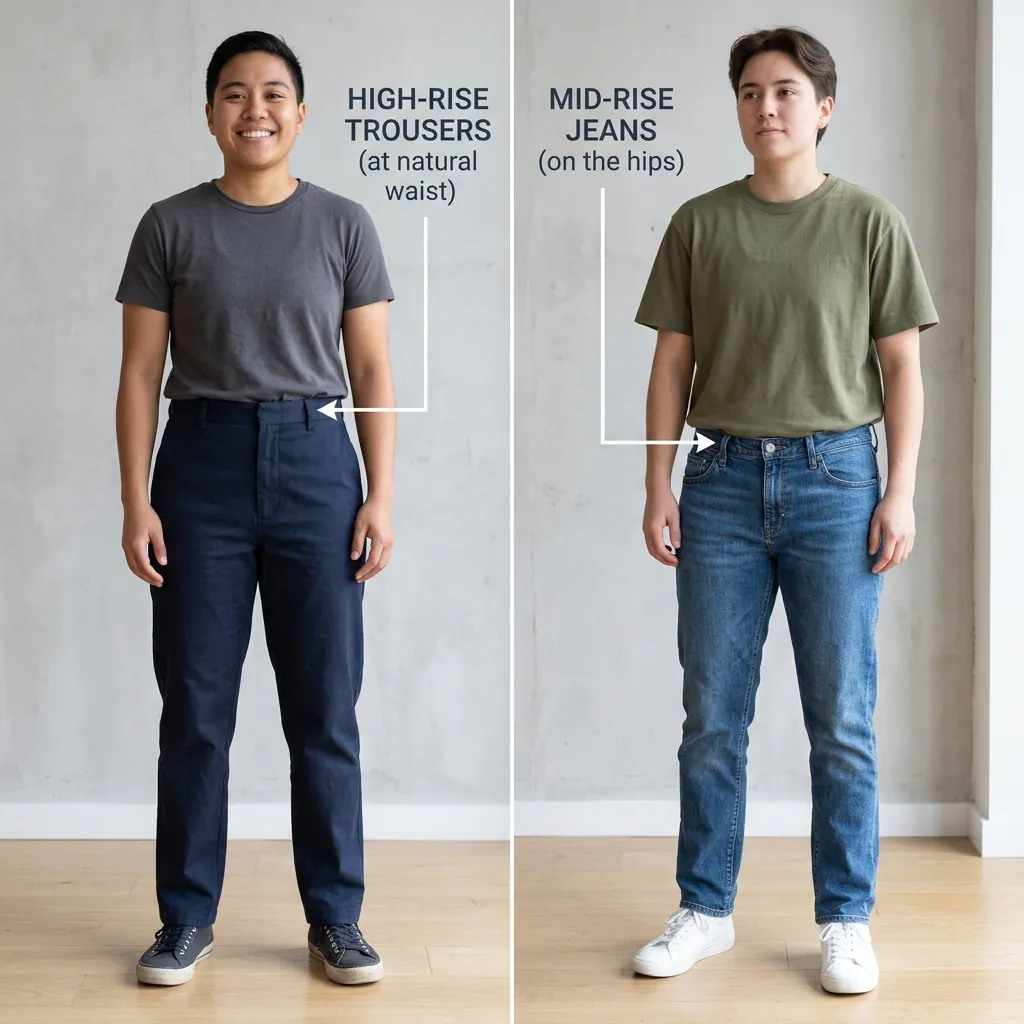
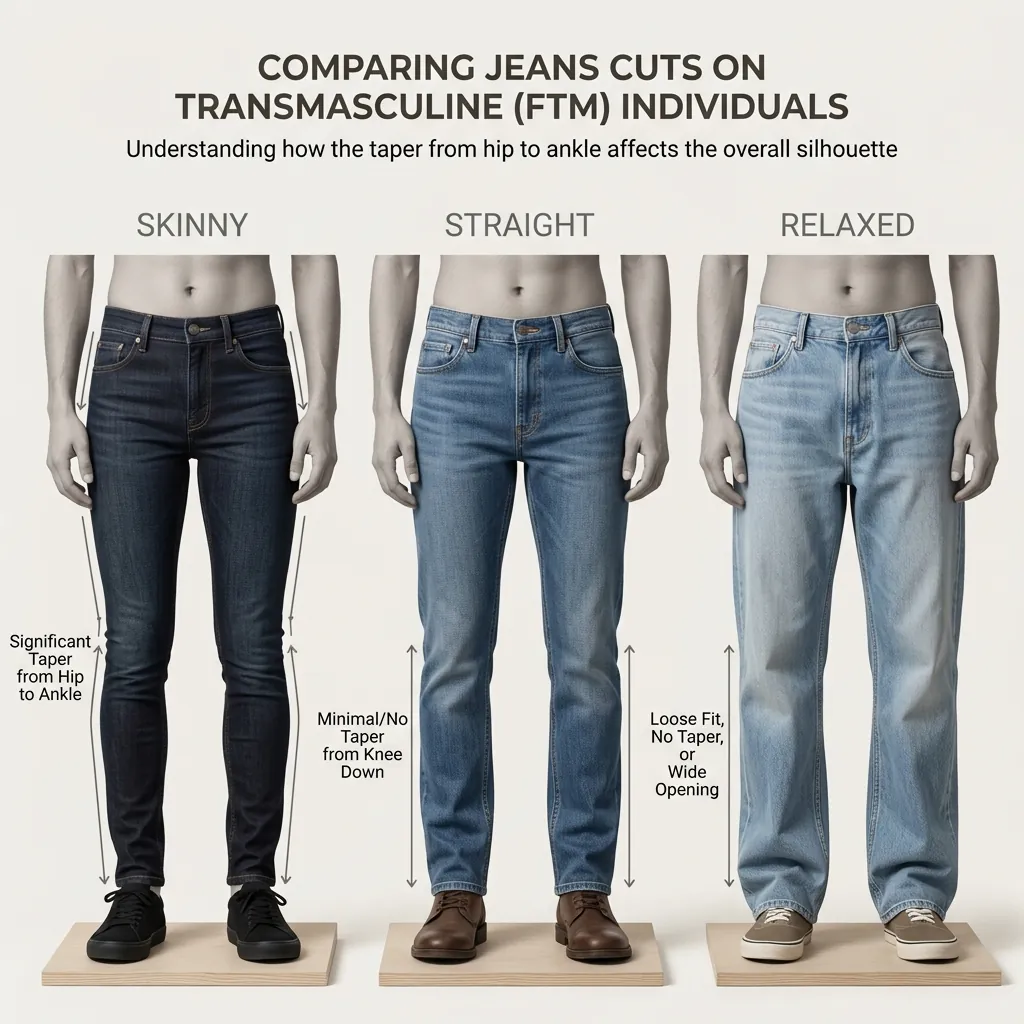
Bottoms are where most people go wrong, and the culprit is almost always rise — the distance from the crotch seam to the waistband.
- Go lower-rise: High-rise trousers sit at your natural waist — the narrowest point — which advertises exactly the curve you're trying to downplay. Men's jeans sit lower, on the hip, so the eye reads your waist as lower and straighter.
- Straight or relaxed leg, not skinny: Skinny jeans taper hard from hip to ankle, which exaggerates hip width by contrast. A straight leg keeps a consistent column from hip to floor.
- Dark and matte: Dark indigo, black, charcoal, and olive absorb light and flatten shape. Light washes, shine, and heavy fading across the hip do the reverse.
- Watch the back pockets: Small, high, widely-spaced pockets make hips look wider. Men's pockets are generally larger and lower, which is more flattering here.
- Beware heavy stretch: Denim with lots of elastane clings and follows your shape. Rigid or lightly-stretched denim holds a straighter line.
- Let the hem break: A slight break at the shoe grounds the leg line, rather than cutting it short at the ankle.
If men's jeans gape at your waist but fit your hips, that's normal and fixable — it's the most common alteration there is. A tailor can take in the waistband for a few dollars, or a belt will do in the meantime.
Outerwear: Your Heaviest Lever
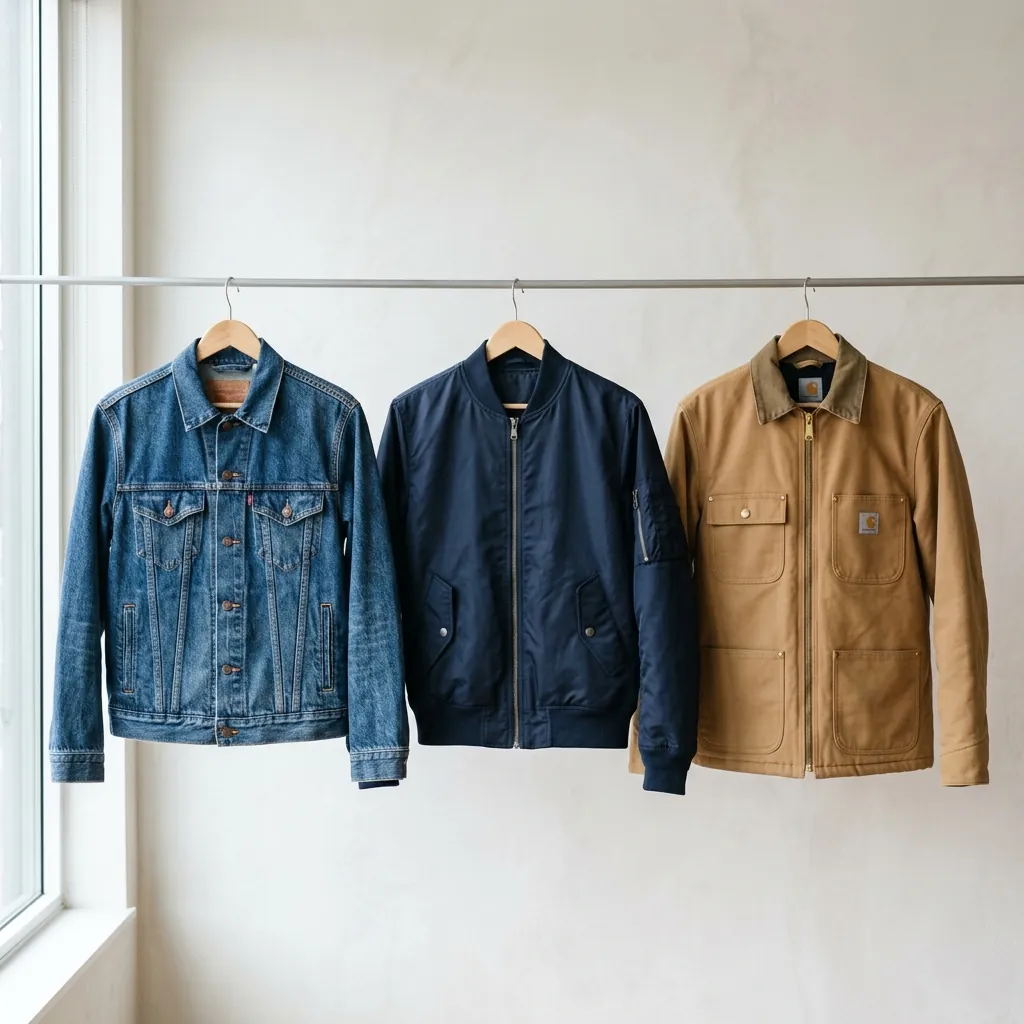
A structured jacket is the closest thing to a cheat code. It literally adds fabric and often padding across your shoulders while hanging straight past your waist.
- Denim & work jackets: Stiff, boxy, cut straight through the body. Excellent, and everywhere secondhand.
- Bomber jackets: The elasticated hem sits at the hip and the volume sits up top — a naturally inverted-triangle shape.
- Blazers & sport coats: Structured shoulders (sometimes lightly padded) are the most dramatic shoulder-builder available. Check the shoulder seam rule above before anything else.
- Overshirts & chore coats: Lighter option with the same straight, boxy line.
- Avoid: belted or cinched-waist coats, peplum shapes, puffers with a defined waist seam, and anything described as "fit and flare."
Tip: Jacket length matters. A jacket ending at your hip bone keeps the line straight. One ending mid-hip or lower cuts across the widest part of your hips and draws attention there.
Fabric, Color & Pattern
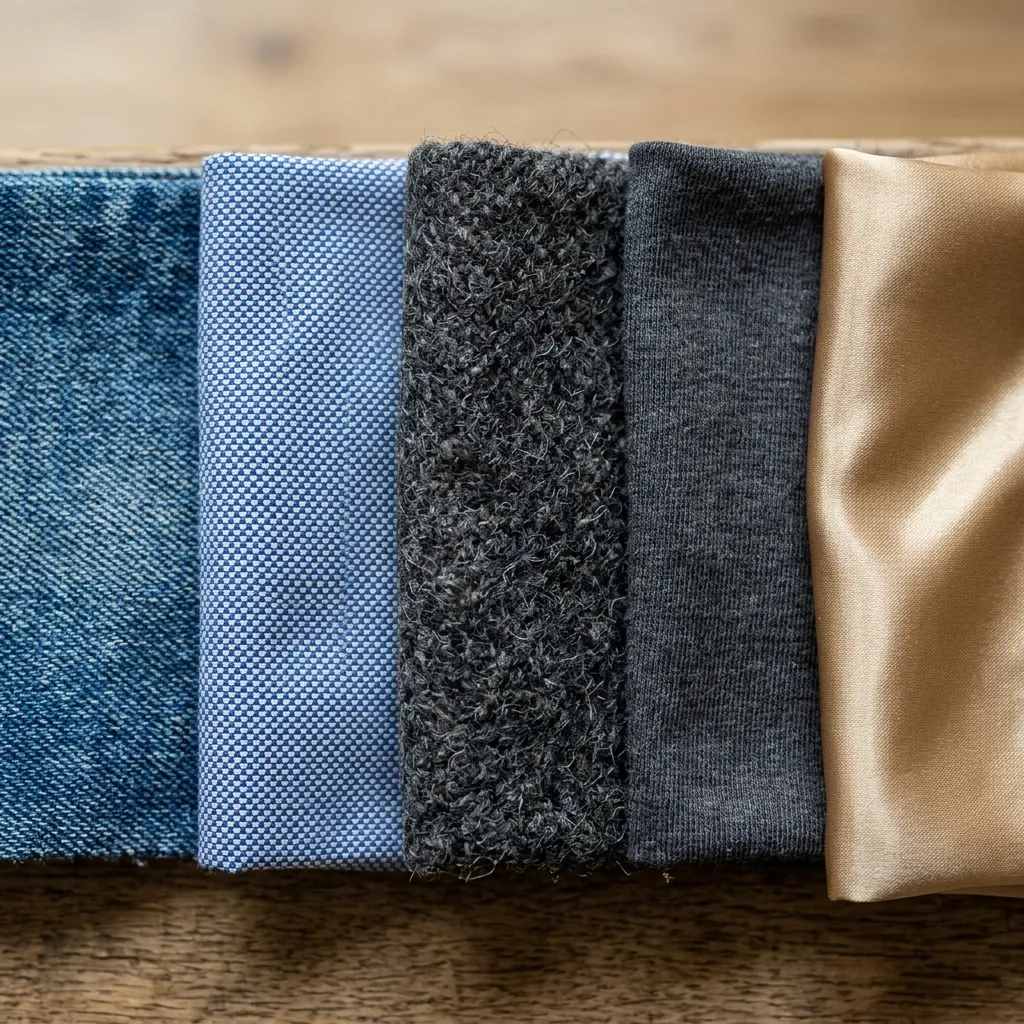
Fabric decides whether a garment holds its shape or reveals yours. This is why two shirts in the same size can look completely different on you.
- Reach for structure: Oxford cloth, denim, twill, canvas, corduroy, wool, and heavyweight cotton jersey all hold a squarer shape.
- Avoid drape and cling: Rayon, viscose, satin, modal, and thin jersey follow every contour.
- Weight is a lever: The thicker the cotton, the more it skims past your chest and waist instead of hugging them.
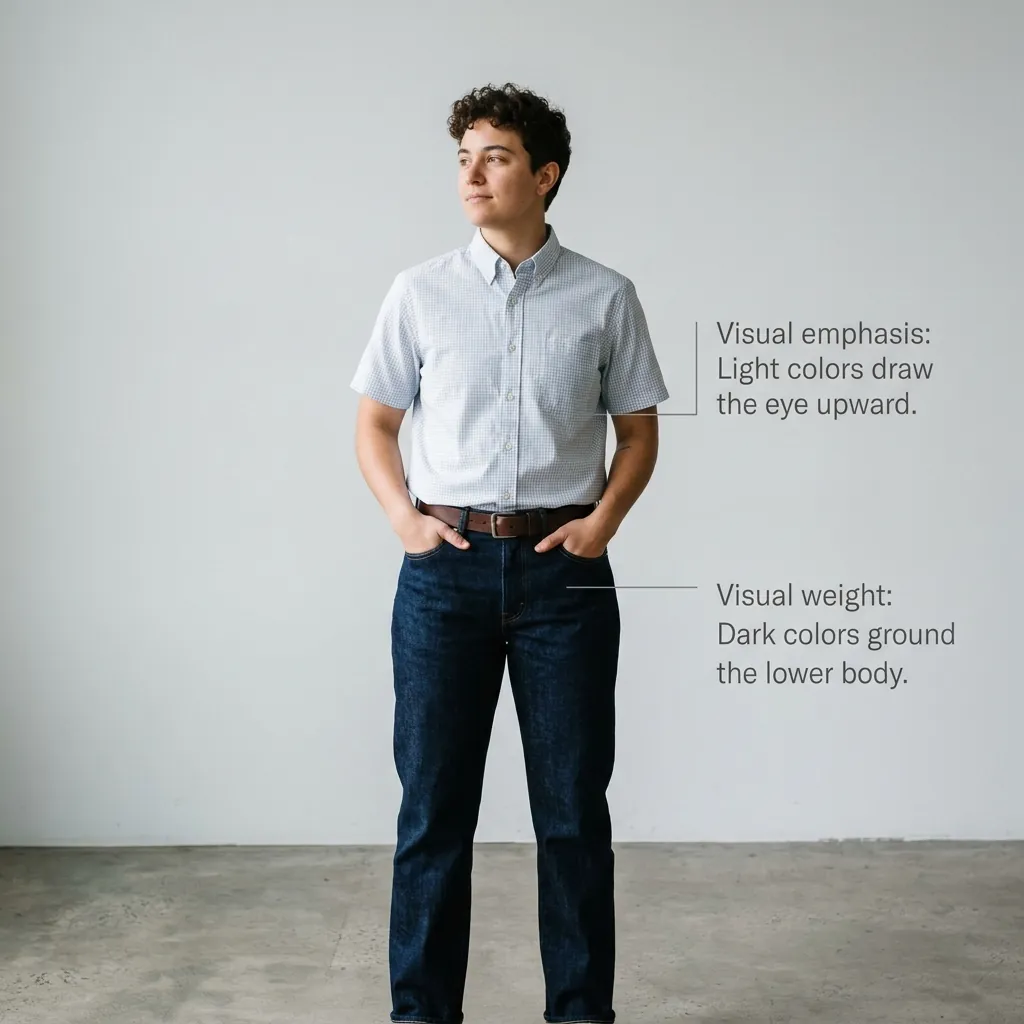
- Dark bottoms, lighter top: This pushes visual weight upward — exactly the direction you want. A pale or patterned shirt with dark jeans is a reliable default.
- Place patterns thoughtfully: Horizontal stripes and plaid across the chest add width up top. Keep busy patterns off your hips.
Binders & Clothing: Safety First
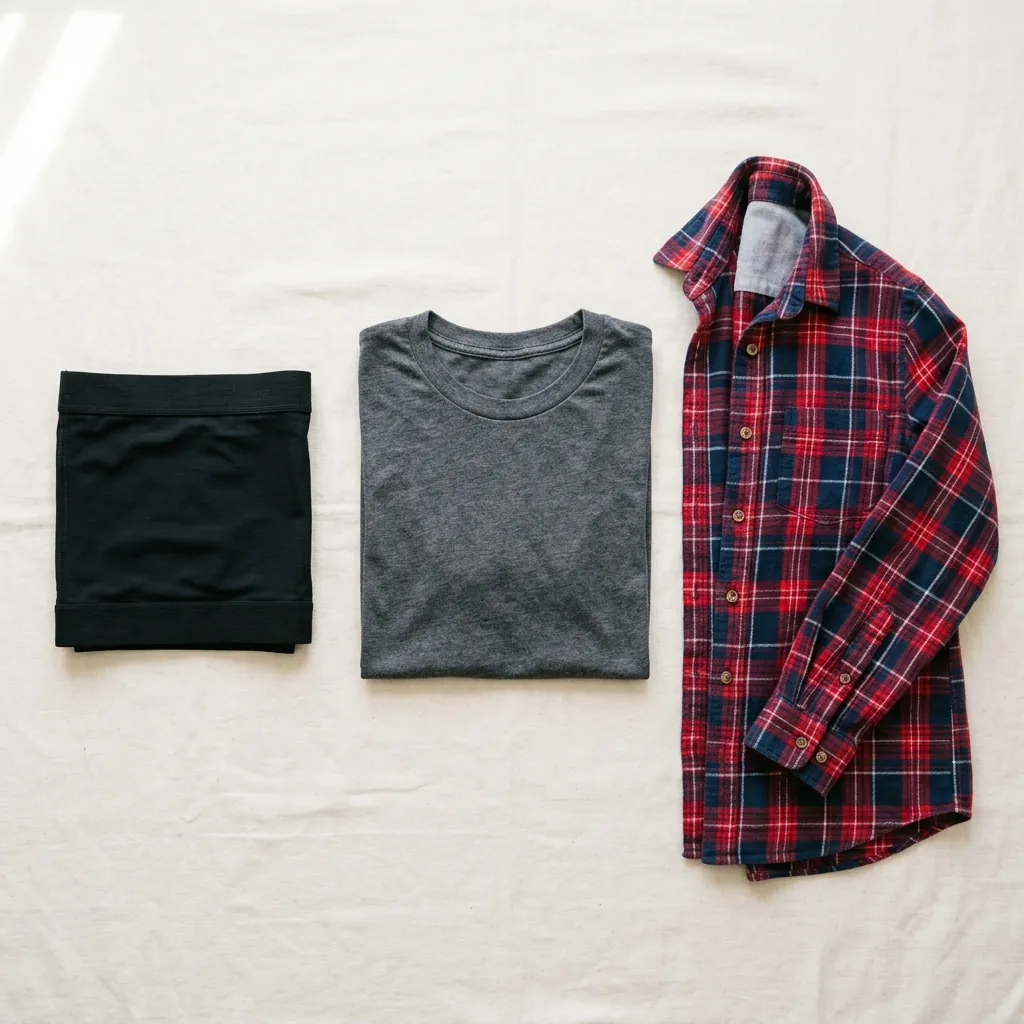
Binding and dressing work together — but your clothes should be doing enough work that you're never tempted to bind harder, longer, or tighter than is safe.
- Never size down. A binder that's too small doesn't flatten better — it restricts your breathing and can bruise ribs. Buy your measured size.
- Never use bandages, tape, or plastic wrap. Ace bandages tighten as you move and are strongly linked to negative outcomes. Duct tape and cling film can damage skin and dangerously restrict breathing.
- Cap your hours and take rest days. Clinical guidance is to bind no more than about 8 hours a day, take at least one day off per week, and never sleep in a binder.
- Let layering do the work. On rest days, an open shirt over a tee gives you a similar visual result with zero compression.
- Consider alternatives: A well-fitted sports bra or a compression tank is gentler than a binder and works well under structured layers.
- Stop if it hurts. Shortness of breath, chest pain, dizziness, numbness or skin changes are signals to take it off — not to push through.
Key fact: In the largest study of binding to date — a community-engaged survey of 1,800 people who bind — over 97% reported at least one negative physical outcome, most commonly back pain (53.8%), overheating (53.5%), chest pain (48.8%), and shortness of breath (46.6%). The same participants overwhelmingly reported improved mood and reduced dysphoria, which is exactly why binding safely matters so much. — Peitzmeier et al., Culture, Health & Sexuality, 2017
For full detail on choosing, sizing, and caring for a binder, see our Complete Guide to Chest Binders.
Sizing: How to Shop the Men's Section
Men's clothing uses measurements far more than arbitrary sizes — which is genuinely good news, because measurements don't lie and they don't have a gender. Grab a soft tape measure and write these down once.
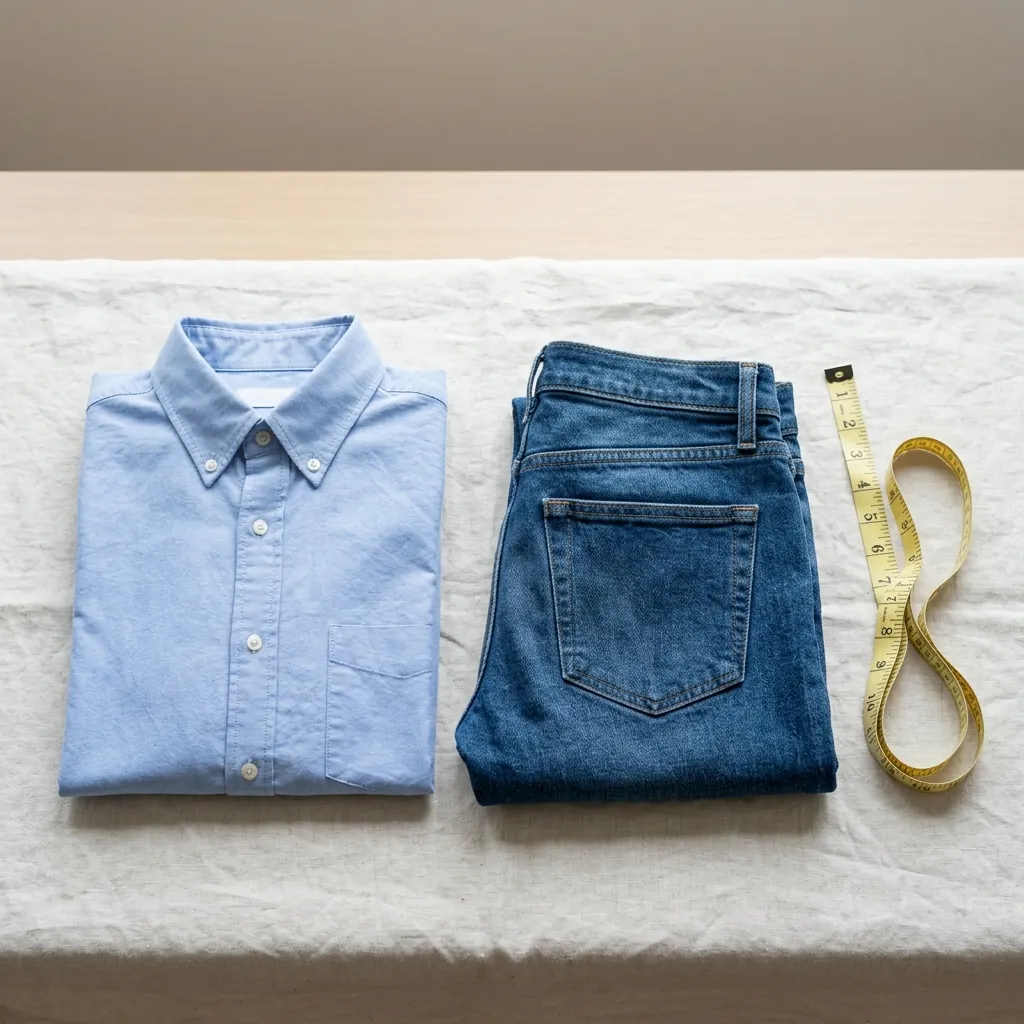
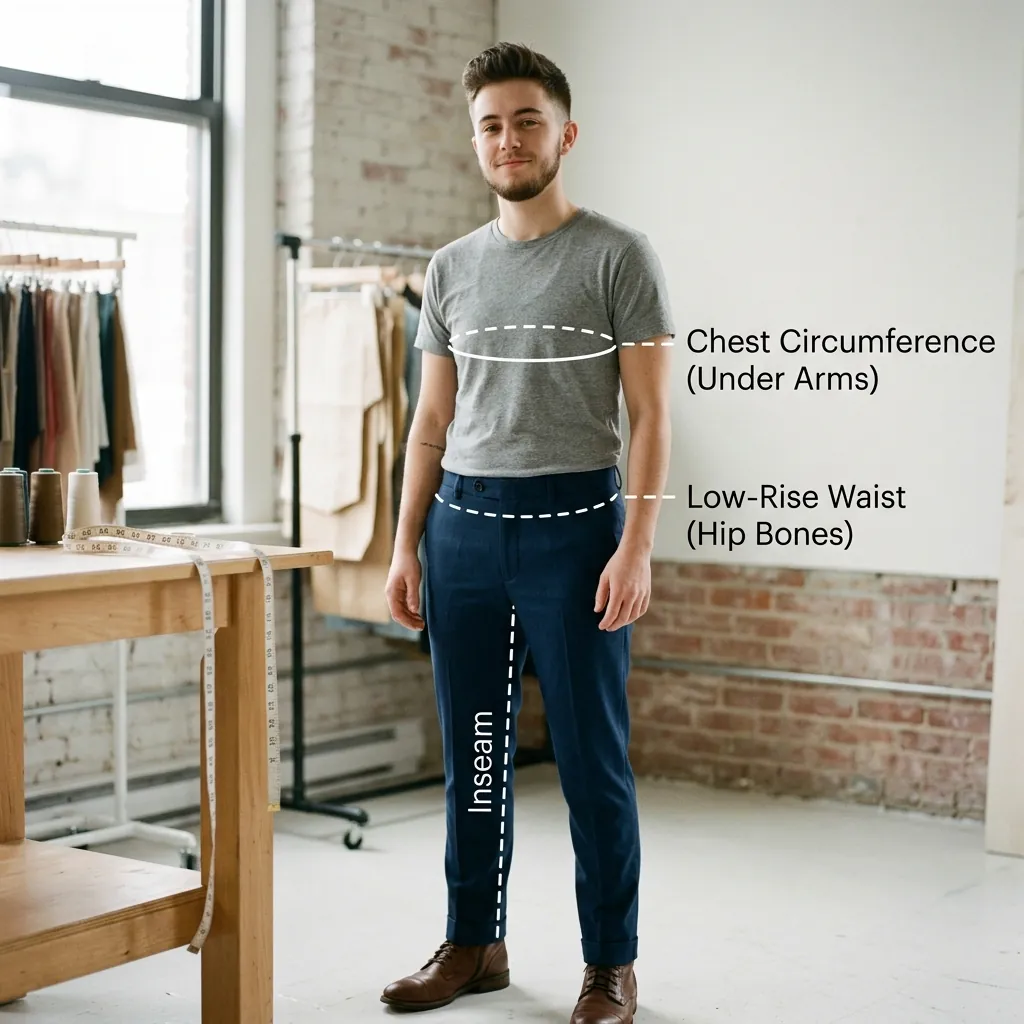
- Chest: Around the fullest part, under your arms. Measure while wearing whatever you'd normally wear underneath — binder, sports bra, or nothing.
- Waist: Where men's trousers actually sit — around your hip bones, not your natural waist. This is the number that goes on jeans.
- Inseam: Crotch seam to hem, on trousers that already fit you well.
- Neck & sleeve: Only needed for dress shirts, which are sized neck × sleeve (e.g. 15 × 33).
Use this as a rough starting point — then check the brand's own chart:
| Women's size (US) | Approx. waist | Men's jeans waist | Men's top |
|---|---|---|---|
| 0–2 | 24–25" | Try boys' / 26 | XS |
| 4 | 26" | 26–27 | XS |
| 6 | 27–28" | 28 | XS–S |
| 8 | 29" | 29–30 | S |
| 10 | 30–31" | 30–31 | S–M |
| 12 | 32" | 32 | M |
| 14 | 33–34" | 33–34 | M–L |
| 16 | 35–36" | 36 | L |
| 18 | 37–38" | 38 | L–XL |
⚠️ Bottoms convert far less reliably than tops, because men's trousers are cut narrower through the hip and thigh and use a different rise. Treat the waist number as a starting point and expect to try a size either side. A rough shortcut for tops: your women's size is usually one step larger than the men's equivalent — a women's large often lands near a men's medium.
What Actually Helps for Your Body
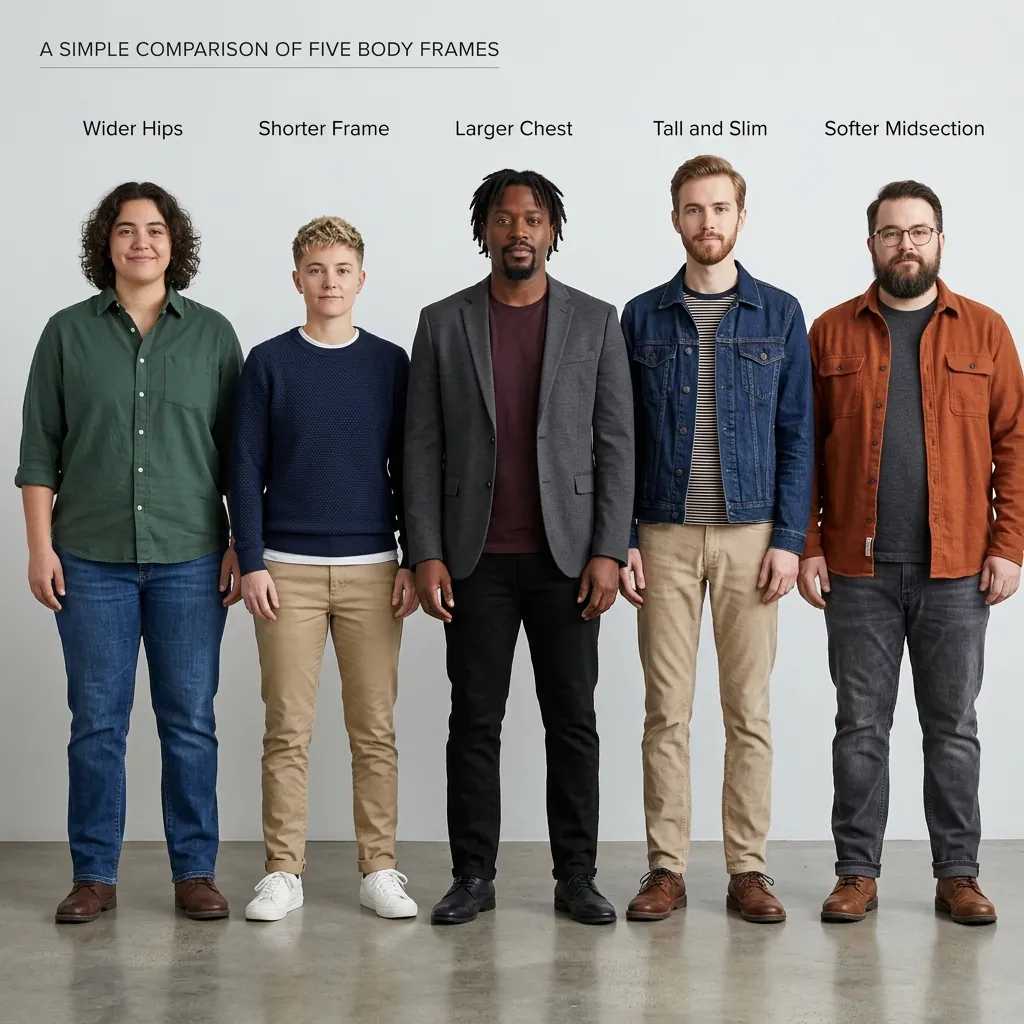
The same three rules, five different starting points — the tools change, the goal doesn't.
The silhouette rules never change — but which tools do the heavy lifting depends on your frame. Find yourself below.
- Wider hips than shoulders: This is the most common concern, and it's very workable. Prioritize adding up top rather than hiding down below — structured jackets, layering, horizontal chest detail. Then keep bottoms dark, straight-legged, and lower-rise. Adding shoulders beats subtracting hips every time.
- Shorter frame: Keep your color palette closer to monochrome so you aren't cut in half horizontally. Choose shorter jackets that end at the hip bone, and avoid oversized fits that swamp you. The boys' section is genuinely useful here and often much cheaper.
- Larger chest: Structured, heavier fabrics and open layers do more than any tight garment can. A stiff open button-down creates strong verticals that break up the chest visually. Avoid clingy knits and chest-level horizontal stripes, which is the one place that rule flips.
- Tall and slim: You already have the vertical line — you need width. Look for layering, chunkier knits, boxier cuts, and jackets with real shoulder structure. Horizontal detail up top is your friend.
- Softer midsection: Skip anything cinched. A straight-cut overshirt or unstructured jacket that hangs from the shoulders creates a clean column and is far more effective than compression.
Shoes, Accessories & Small Details
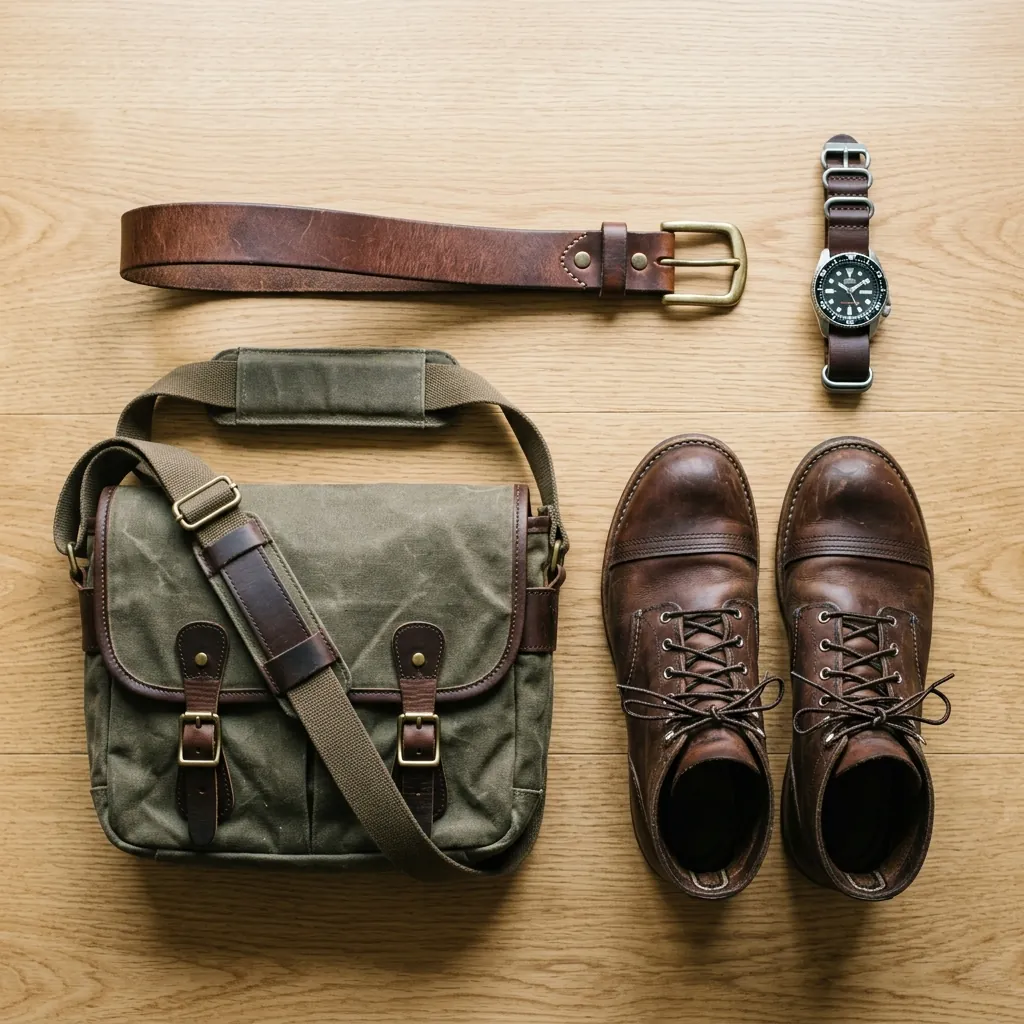
Once the silhouette works, small details add up — and unlike a wardrobe overhaul, most of these are cheap.
- Shoes with visual weight: Boots, chunky sneakers, and derbies give your frame a solid base. Narrow, pointed, or delicate shoes taper the bottom of your line.
- A wider belt: Men's belts are broader and sit lower, which reinforces a lower, straighter waistline.
- A larger watch: Bigger watch faces and wider straps make wrists and hands read larger by comparison.
- Bag choice matters: A backpack, messenger, or tote carried in the hand reads differently from a small bag on a shoulder strap across the body — which cuts a diagonal line right across your chest.
- Socks and hems: Avoid a bare-ankle gap with cropped trousers if you're trying to keep the leg line long and continuous.
Haircut and grooming sit outside the scope of this guide, but be aware they often outweigh every clothing choice combined. If your silhouette is right and something still feels off, that's usually where to look next.
Posture, Budget & Building Slowly
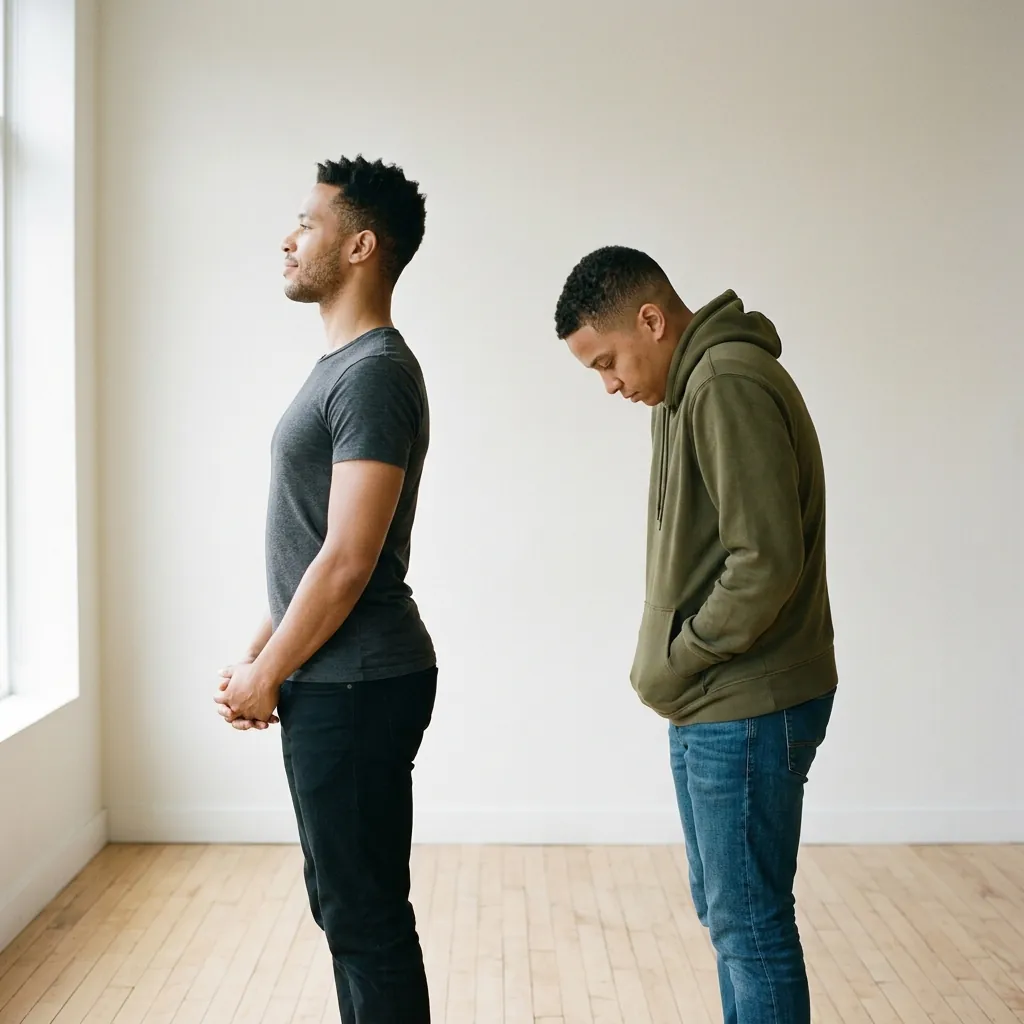
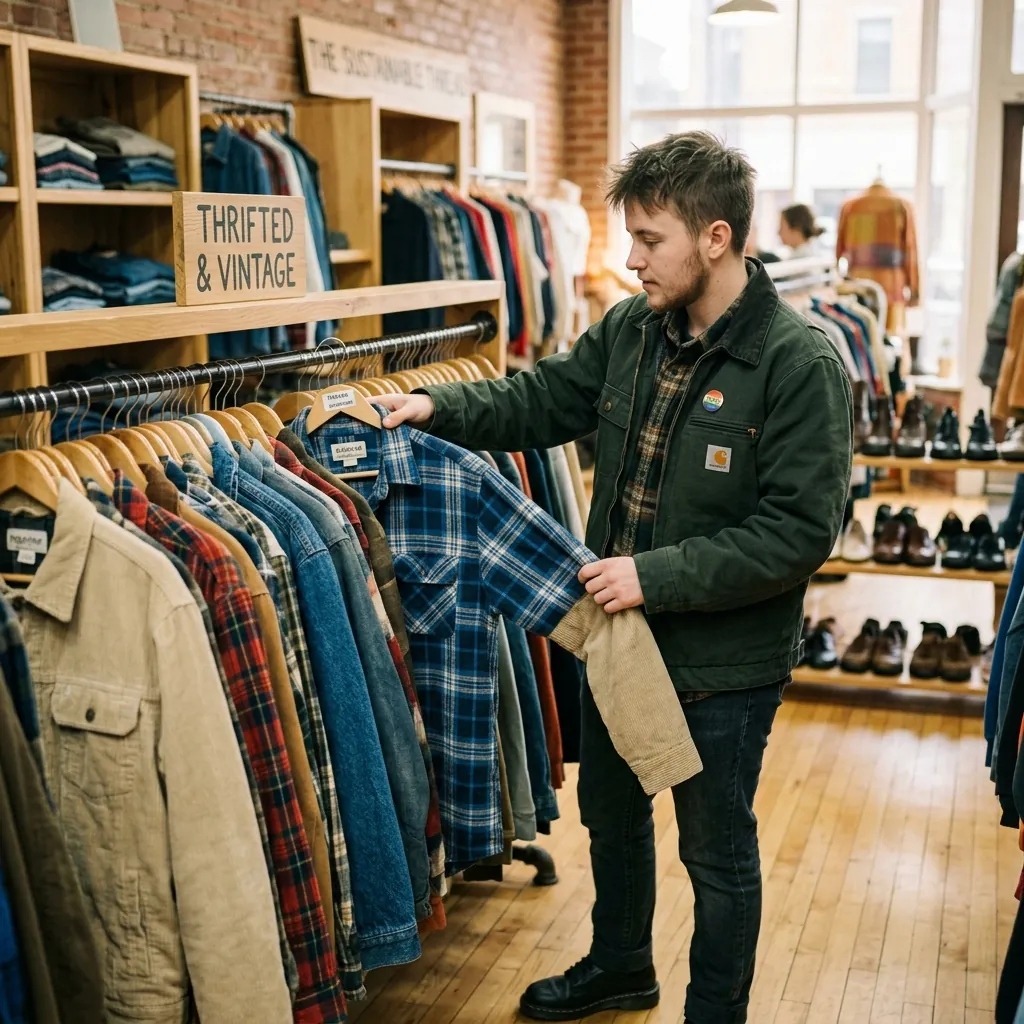
Two last things that cost nothing and change more than most purchases.
- Posture is free width: Rolling your shoulders back and down opens your chest and squares your frame. Slouching collapses your shoulders inward and undoes the work your clothes are doing. It's the cheapest silhouette tool you own.
- Take up a little space: Masculine body language tends to be wider — hands out of the hips, arms not crossed tight, a slightly wider stance.
- Thrift first: Secondhand shops are full of exactly what you want — denim jackets, flannels, oxfords, straight-leg jeans — for very little, and you can try things without committing money to a look you're still figuring out.
- Buy a tailor, not a wardrobe: Two well-altered shirts beat ten that nearly fit. Basic alterations usually cost a fraction of the garment.
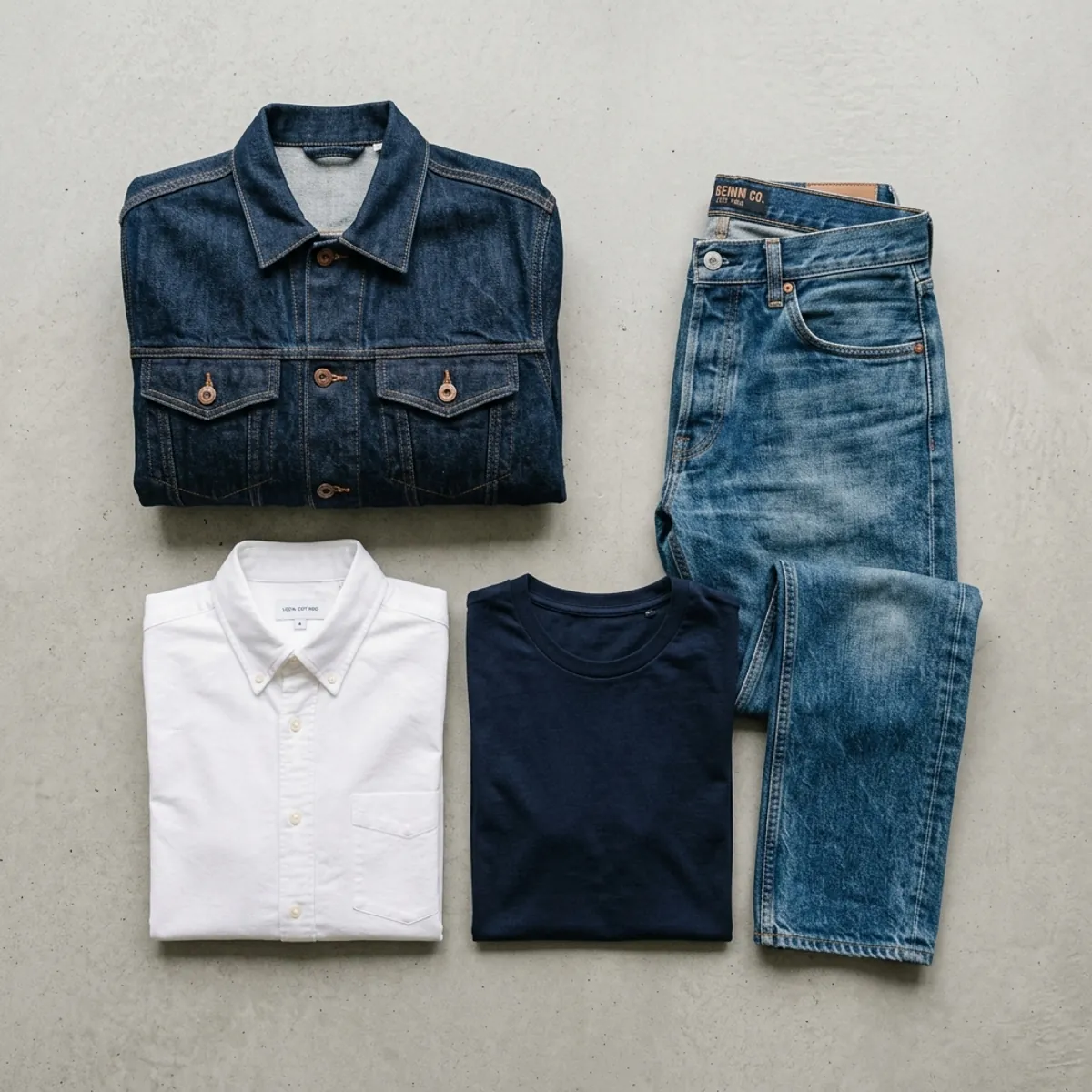
- Start with three pieces: A dark straight-leg jean, a plain crew tee that fits your shoulders, and one structured open layer. That combination alone gets you most of the way.
Tip: If shopping in person feels unsafe or exposing right now, that's completely understandable — you're not alone in that, and it's a normal stage rather than a failure. Ordering online and returning what doesn't work is a perfectly valid strategy.
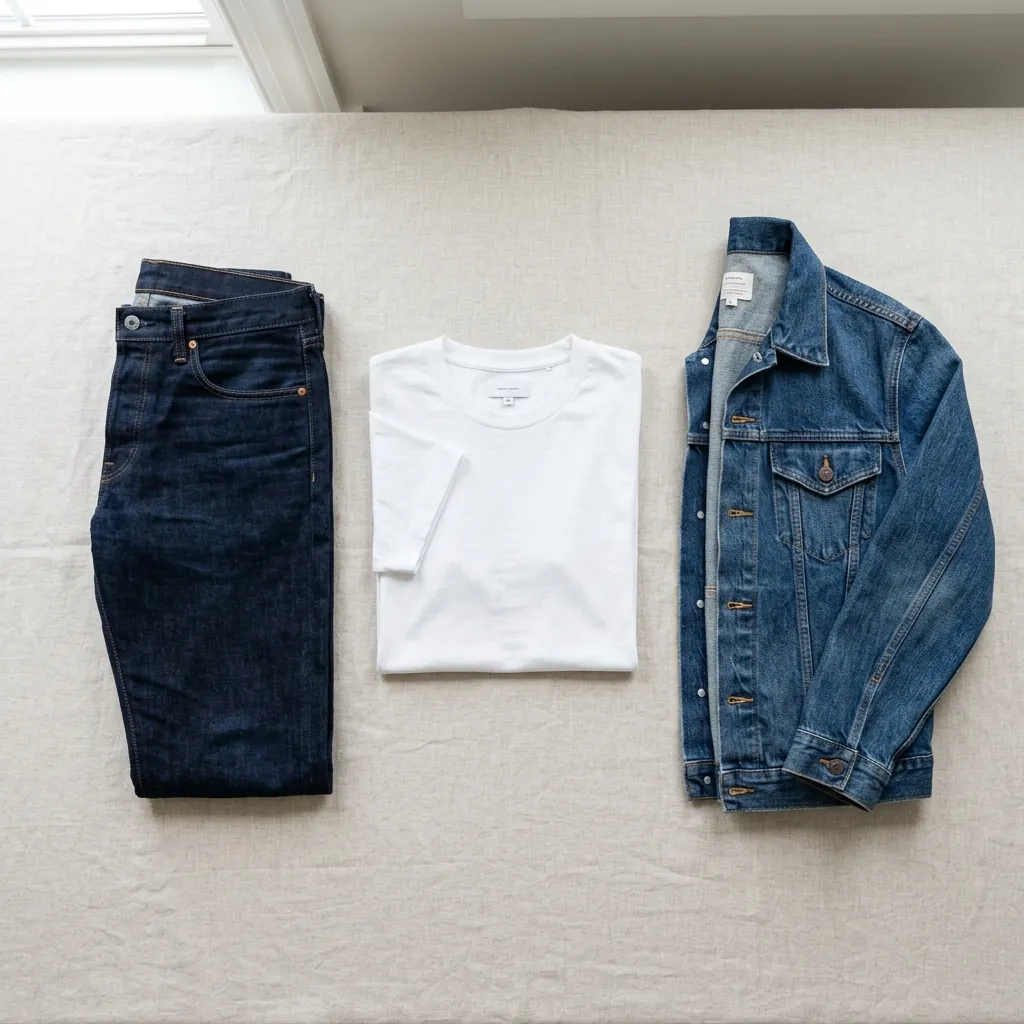
The whole guide in three pieces: dark straight-leg jeans, a crew tee that fits your shoulders, and one structured open layer.
Remember: None of this is a requirement. Plenty of trans men and transmasculine people dress however they like — soft, colorful, feminine, or all of the above — and are no less men and no less valid for it. These are tools for people who want them, on the days they want them. Dressing masculine is something you can pick up and put down.
❓ Frequently Asked Questions
What's the single fastest change I can make?
I have wide hips. What actually helps?
Can I look masculine without binding?
What size am I in men's clothing?
Why do men's shirts fit my chest but look baggy at the waist?
Are skinny jeans bad for passing?
How do I dress masculine when it's too hot to layer?
Should I shop in the boys' section?
What if I can't afford a new wardrobe?
Will a tailor judge me for bringing in men's clothes?
Do I have to dress masculine to be a "real" trans man?
Can non-binary people use this guide too?
🤝 Resources & Support

- 🌐 UCSF Gender Affirming Health Program — Clinical guidelines on binding, packing, and tucking
- 🌐 Point of Pride — Free chest binders and gender-affirming garments, shipped internationally
- 🌐 WPATH — International standards of care for transgender health
- 🌐 PFLAG — Support and resources for trans people and their families
- 🌐 Trans Lifeline — Peer support staffed by trans people
- 📄 The Complete Guide to Chest Binders — Choosing, sizing, and wearing a binder safely
- 📄 The Complete Beginner's Guide to FTM Packing — Packers, sizing, and daily care
📚 Sources
- Peitzmeier, S., Gardner, I., Weinand, J., Corbet, A., & Acevedo, K. (2017). Health impact of chest binding among transgender adults: a community-engaged, cross-sectional study. Culture, Health & Sexuality, 19(1), 64–75. doi.org/10.1080/13691058.2016.1191675
- UCSF Gender Affirming Health Program. (2016). Binding, Packing, and Tucking. transcare.ucsf.edu
- Peitzmeier, S., et al. (2021). Chest binding in context: stigma, fear, and lack of information drive negative outcomes. pubmed.ncbi.nlm.nih.gov/34839781
- PFLAG. (2024). National Glossary. pflag.org/glossary
This article is for informational purposes only and does not constitute medical advice. Binding carries physical risks — consult a qualified healthcare professional about your own situation, especially if you have a respiratory or cardiac condition. Laws and medical guidelines change — always verify current information with authoritative sources.