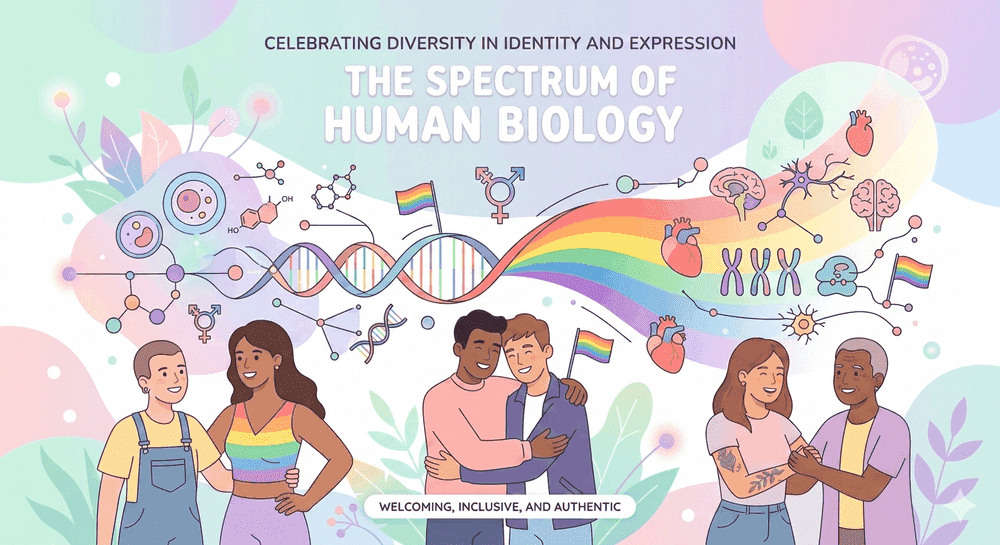
For generations, most of us were taught that biological sex is a simple "either/or" choice: you are either male or female. But modern science, biology, and genetics show that the reality is far more complex. While the majority of humans fall into two main categories, nature provides a rich spectrum of variations that challenge the traditional binary view.
🧬 The Three Main Categories of Biological Sex
To understand the spectrum, we first have to look at how biological sex is usually identified.
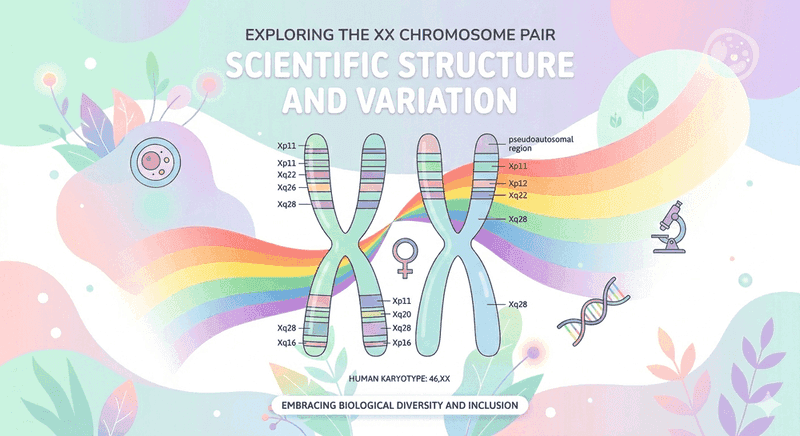
1. Female
- The Blueprint: Typically defined by two X chromosomes (XX).
- The Biology: Includes the production of eggs (large gametes) and reproductive organs like the ovaries, uterus, and vagina.
- The Hormones: Driven primarily by estrogens and progesterone.
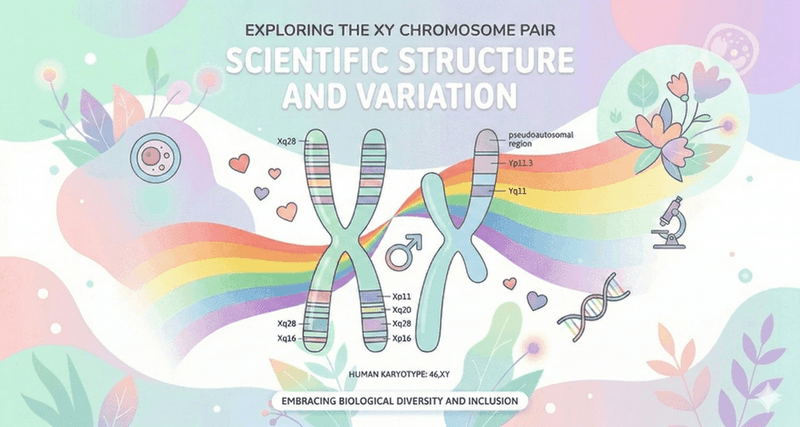
2. Male
- The Blueprint: Typically defined by one X and one Y chromosome (XY).
- The Biology: Includes the production of sperm (small gametes) and reproductive organs like the testes and penis.
- The Hormones: Driven primarily by androgens like testosterone.
3. Intersex (The Biological Reality)
- The Blueprint: "Intersex" is an umbrella term for people born with biological traits that don't fit the typical definitions of male or female. This can include variations in chromosomes (like XXY or X0), hormones, or internal/external anatomy.
- The Statistics: The figure you'll see quoted most often is 1.7%—about as common as having red hair. It comes from Blackless et al. (2000), which used a broad definition of what counts as a variation.
- The Honest Caveat: That number is genuinely disputed. Sax (2002) counted only cases where anatomy is clinically ambiguous at birth and arrived at roughly 0.018%—almost a hundred times lower. Both numbers are honest; they simply draw the line in different places. Which is really the whole point of this article.
📜 The History of Biological Sex Identification
How did we move from a strict binary to understanding the spectrum?
- The Ancient World: Many cultures (including some Native American and South Asian traditions) historically recognized "third sexes" or gender-fluid individuals.
- The 1950s: The term "intersex" began to be used more formally in medicine to replace older, less accurate terms.
- The Genetic Revolution: As we began to map DNA, scientists discovered that the SRY gene on the Y chromosome is what usually triggers male development. But it doesn't always behave: it can be missing, it can stop working, or it can end up on an X chromosome instead—each of which leads to a different outcome.
🌍 Global Perspectives: WHO vs. U.S. Policy
The definition of "sex" is currently a major point of debate between international health organizations and local political movements.
The World Health Organization (WHO) View
- The Definition: The World Health Organization describes sex as a set of biological attributes—chromosomes, gene expression, hormone levels and function, and reproductive anatomy. It notes that sex is usually categorised as female or male, but that natural variations in sex characteristics, known as intersex, also occur.
- The Focus: Aimed at inclusive healthcare and acknowledging that intersex people have specific medical needs and rights.
The Current U.S. Political Shift
- On 20 January 2025, President Trump signed Executive Order 14168, "Defending Women From Gender Ideology Extremism and Restoring Biological Truth to the Federal Government."
- The Definition: The order defines sex as "an individual's immutable biological classification as either male or female," and states that it "is not a synonym for and does not include the concept of 'gender identity.'" It defines a female as someone belonging, "at conception," to the sex that produces the large reproductive cell, and a male as the sex that produces the small one.
- The Impact: This policy aims to remove "gender identity" from federal recognition, requiring federal programs to operate based on biological sex at birth rather than self-identified gender.
⚖️ Sex and Gender: Clearing the Confusion
A major source of social tension is the interchangeable use of "sex" and "gender." Experts recommend keeping them distinct to improve communication:
| Feature | Biological Sex | Gender Identity |
|---|---|---|
| Foundation | Anatomy, DNA, and Hormones. | Internal sense of self. |
| Focus | About your body. | About who you are. |
| Assigned By | Doctors at birth. | The individual themselves. |
This article is about the left-hand column—the body. If you want the right-hand column, our guides to transgender identity and gender dysphoria pick up exactly where this one stops. And if a term here was new to you, the plain-English guide to LGBTQ+ explains where intersex sits in the acronym.
🌟 Conclusion: 2, 3, or Many?
Science suggests that human sex is bimodal—meaning it has two very common peaks (male and female), but those peaks are connected by a wide range of natural variations.
- The Binary View: Useful for simple reproductive explanations and preferred by certain legal and political frameworks.
- The Spectrum View: The scientific and medical reality that some people's bodies do not fit either category cleanly—whether you put that at 1.7% or 0.018%, it is never zero.

Frequently Asked Questions
Is biological sex binary?
For most people, yes—the overwhelming majority of humans are born clearly male or female, and that is why the binary is such a useful shorthand. But “most” is not “all.” Chromosomes, hormones, gonads and anatomy are four separate systems, and they usually line up but don’t have to. When they don’t, you get a person who doesn’t fit either box. So the binary is an excellent rule with real exceptions, rather than a law with none.
What does it mean that sex is “bimodal”?
Bimodal means a distribution with two distinct peaks. Picture a graph with a tall cluster at “male,” a tall cluster at “female,” and a low but genuinely non-empty stretch between them. It is the middle ground between “there are exactly two sexes” and “sex is a smooth rainbow with no clusters”—and it is the description that best matches the actual data. Human height is bimodal in a similar way: men and women cluster at different averages, but the ranges overlap.
What percentage of people are intersex?
It depends entirely on your definition, which is why you’ll see wildly different numbers. Blackless et al. (2000) estimated about 1.7% using a broad definition that includes chromosomal variations a person may never discover. Sax (2002) counted only cases where sex is ambiguous at birth and got about 0.018%. Neither figure is dishonest—they answer different questions. Be sceptical of anyone quoting either one as though it settles the argument.
Is being intersex the same as being transgender?
No, and this is one of the most common mix-ups. Intersex describes a person’s body—the physical traits they were born with. Transgender describes a person’s gender identity—their internal sense of self, relative to the sex they were assigned at birth. Most intersex people are not transgender, and the overwhelming majority of transgender people are not intersex. They are separate things that occasionally overlap.
Are XXY or X0 chromosomes intersex?
They are chromosomal variations that fall under the intersex umbrella as it is broadly defined. XXY (Klinefelter syndrome) and X0 (Turner syndrome) are the two most common. Whether a given clinician counts them as “intersex” is exactly the definitional disagreement that drives the 1.7% versus 0.018% gap—many people with these variations have unremarkable anatomy and only find out through unrelated testing, or never find out at all.
If sex is bimodal, does that change what sex someone is?
For nearly everyone, no. Recognising that a small number of people don’t fit the two categories doesn’t reclassify the people who do. The bimodal description isn’t an argument that male and female aren’t real—it’s an argument that they aren’t exhaustive. Both things can be true at once, and most of the public argument on this topic comes from treating them as though they can’t.